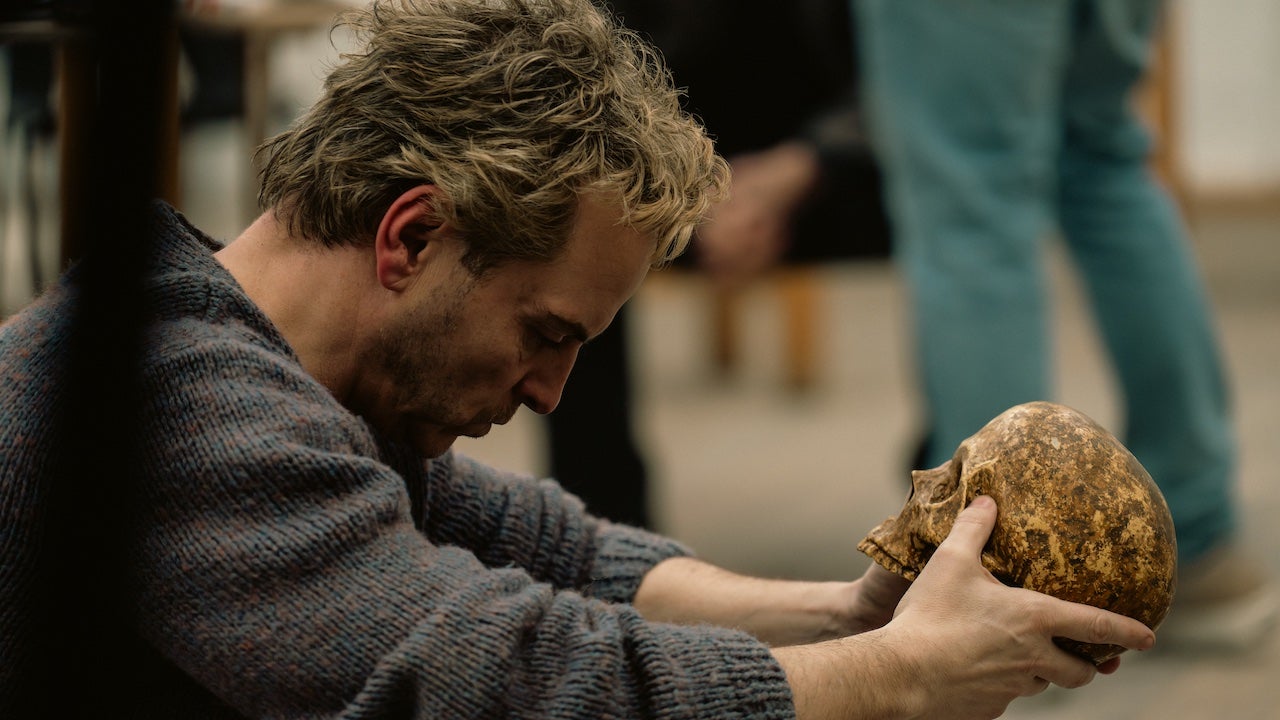
www.thewrap.com: Like many of Britain’s great actors, Andrew Scott is very familiar with “Hamlet,” having played the title role dozens of times on the West End. But to take on the role of Ian Charleson in “Elsinore,” he had to toss much of how he approached the Prince of Denmark out of the window…except for the memories of how much it took its toll.


5 comments:
I loved this article! I really like Andrew Scott, and I’m super excited to see Elsinore. I think it’s super interesting to read about how Scott had to mentally prepare for this role; though he’s played Hamlet dozens of times, the focus on mortality and the actor’s experience of playing the character is incredibly different from the regular stage shows he’s done before. In Elsinore, Scott plays a character who’s playing a character - the movie is about Ian Charleson, an actor who took on and gave one of the best performances of Hamlet only three months before dying of AIDS. For this performance, Scott had to relearn the Shakespeare, in addition to transforming himself into the actor behind the performance. As a whole, I really enjoyed this article - both hearing about Scott’s experience making the film, and learning more about Charleson as a whole - and I can’t wait to see Elsinore when it comes out!
Relevance seems to always be at the core of theatre. A production to resonate with an audience had to have its finger on the pulse, timing the audience’s heartbeat. People, to make it really simple, have to care. Shakespeare, and Hamlet specifically, have always been interesting to me, because I think theatre demands much more than, say, a book or a movie. Those have more freedom in a sense. They demand less of their audience. Theatre requires attendance, and a willingness to disconnect from your world and step into another on someone else's time. Nowadays, I think you have to care a lot to be willing to do that. The persistent nature of Hamlet probably stems in good part from its throne in the English canon, but also through works like Elsinore. It's the very human nature of the characters and their issues that are transcendent of their specific given circumstances. Hence, Andrew Scott relearning Hamlet, a play he is intimately familiar with, for this role. I loved his version of Hamlet, and I am now incredibly intrigued to the new ways in which he will explore his character in this version. To take a monumentally famous role, and align that with a specifically renowned performance of it, to play a character playing a character. It's all very Shakespearean, and all very relevant.
I’m really looking forward to seeing this movie, partly because I love Andrew Scott, partly because I love Hamlet, and partly because Ian Charleson’s story is mostly unfamiliar to me. I’m very interested in learning more about him and his life. I’m also looking forward to seeing what Andrew Scott brings to this role, especially having played Hamlet himself for so long. Hearing about his process in portraying Ian Charleson is very intriguing, especially how he relearned so much of the text. It makes sense; I’m sure it was very difficult to get out of the pattern of how he played the role, and to get into the mindset of a completely different person saying the same words. I imagine the effect of that is very subtle, but completely necessary. I also loved what Andrew Scott said about actors looking towards the light, and not wallowing in the darkness. That very much resonated with me as someone who is constantly trying to see the bright side of everything.
Post a Comment