Power & Motion Tech: Electric motors are used in a wide range of applications today to drive hydraulic and pneumatic pumps, electric actuators and more.
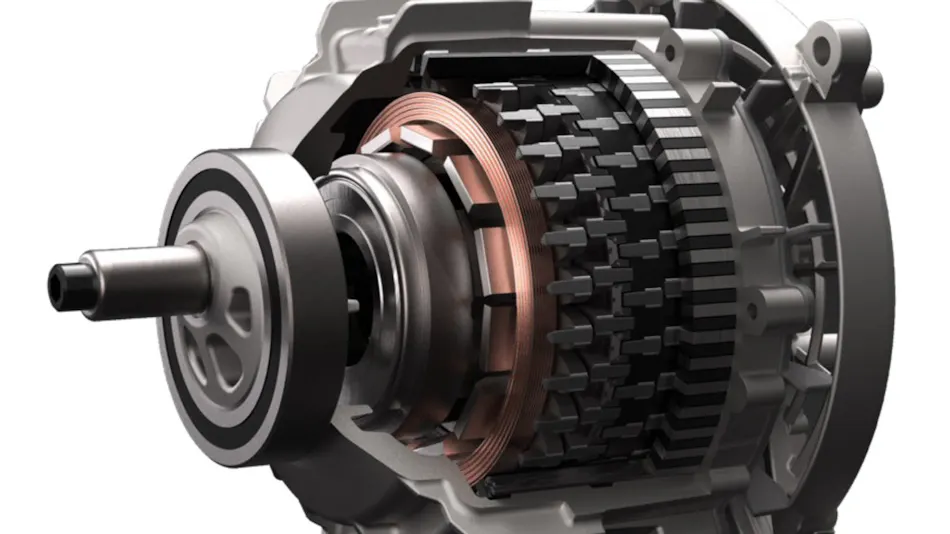
These motors are typically categorized as radial flux, axial flux and transverse flux, the latter of which is gaining in use due to companies like ETM — the electric motor division of Graco Inc. — advancing the technology in recent years.


2 comments:
This seems very interesting for a wide variety of industries, including fluids, like the article mentioned, but they also mentioned lifting or hoisting things as another continuous torque application the motors could be useful for. With the continued proliferation of automated rigging systems, this motor technology could be very useful, particularly in standalone systems where the hoist and pipe are all together, with no wire rope fly system. They also mentioned that they are lighter, although not particularly fast, so I think they could be most useful in systems like semi-architectural rigs in conferences or corporate events--locations that may not have been originally specked to have a fly system hung there, and where speed isn't a factor, but the reduced weight of the motor increases what can be hung there.
I’ve never been the best at fully comprehending or visualizing exactly how motors and other electrical components work, I have an approximate idea, but nothing concrete; however, I understand mechanical stuff fairly intuitively, and when I was intending to pursue education in automotive engineering, I was incredibly intrigued by electric cars, particularly ones that sought to innovate the formula that was culturally formalized and established in practical daily use through Tesla. Porsche several years ago released an electric car with a transmission (very uncommon in electric cars, because of the massive range in speed, without much difference in torque), so it could have a more aggressive “launch”. Very much a gimmick, not at all necessary for the operation of the car, but this article really intrigued me when I saw it, because I’ve wanted to better understand how these motors operate, and this helped me do that, as well as pointing out a weakness in the previous standard. These also could pose an interesting branch of progression for theatrical applications, particularly in cases of smaller-scale motor driven effects, because systems that are more robust and standardized are better for critical applications. A motor like this could mean a wider capacity for effects out of a single system for smaller theatres that can’t afford bigger systems from companies such as creative conners.
Post a Comment