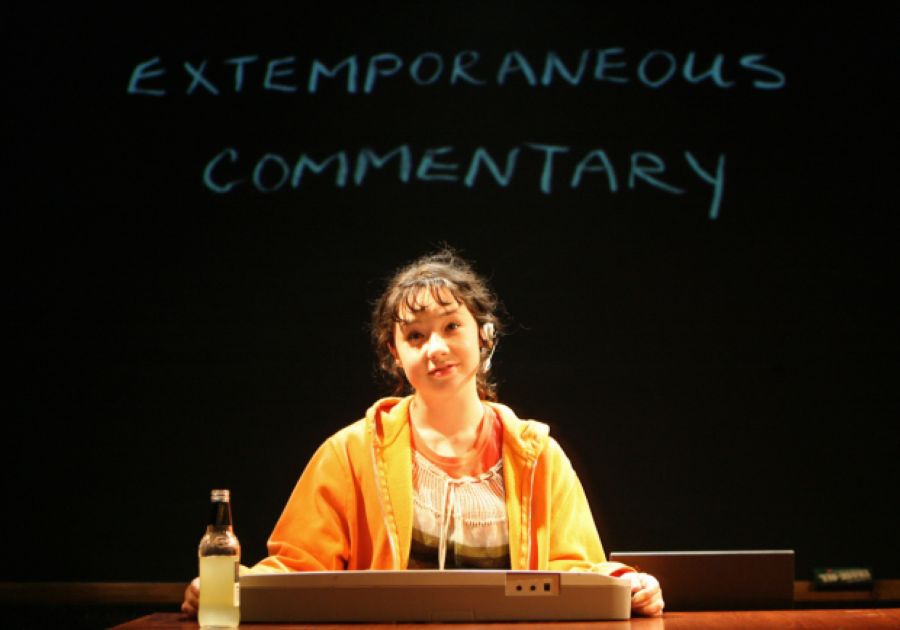
AMERICAN THEATRE: During my time at the MFA program that brought me to this country, professors told us to leave school with one or two “calling card” scripts that we would be confident sending out. For me, that was my play Machine Learning: It got me into The Lark’s 2018 Playwrights Week, then into festivals in New Jersey, Vermont, Texas, and San Diego, and it even won me a Princess Grace Award in 2022. But I only really saw it come to life with actors, design, and paying audiences seven years into its life, when it premiered at Central Square Theatre in Cambridge, Massachusetts, in January 2024.


3 comments:
I thought this article was incredibly interesting, though I also found it to be a little bit disheartening. It was really intriguing to hear about all the spaces that used to be open to new artists and playwrights, and to hear about the works that used to be produced in them. A lot of the new plays sounded both very experimental and very personal; Red Speedo looked atypical, both in subject matter and presentation, while plays like Ironbound and Boats on a River appeared to be much more serious and/or personal. In general, it seems like the drearer, darker plays tended to find themselves in the artist spaces from the article - this makes sense, especially given the fact that a lot of commercially successful shows are lighter or funnier. Either way, I think it’s really important that these new plays, as well as their writers, are given spaces to create and grow; theatre is a fundamental reflection of what it means to be human, and all “classics” started out as a "new work" somewhere.
I agree with this article so much. Especially as a student, seeing masses of teenagers give up on plays in English class because they are not easy to visualize or understand. We grow up being taught the so-called classics, aka Shakespeare, but you truly cannot understand it if you do not have a deep understanding and experience with Elizabethan english. But if you have the chance to see any production of a Shakespeare play, or even read a scene out loud with a couple of friends, it becomes so much easier to process. When a playwright comes up with an idea, it is often hard for a possible producer or reader to completely visualize what is happening, this can delay the workshopping process and be possibly detrimental to the success of a playwright. This is why institutions like the underground at the roundabout theater are so incredibly important. It gives young up and coming playwrights the chance to actually see what works and what they need to change in their work.
Reading this article made me both worried and excited for the future of new theatrical works. I was slightly misled by the title, in that I thought I was going to learn about the pros and cons of having a table read vs. staged reading vs. full production of new plays. However I was pleasantly surprised by the in-depth dive into the history of programs designed to push forward new plays and playwrights. Producing new plays can be an extremely risky venture. It is already questionable whether or not plays with widely recognizable names will be profitable or not, so putting on a show without the advantage of a name to bring in an audience is scary. Which is why I was so excited to hear about programs that were dedicated specifically for new productions. It was inspiring to hear about these people committed to uplifting the next generation of theatre-makers. However, I was readily disappointed to find out that most of these programs no longer exist.
Post a Comment