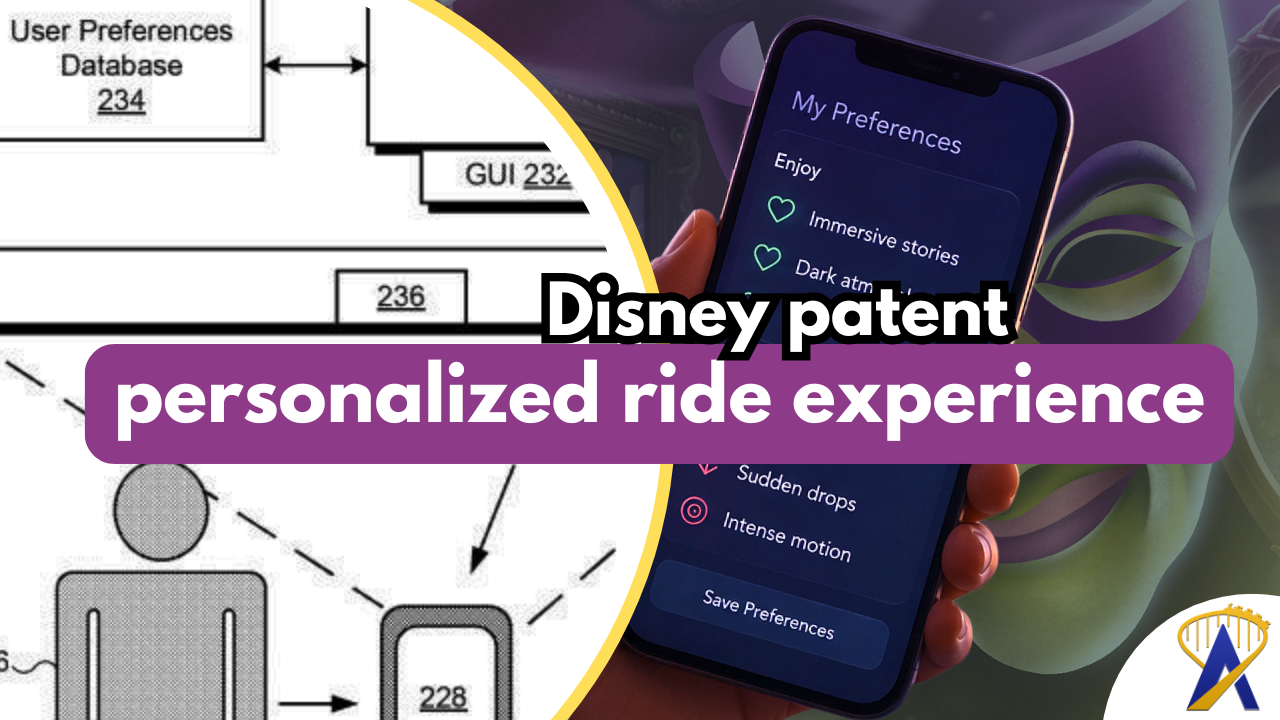
Attractions Magazine: A newly published patent application from Disney Enterprises describes a system that could learn what guests enjoy — or find uncomfortable — and use those preferences to recommend attractions, provide real-time warnings and, on compatible experiences, adjust elements including sound, lighting and motion. Disney even envisions giving thrill-seekers more of certain effects, such as increased G-forces on an individual simulator, within predetermined safety limits.


6 comments:
Test
I find this concept, that of rides having the capacity to adjust based on data about a rider, both interesting in regards to accessibility, and concerning in regards to guest satisfaction. I believe this technology has the potential to make rides that were previously inaccessible to some riders, due to overwhelming sounds and lights, or extremely fast turns and drops, accessible. This opens doors for those guests to share experiences with their friends or family, and have more options for activities within the theme parks they visit, possibly leading to increased return customers due to a more enjoyable experience. On the flip side, most theme park rides are not single rider experiences, and what one rider experiences is often the same as what any other. This leads me to worry that a guest who is not seeking a tamed down version of a ride might be disappointed when they are unexpectedly given a more mild version of the ride due to accommodating another guest. If there was a way to make the experience vary more person to person, or if more rides were designed as a single rider experience than I believe this technology would fit in excellently and would allow for greater overall rider satisfaction wherever it was implemented.
First, I will agree with Luke, and say that rides being able to warn or even remove or reduce the intensity of scary or triggering factors is a good thing for many people to be able to safely and happily experience the attraction. At the same time, on a slightly philosophical note, I do think, particularly when it comes to adjusting things, it is a bit of a loss for humanity---part of the point of a roller coaster is to be scary, and if you have exact warnings or even a decrease in the g-forces of the ride, that somewhat defeats the point of a adrenalin-inducing ride. From a more technical standpoint, I think this is an exciting developments for ride designers when they are able to create varying designs for different riders based on their preferences. I think this will allow designers to really push their designs to the next level, while still leaving options for those who want a more subdued experience. However, in the end, I do fear this may become a novelty feature where designers are forced to put in more work and complexity while few actually utilize it.
I find this to be a very interesting concept. I really like the fact that having something like this means that someone interested in an experience wouldn't have to miss out due to an ambiguous warning about one particular moment. Not only that, but that it would perhaps be possible to alter the experience slightly so that one could enjoy their overall experience a little more is very inspiring. Additionally, as someone who enjoys thrill rides, being able to have the option to increase the g-forces or speed on a ride is an idea that excites me. Disney is known more for it's thematic experiences than for adrenaline-pumping attractions, mostly because they are trying to create experiences that are fun for families as a whole, but I would be very interested in seeing that gap bridged a little more by options like this. While I understand some people’s point of view that it isn’t worth toning experiences down for one person who is slightly uncomfortable with an element, I think that there are a lot of assumptions being made in how this technology would be used, and that we should wait and see before making any judgements.
This is a fascinating concept. It definitely has its limitations, but has the potential to make attractions that much more accessible. I’m reminded of one time when my family went to Disney land and as soon as we got into the park they wanted to go to space mountain. I was a little more than trepidatious and did not want to go on the ride. Alas, my mom was like “just do it, it'll be fun”, so I did. I had a great time. My mom, not so much. What can I say… Karma? She was horribly motion sick for the rest of the day. Another example is Indiana Jones: my brother and I love it! My parent’s backs hate it. With all this said there isn’t much a ride preference could change? And even if it could it would affect the ride for the whole car or mess up the flow for other cars. How often is there a single-rider ride such that the intensity could be dialed for just that one person?
Post a Comment