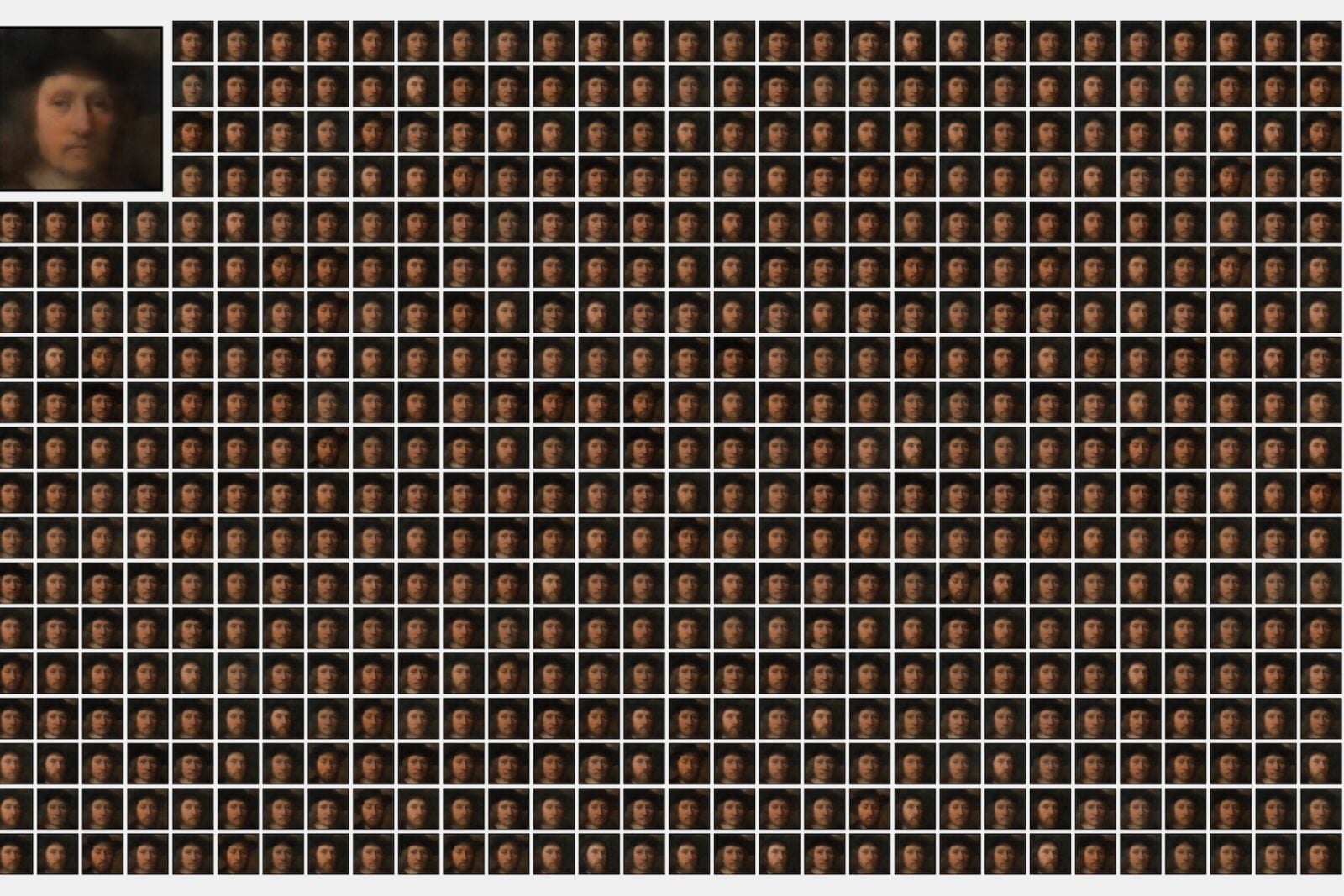
gizmodo.com: One way to figure out how something works is to take it apart one piece at a time, and see how it changes along the way. That was the approach taken by two AI researchers who wanted to understand how image-generating AI models arrive at their final outputs: Do they reference a particular image, the way a human portrait artist might look at a human subject while painting? Or is there some other process at play?


4 comments:
To be perfectly honest, I was frankly surprised that this was ever something people were considering you could do with AI? It's a very human way of thinking about a very inhuman product -- I don't know how diffusion models work beyond the very basics (though there are many lovely people on this campus that could help you or me with puzzling it out), but they don't plagiarize like people do. The concept that an artist could look at an AI generated image and say, with any degree of certainty, that their image was a part of the training data set and then take that hunch to court, has always felt incredibly unrealistic.
Now, what IS a little worrying to me is this quote: "you can remove [something] from the training data and the output will remain the same." As more people start to grab the handlebars of AI as a massive, uncontrollable misinformation machine that it is -- see Dajeon Love for a recent example -- attribution decay feels like a insurmountable issue. Feels bad, folks!
This article is quite interesting as it brings up the idea of cognitive influencing. Art will always be recreated over and over again and as humans we are always influenced by the things and other art around us but we have the ability to recognize the impact other work is having on our output. We then have the ability to alter our creations to be uniquely ours even if it has been completely inspired by others' work. But how the article addresses the idea of using artists' work to create output is slightly misplaced. Even if you can't directly trace the influence of an AIs output back to a singular painting you can still see that the AI is being trained on artists' work. Artists maintain copyright of their work to ensure that they know what it is being used for and to guarantee they can support themselves through their work. Having AI be trained off of creator owned art violates copyright and the artist should be compensated and be allowed to take their art out of an AI’s training database. In my opinion AI companies should release what exactly their models are being trained on so people have the opportunity to see where their work is truly being used to create AI art.
This article sheds even more light on something I was discussing in one of my other comments on an AI related article. It’s incredibly difficult to prove how much one artists work influences the product of these models, and the weight that one artist has on the product relates to the idea of AI being the great “democratizer” - no single artist influences the product more than another, but this is another key difference between human artists and generative AI - humans have bias, and we are particularly inspired by other artists, and in many cases, we can trace the roots of an artists style to those around them and their influences can be at least in some part, be perceived even if mostly through speculation.
And the article even addresses how the inability to trace the influence of an individual on an LLM makes it even more difficult for artists with claims of their work being used by these models even harder to fight for in courts, which certainly doesn’t give the LLM or their libraries the rights to use copyrighted works, but makes the over struggle even more difficult.
The article's perspective on the human aspect of diffusion was really interesting however, as the great Susan Tsu once said, only a person can have a truly original thought. There is no art without humanity, and also there is no AI art without humans who are lazy enough not to attempt art on their own. I feel that art, fundamentally, in particular, can often be more about the effort taken to portray an emotion or a story than the actual beauty of the content; this is especially true of modern art whose entire purpose is to make you think. I firmly belive on Ai cannot recreate a painting such as "This Is Not a Pipe" without specific prompting, however theres art out there that no one knows exists because no one has invented a medium for it, an AI cannot invent a new medium or a new style of art beause it only recycles existing forms of it leading to a technically human like creation only becuase it uses the humans of the pasts data.
Post a Comment