ProSoundWeb: Sennheiser has announced it supports a recent Federal Communication Commission (FCC) regulation change that now permits operation of Wireless Multichannel Audio Systems (WMAS) in the United States.
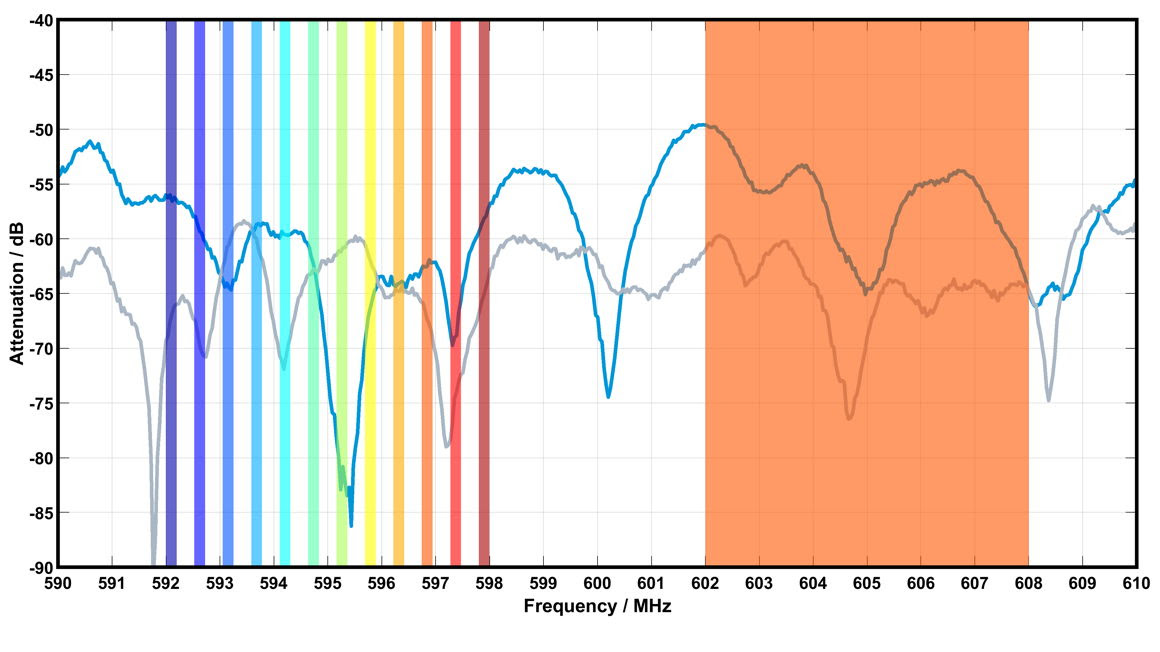
In comparison to conventional wireless microphone systems, WMAS offers higher spectral efficiency – the ability to transmit more audio channels within a limited block of radio frequency (RF) spectrum – as well as greater interference protection to other wireless services that share the same spectrum.


1 comment:
I hadn’t heard of WMAS before! It seems like WMAS (Wireless Multichannel Audio Systems) uses a singular broad radio channel to transmit multiple audio channels. The other, contrasting approach to transmitting multiple audio channels with a limited amount of space is narrowband transmission, where each audio channel is given a small frequency range with channel spacing (space in the electromagnetic spectrum with no frequency allocation, also called a guard band). By eliminating channel spacing/guard bands, the WMAS is able to fit more into a small bandwidth. Hearing this, I immediately asked how they could do this. Guard bands eliminate interference. Without them, how is the signal still distinguishable? The article references “intermodulation products,” radio frequencies which are a type of interference. It seems that WMAS somehow modulates these to a certain band surrounding the channels (not on top of the audio channels we want) which allows them to control and eliminate the interference. It is insane technology, and I am glad the US FCC was able to allow it.
Post a Comment