Playbill: Directing a new musical on Broadway is not an easy task. Even leaving artistry aside, one has to wrangle hundreds of people and show elements, from cast to backstage crew to large and often mechanical sets and costumes and props—all of which need to be unified under a distinct and engaging directorial vision.


5 comments:
Wow, when the article describes the scale of the opening ceremony of the olympics to be “truly mind-meltingly huge” they really are not joking. With a cast of over 1,300 performers, 80,000 live viewers, and millions of people watching the ceremony from around the world I could only imagine the sheer amount of pressure Sammi Cannold would feel directing and managing that size of an event. I think the article’s reference to the overlaps of live theater spaces such as Broadway and events such as the Olympics and other large scale events was super interesting. It reminds me of events like the Super Bowl halftime show, where most viewers might not even consider the amount of management and skills found in theater spaces are actually necessary to execute a performance like that. I also thought it was interesting to hear about how pre-visualization technology was used because they were unable to always do full rehearsals and run-throughs in the space.
The Olympics is one of the only events that is watched by the entire world and getting the opportunity to manage even a small section of it is a once in a lifetime opportunity. I found it interesting to learn about all the parallels and differences between live theater and ceremonies. I never really put ceremonies in their own category within the entertainment industry but it's clearly a class of its own. The precision and level of detail that needs to be accounted for is unprecedented due to the event being both live and televised to the entire world. A small detail that caught my eye in the article was the accounting of wind speed. On top of making sure that the people are in the right place and every mechanical element is precisely programmed the weather can still decide to throw off every part of the plan. The Olympics require a level of precision that is unheard of and needed to put on a show at the scale required.
I think this shows quite well how transferable the skills you learn in the theatre industry are to other industries. Along with that, it trains you for positions any other college degree would not give you the correct training for, sure you can argue a business major can stage manage and help direct a massive olympic opening ceremony, but they would only focus on the money aspect and more of the production management side, but when you get a stage manager who has worked on intense shows that went through the ground work to being on broadway timeline, they know the all around aspects of the task and how to properly do it. Broadway and all types of theatre I believes prepares you to do what you learn in your training, either being stage management or even technical direction, and apply the skills you learned them to any field as you’re trained to handle one of the most intense situations with little to no time.
I am always impressed by directors of live events on tv. There are so many things to think about and so many cameras to remember. When Sammi Connold talked about what people would be surprised by, how mathematical the process is, made me really intrigued by the organizational skills and tracking that the team must have. I would love to see one of those spreadsheets, just to see if I could understand it. I appreciate how she addressed the question that she gets a lot when she works outside of theater, the “are you leaving theater” question. To be able to work on multiple disciplines and learn transferable skills from all of them is a dream. The arts world is full of so many different ways to be creative and you can learn so much about yourself and your craft by branching out to new disciplines. I hope to see more from her in the future.
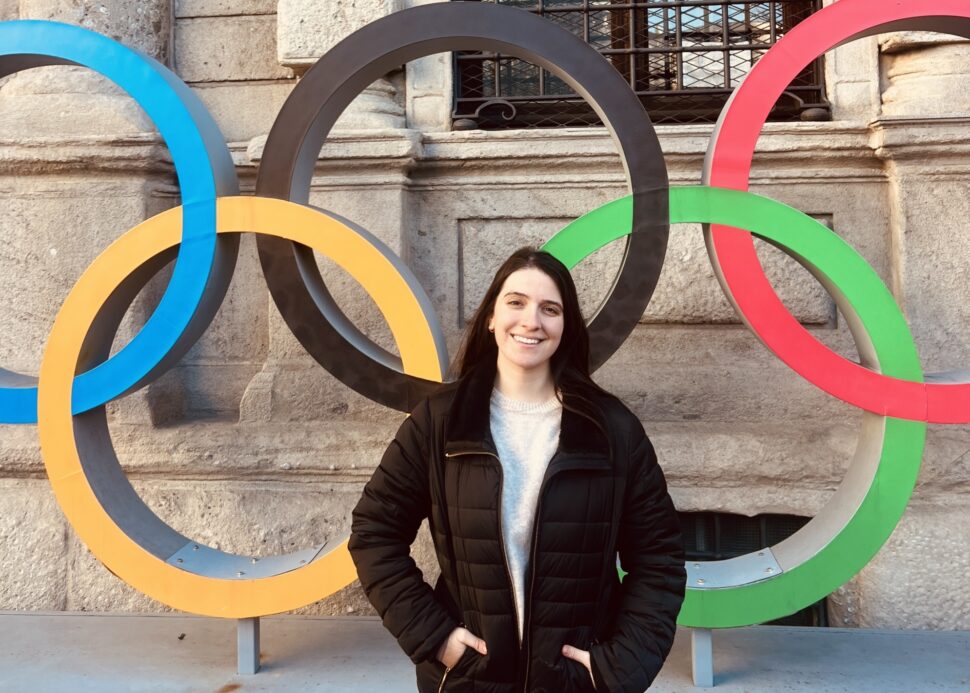
That’s quite a feat- to jump from directing on a theatrical stage, and admittedly a large scale one, being Broadway, to an internationally broadcasted one-night-only event. How to Dance in Ohio is such an underrated musical, and I never realized Sammi Cannold directed it. It makes sense that the directorial team is comprised of many individuals, including Cannold’s role of creative coordinator. To join a show at this scale only four months before show day is daunting, and I’m wondering about her mindset going into such a multifaceted project. I remember the five olympic rings sequence being awesome. I took the opportunity to do a little searching into Skywalker and they seem quite similar to TAIT in their live rigging solutions, turn key systems, and such. It seems to be pretty significant shift from, as Cannold states, creating and executing to solely executing. It’s amazing that she really did just jump right into it head-first, and that’s something I admire.
Post a Comment