www.uploadvr.com: On June 6, 1944, the Allied Forces launched the largest amphibious assault in history, turning the tide on the beaches of Normandy, eventually winning the Second World War against the Axis powers. This defining moment came to be known as D-Day. Countless accounts of it have been recorded since, making it a key point in history where democracy prevailed.


5 comments:
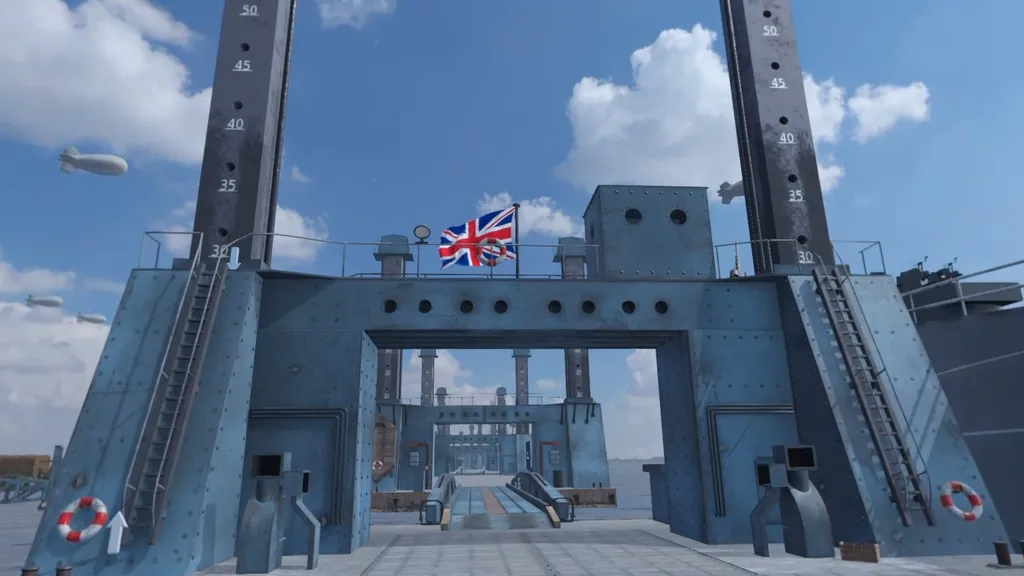
At first when I clicked on this article I wasn't sure if this wasn't just going to be talking about another VR game, or if it is a legitimate museum produced by a government agency. The concept that this article is describing seems really interesting, and if my computer is able to run this experience then I might view it for myself. Specifically the part of this article that really caught my attention is the fact that they modeled real artifacts that relate to D-Day in the museum experience. I look forward to the day where VR is able to accurately re-create historical events for people to view and experience for themselves. I just hope that this will not lead to historical events being altered, and people developing inaccurate beliefs about said historical events. I also wonder if government and or educational agencies start to regularly use VR as a educational or knowledge developing tool. In a way where it can be regulated and viewed as a legitimate option for learning, and not just a game.
I think this is a really surprising and intriguing way to keep people informed about our world’s history. Often in educational settings, technically advanced methods are neglected. This isn’t a strictly educational setting, nor is it super exceptional design, but I think it’s very valuable to bridge the gaps. When entertainment keeps developing, finding ways to keep young generations engaged is very important. I’ll always agree with the sentiment that “those who do not remember the past are doomed to repeat it,” but do I feel that D-Day specifically isn’t very focused on the atrocities committed in WWII. I think that in this current hostile climate, it is imperative that we keep Americans educated on the danger of alienating specific groups of people. The way the current administration treats immigrants makes me wonder if they’ve forgotten our own history. Poor treatment of immigrants dates back to the earliest parts of our nation, but does everybody forget that white people emigrated too? Finding more empathy for everybody is a must right now, and I hope people stay strong in their effort to keep educating.
I wasn’t sure what to expect when I first read about a D Day VR Museum. I honestly assumed it might feel more like a game than an educational experience. However, after reading the article, I was surprised by how seriously it seems to approach history. The use of real artifacts, detailed narration, and multiple ways to explore the event makes it feel closer to a museum than simple entertainment. I think the interactive elements are what make this seem especially educational. Being able to virtually hold objects or experience locations connected to D Day seems like it could create a stronger emotional connection than reading or watching a documentary alone. That said, I do share some concerns about accuracy and interpretation. VR is incredibly immersive, which makes it even more important that these experiences stay grounded in careful research. Overall, though, this feels like a very fun way to engage people with history.
To be honest, my approach towards design and production in the past was quite short-sighted. In my mind, the only possibilities were professional theatre (Broadway, West End, etc.) because why would you ever wish for anything else. I knew that there were equally exciting job opportunities in live television, film, and other art mediums, but it was not until the talk from the Hudson Scenic representative that I realized how theatrical design and production processes could be applied so nichely and out of the scope of traditional theatre, though not in a bad way. Take, for example, this D-Day VR Museum. Despite this not being theatre in any sense, one can still use their knowledge about graphics and programming (both technical elements necessary for theatre) and apply it to this virtual reality. At the end of the day, this is still a form of art and it is doing what art should do: making a statement and connecting with the audience emotionally.
I feel like this is a really good and interesting way of using VR. VR provides a super immersive experience and knowing that items were 3D scanned into this virtual museum, as well as your ability to interact with them is I think fascinating and provides more insight and connection for the person who might be experiencing it. I do think that of course, certain elements are still missing like texture or smell, but I’m sure VR will one day get to the point where it can recreate that too. Along with that, some people while using VR do experience Phantom Touch, myself included, so I do know that to a certain extent, the mind does try and fill in the gaps. Overall though, I think that as long is this technology is used right, VR might be a great educational tool in terms of history. Having an up close and personal interactive experience with historical events could foster a deeper connection and understanding.
Post a Comment