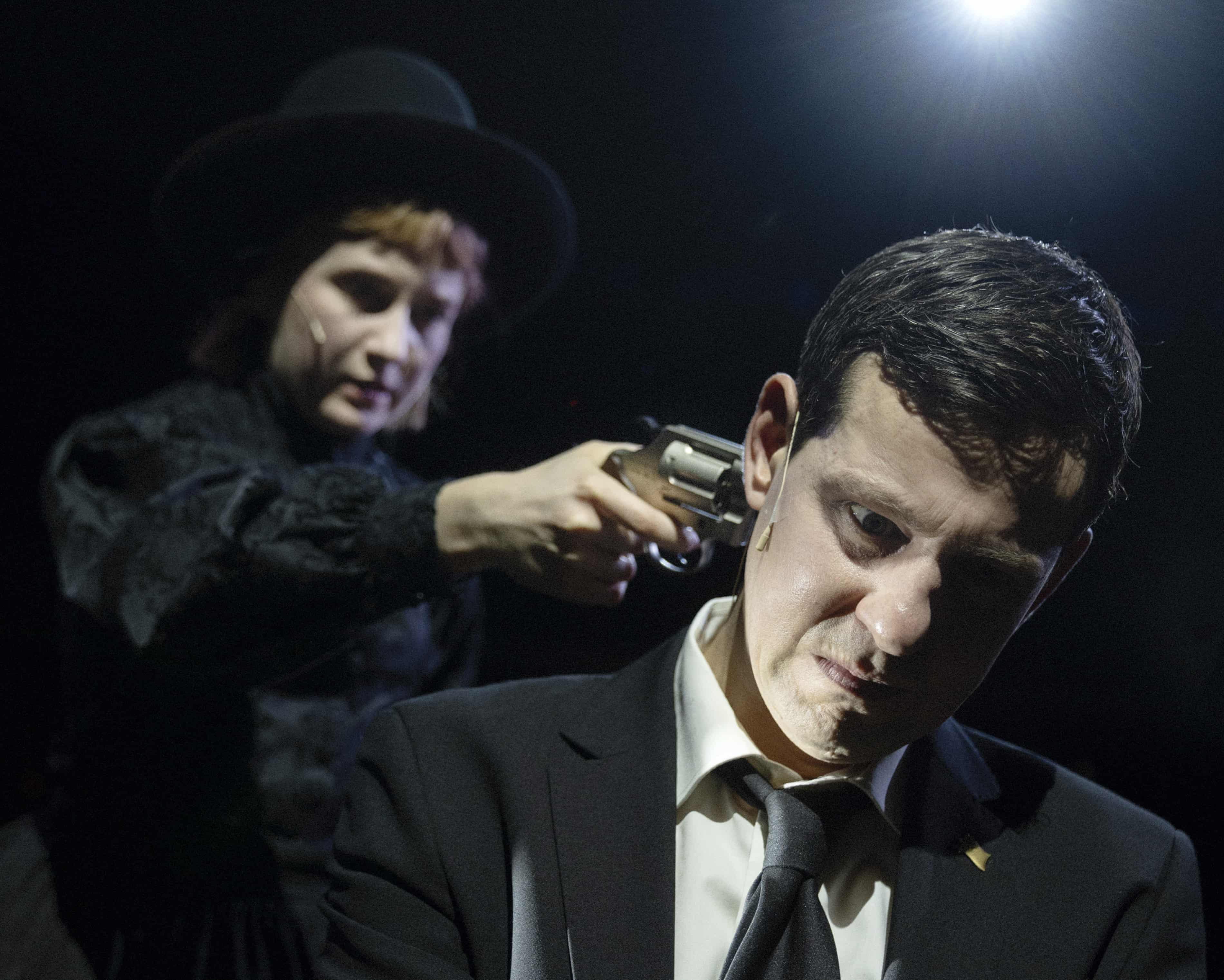
Germany | The Guardian: An actor at a theatre in Germany was at the weekend shouted down, pelted with fruit and subjected to an attempted stage invasion as he delivered a final monologue in character as a far-right activist.
The violent scenes came on Saturday during the German premiere of the Portuguese playwright Tiago Rodrigues’s work Catarina, or the Beauty of Killing Fascists in Bochum, North Rhine-Westphalia.


4 comments:
In one of my college classes, I was prompted to discuss Enemy of the People and various versions that had been performed over the years. While the play itself seems to have a pretty straight forward message about mob mentality and media influence. There were various versions of the play that managed to construe this play. The most prevalent example of this, was the version produced by Nazi Germany. You would be shocked by just how effective this sort of propaganda can be, and it wasn't the only example of a show or movie that was adopted by the Nazis for propaganda reasons during the second World War. This behavior continues to reflect the power that messages in art not only have but also continue to have. It's really important that hate is not the center for what art is about. But to continue to have it push out messages of continue peace, and support.
Art is created with the intention of evoking emotion, whether that be good or bad. For this piece, the intention was to invoke a strong, negative emotion; especially given the content that was being discussed. While the strong audience reaction means that the goal was achieved, I think people need to understand that art is a statement, not directly a harmful thing. It is frustrating and concerning that someone would think it okay to attack an actor doing their work. When I did theatre in middle school and especially in high school, there was always a select group of parents that were upset that the shows we did were “too political” and asked “why couldn’t we just do a fun show for the kids”. In reality, all art is political because all art is meant to make a statement. Take Seussical for example. Definitely a very child-friendly show, and one that is performed quite frequently, but still sends a clear message about environmentalism and other things. I think that there should be more focus on how we as an audience respond to the question that the art provokes rather than shooting the messenger.
I am very sad for this actor who I can only imagine is having a very hard time after a scary experience. Something I readily bring up is how often the media we consume is meant to pacify us. We watch something where we agree with the message whether it is Star Wars or Wall-E, we come out of the theater with a sense of righteousness that the wrongs have been righted and we are pacified from actually pursuing the righting of wrongs that are happening in real life. What I would not have expected is that people would be so angry and impassioned by something as to take that emotion out on an actor in a theater. I think it is not shocking that people are upset and violently expressing that but it is disheartening that people are trying to assault actors, when their vitriol is clearly not aimed at someone just reciting lines that they very likely don’t believe but they still become violent at that person.
Firstly, I feel the need to say that violence against an actor in a performance setting should be protected against this kind of violent behavior, regardless of the topic of the show, the character that they play, or the audience beliefs. The intent of the director was to scare the audience, and I believe that they were very successful in that mission. Such actions are never unprovoked by fear rotting into anger. Anti-facist theatre is vital, now more than I would hope, and it is just as vital to protect the individuals breathing life into it. The last line ‘the future belongs to us’ is an interesting one in that it is meant to simultaneously alienate the audience while encouraging them to think in a manner opposite so that it applies to them. While I hadn’t heard of ‘the Beauty of Killing Fascists’ before, I’m intrigued by the plot that the article alludes to. Politics and morals certainly combine to make good drama.
Post a Comment