Pittsburgh Arts, Regional Theatre, New Work, Producing, Copyright, Labor Unions,
New Products, Coping Skills, J-O-Bs...
Theatre industry news, University & School of Drama Announcements, plus occasional course support for
Carnegie Mellon School of Drama Faculty, Staff, Students, and Alumni.
CMU School of Drama
Tuesday, November 11, 2025
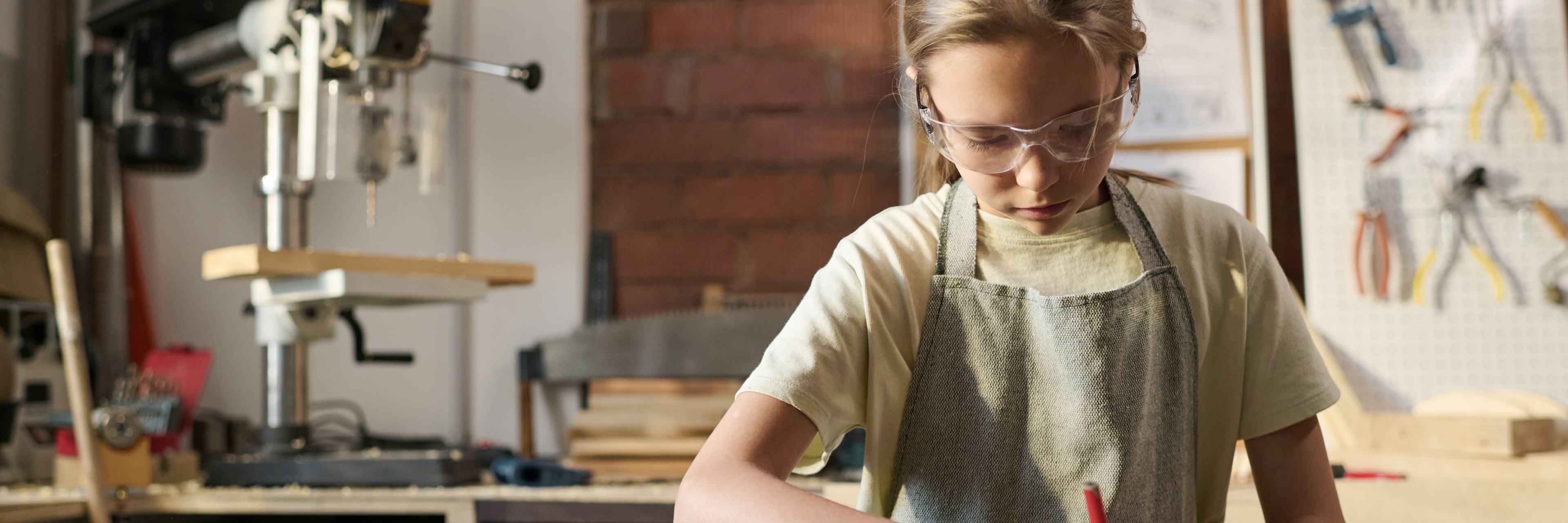
Design and technology’s practical and creative skills should see it revived in the school curriculum
theconversation.com: Studying design and technology (D&T) at school gives children the opportunity to get up from behind a desk and learn practical skills. It’s the only subject in the national curriculum in which children can develop and create tangible solutions to real problems.
9 comments:
Sid J
said...
I have always believed that design and technology education belongs in schools and is severely under resourced. I think a big problem in the way we teach critical thinking in schools is that we teach it too scientifically and too methodically, placing too much emphasis on finding out what things mean instead of teaching how to make deliberate choices to craft meaning. In my high school, a lot of my friends elected to take more purely academic courses over art courses, simply because they thought it would get them in to a more selective university or look better on their report card. I think if colleges as well as the general public took design courses more seriously as a foundational part of critical thinking and a valuable asset for the professional world, more students would take arts, design, and technology courses which could lead to a more creative, innovative workforce.
I'm in total support of this concept! But really it's not just theatre technology and design that develops these skills. I think there need to be a greater push for more CTE based programs around the country. They provide so much more in terms of real world experience than anything you could be learning in a textbook. I know that Kentucky is one of those states that has been providing grant money to schools for CTE programs for a long time, and there was a huge benefit to it, since much of Kentucky is not as wealthy as many other states pursuing an education there can be extremely difficult, and so learning trade skills for industry that don't necessarily require education is extremely beneficial for our residents and I think it would be great thing to spread beyond schools than those in Kentucky. They should also expand what programs are considered CTE, I think that theatre could be a major one, especially being a live tech for shows is definitely a CTE.
This article makes such a good argument for why the arts should continue to be not just funded for schools, but a priority in the budget. I was talking about this with my marching band director last year. Every year, the music program gets more and more budget cuts thrown their way, with classes having to move to closets and instruments that have been broken for years going unreplaced. This unfair view towards the arts from the school district is also seen in the time and energy allocated to the arts. I remember when marching band practices would have to move off of the field in the middle of rehearsal because sports teams had practices that weren’t scheduled with management. Despite this, sports would always get priority. THere were weeks where we would not be able to practice on turf at all, because administration did not see our practice time as valuable. With the benefits of all arts, especially ones where we learn community and discipline, school boards need to consider what students they are pushing to the side.
I agree with everything this article is saying. I spent a lot of time in high school in design and technology class and they were always my favorite. I am someone who can typically crank out homework assignments with very little effort or thought. I can also get away with completing an assignment or getting through an entire class with a good grade without learning a single thing. However, with technical classes I cannot do that. And I do not necessarily mean that they are more difficult but because I am doing things with my hands my brain holds onto it better and I learn a lot more. I also find myself more engaged because I am not just prepping to spit out information I memorized and then move on. I think more funding should be given to this area of education. I think good change would come with putting more effort and resources into these classes.
I mean I feel like it is a given that making kids practice thinking critically and problem solving will actually help them think critically and problem solve. I know this article focused on education in the United Kingdoms but I think it applies just as much to the United States of America. I think a lot of blame for why our schools have lost these practical courses can be pinned on the 2001 No Child Left Behind Act. There really is not a good way to easily and cheaply test these critical thinking and problem solving skills and our education system continues to move farther and farther toward a complete reliance on standardized testing as the only metric for success. This becomes more and more concerning as we move into the era of generative artificial intelligence. Now more than ever we need to place emphasis on innovation rather than production. I do acknowledge that this is especially difficult when working within the confines of an education system built not to produce thinkers but workers.
This article was really interesting. I am a huge fan of this idea. Oftentimes in school we only get to learn the methodology and the concepts of things, and we rarely are able to get hands-on experience with the topics. This is so important because there are so many more little things that you learn and understand from a tactile experience that you just can't teach from a textbook or lecture. At my high school we had a little of this in our curriculum, in the form of CTE classes. However they only offered a few, and they were not really pushed by the school as they were not a graduation requirement. As a result, not many took these classes. Additionally, these classes were only worth 4 grade points. This was a downside to many as even an A would likely lower your gpa. Overall, these types of classes are so important even for people who don't plan to go into these professions so they can develop an understanding and appreciation for these professions.
It would be really interesting to see the American numbers in comparison to these English ones for multiple reasons… I wish that American schools took design and technology more seriously, because I think it would help solve a lot of the problems that teachers AND students from this upcoming generation are facing. I see so many teachers complaining about how hard it is to keep children's attention, commitment, and productivity alive and it's simply because they spend too much time behind screens. A lot of kids were raised behind screens as a form of neglect, and then go to school to do the same, which creates a difficult separation of home vs school. Tangible hands-on activities are so crucial for all kids, especially ones with learning disabilities (which if we are being honest the majority of generation alpha has). This is because you learn better by doing, not by sitting and listening. Unfortunately, design and technology are grouped into the arts which they should’nt be. If I was a teacher trying to teach younger students, I would never give them a power point presentation or a paper. I would want them to create projects using forms of design and technology to create a physical product which could be applied to any subjects. Our main problem is that we need to have kids making and doing instead of sitting and listening.
I really agree with the point this article makes about how important D&T is, not just as a subject but as a way of thinking. Growing up, I really didn’t like how it kind of felt like practical or creative classes were treated as “extra” compared to the academic ones, even though they actually teach skills you can’t get from a textbook. What stood out to me is how D&T helps students learn by making things, such as problem-solving, experimenting, paying attention to materials, which are all skills that matter in the real world. It’s frustrating that the decline of D&T isn’t because students don’t care, but because the system pushes them toward subjects that look better on paper. The lack of funding and teachers makes the problem even worse. With industries needing creative and tech-skilled workers more than ever, it feels like we’re moving in the wrong direction. Rebuilding D&T in schools isn’t nostalgic, I think it’s something necessary for the future.
I really like the arguments made in favor for the arts in this article. I fully agree that design and technology skills should be taught in schools. From my own personal experience I was in a school that had massively defunded the arts and I had almost no budget. I had learned so much from just teaching myself the technical aspects of a theatre and I have learned many practical skills from it as well. It is unfortunate that students after me will not get to experience much theatre at my high school because it can take you places, such as myself being here at CMU. I always felt like I was so much more capable than many of the other students in my class because of the skills I had picked up. There were many times where I was called down to the office to go fix something for a presentation or speaker in the performance hall and I was the only one ever called down for these things. Design & production has also opened up new doors for me job wise as well. I feel as though I am a good example as to why the arts need to be funded and why they are so important.


9 comments:
I have always believed that design and technology education belongs in schools and is severely under resourced. I think a big problem in the way we teach critical thinking in schools is that we teach it too scientifically and too methodically, placing too much emphasis on finding out what things mean instead of teaching how to make deliberate choices to craft meaning. In my high school, a lot of my friends elected to take more purely academic courses over art courses, simply because they thought it would get them in to a more selective university or look better on their report card. I think if colleges as well as the general public took design courses more seriously as a foundational part of critical thinking and a valuable asset for the professional world, more students would take arts, design, and technology courses which could lead to a more creative, innovative workforce.
I'm in total support of this concept! But really it's not just theatre technology and design that develops these skills. I think there need to be a greater push for more CTE based programs around the country. They provide so much more in terms of real world experience than anything you could be learning in a textbook. I know that Kentucky is one of those states that has been providing grant money to schools for CTE programs for a long time, and there was a huge benefit to it, since much of Kentucky is not as wealthy as many other states pursuing an education there can be extremely difficult, and so learning trade skills for industry that don't necessarily require education is extremely beneficial for our residents and I think it would be great thing to spread beyond schools than those in Kentucky. They should also expand what programs are considered CTE, I think that theatre could be a major one, especially being a live tech for shows is definitely a CTE.
This article makes such a good argument for why the arts should continue to be not just funded for schools, but a priority in the budget. I was talking about this with my marching band director last year. Every year, the music program gets more and more budget cuts thrown their way, with classes having to move to closets and instruments that have been broken for years going unreplaced. This unfair view towards the arts from the school district is also seen in the time and energy allocated to the arts. I remember when marching band practices would have to move off of the field in the middle of rehearsal because sports teams had practices that weren’t scheduled with management. Despite this, sports would always get priority. THere were weeks where we would not be able to practice on turf at all, because administration did not see our practice time as valuable. With the benefits of all arts, especially ones where we learn community and discipline, school boards need to consider what students they are pushing to the side.
I agree with everything this article is saying. I spent a lot of time in high school in design and technology class and they were always my favorite. I am someone who can typically crank out homework assignments with very little effort or thought. I can also get away with completing an assignment or getting through an entire class with a good grade without learning a single thing. However, with technical classes I cannot do that. And I do not necessarily mean that they are more difficult but because I am doing things with my hands my brain holds onto it better and I learn a lot more. I also find myself more engaged because I am not just prepping to spit out information I memorized and then move on. I think more funding should be given to this area of education. I think good change would come with putting more effort and resources into these classes.
I mean I feel like it is a given that making kids practice thinking critically and problem solving will actually help them think critically and problem solve. I know this article focused on education in the United Kingdoms but I think it applies just as much to the United States of America. I think a lot of blame for why our schools have lost these practical courses can be pinned on the 2001 No Child Left Behind Act. There really is not a good way to easily and cheaply test these critical thinking and problem solving skills and our education system continues to move farther and farther toward a complete reliance on standardized testing as the only metric for success. This becomes more and more concerning as we move into the era of generative artificial intelligence. Now more than ever we need to place emphasis on innovation rather than production. I do acknowledge that this is especially difficult when working within the confines of an education system built not to produce thinkers but workers.
This article was really interesting. I am a huge fan of this idea. Oftentimes in school we only get to learn the methodology and the concepts of things, and we rarely are able to get hands-on experience with the topics. This is so important because there are so many more little things that you learn and understand from a tactile experience that you just can't teach from a textbook or lecture. At my high school we had a little of this in our curriculum, in the form of CTE classes. However they only offered a few, and they were not really pushed by the school as they were not a graduation requirement. As a result, not many took these classes. Additionally, these classes were only worth 4 grade points. This was a downside to many as even an A would likely lower your gpa. Overall, these types of classes are so important even for people who don't plan to go into these professions so they can develop an understanding and appreciation for these professions.
It would be really interesting to see the American numbers in comparison to these English ones for multiple reasons… I wish that American schools took design and technology more seriously, because I think it would help solve a lot of the problems that teachers AND students from this upcoming generation are facing. I see so many teachers complaining about how hard it is to keep children's attention, commitment, and productivity alive and it's simply because they spend too much time behind screens. A lot of kids were raised behind screens as a form of neglect, and then go to school to do the same, which creates a difficult separation of home vs school. Tangible hands-on activities are so crucial for all kids, especially ones with learning disabilities (which if we are being honest the majority of generation alpha has). This is because you learn better by doing, not by sitting and listening. Unfortunately, design and technology are grouped into the arts which they should’nt be. If I was a teacher trying to teach younger students, I would never give them a power point presentation or a paper. I would want them to create projects using forms of design and technology to create a physical product which could be applied to any subjects. Our main problem is that we need to have kids making and doing instead of sitting and listening.
I really agree with the point this article makes about how important D&T is, not just as a subject but as a way of thinking. Growing up, I really didn’t like how it kind of felt like practical or creative classes were treated as “extra” compared to the academic ones, even though they actually teach skills you can’t get from a textbook. What stood out to me is how D&T helps students learn by making things, such as problem-solving, experimenting, paying attention to materials, which are all skills that matter in the real world. It’s frustrating that the decline of D&T isn’t because students don’t care, but because the system pushes them toward subjects that look better on paper. The lack of funding and teachers makes the problem even worse. With industries needing creative and tech-skilled workers more than ever, it feels like we’re moving in the wrong direction. Rebuilding D&T in schools isn’t nostalgic, I think it’s something necessary for the future.
I really like the arguments made in favor for the arts in this article. I fully agree that design and technology skills should be taught in schools. From my own personal experience I was in a school that had massively defunded the arts and I had almost no budget. I had learned so much from just teaching myself the technical aspects of a theatre and I have learned many practical skills from it as well. It is unfortunate that students after me will not get to experience much theatre at my high school because it can take you places, such as myself being here at CMU. I always felt like I was so much more capable than many of the other students in my class because of the skills I had picked up. There were many times where I was called down to the office to go fix something for a presentation or speaker in the performance hall and I was the only one ever called down for these things. Design & production has also opened up new doors for me job wise as well. I feel as though I am a good example as to why the arts need to be funded and why they are so important.
Post a Comment