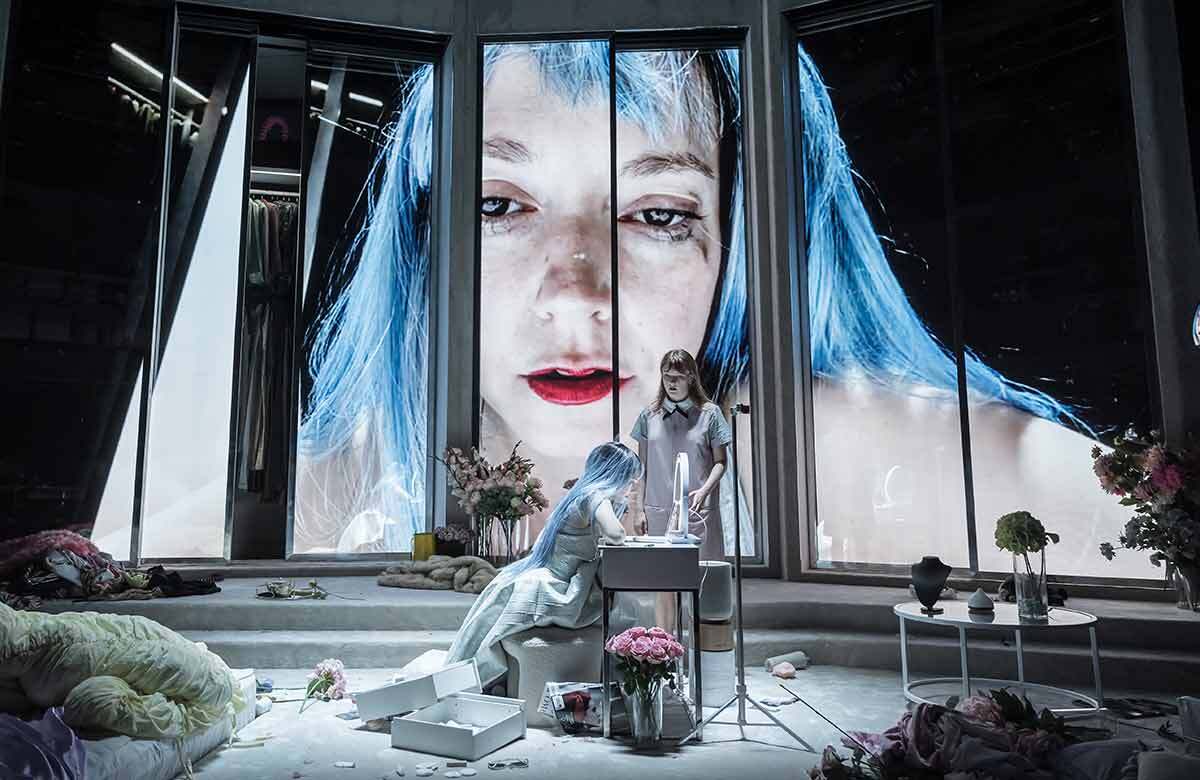
www.thestage.co.uk: Typically, we bridle against change: innovators attract criticism in their lifetime, only for ideas to become standard practice later. Edward Gordon Craig’s ideas to make stage performances a three-dimensional experience – replacing flat backdrops with moving, built designs and lighting – may have been anathema then, but are the origin story of modern theatre staging now.


2 comments:
Since I first started seeing video media design incorporated into productions I’ve been split on whether or not it actually fits into the show. It often feels that the projections are more about “look what we can do!” than actually serving a purpose in conveying the story. I think in large part that’s due to the discipline of VMD still being in its early stages. In my opinion designers are still focussed on trying to find what their tools can do rather than focussing on what the show needs from their tools. Much like how when electronic control of lighting became possible many shows vastly overdid it with lighting before slowly tuning it to the right levels for the show, I think that VMD will eventually find a balance. There will be shows that make more use of it than others but as a whole it will take less of the focus from the world of the show. As for what the article was saying about the phones, I think that except for a few shows where having actors be engrossed in their phones is plot important I hope that phones do not become a major part of modern theatre. I enjoy live events as an escape from the omnipresent digital world and as a one time experience shaped by being physically present in the same space as the action.
This is such a fascinating discussion, and it’s one I think this article handles fairly well given the nuance of modern creative technical decisions, specifically such as incorporating video and media design in productions. One of the fundamental rules (I’ve been told) of technical theatre is that it’s supposed to always be additive, but never distract in taking away immersion. While it’s not necessarily true that technical elements taking precedence over performers in moments of live theatre is a bad thing, there are easy ways to misuse that and get caught up in the “spectacle”, taking away instead of adding to a show. A show that’s “too flashy” or “too distracting” in its technical design can overwhelm or overstimulate an audience even if it wasn’t the intent. And even when the intent is to overwhelm or overstimulate the audience, there are careful moments of timing and ensuring the appropriateness of those elements.
Post a Comment