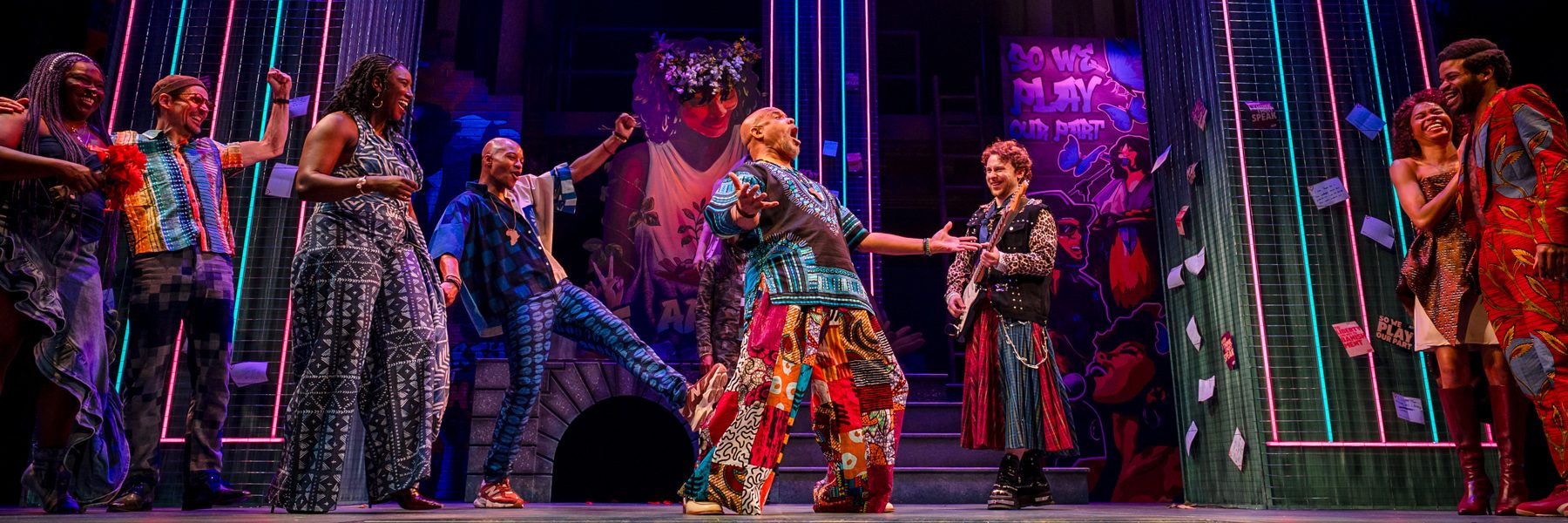
Folger Shakespeare Library: We all know that Shakespeare loved twins, but less talked about is how much he adored triplets. From the three weird sisters in Macbeth, to King Lear’s three daughters, to the rhetorical majesty of “Friends, Romans, countrymen,” Shakespeare understood well the power of three and deployed it, perhaps most unexpectedly, in his popular comedy As You Like It.


2 comments:
What an interesting way of looking at As You Like It. I have never thought of that before, and it makes me want to see the play with this perspective. The point about Rosalind’s triplet disguise (woman, boy actor, male character), leads to the idea mentioned of the play’s "queer space" that Shakespeare didn’t have the language for (which is ironic because he’s The Bard…but it was the 1500s so I guess we can let it go).
I wish I could communicate with the 16-year-old version of myself and talk about the three-location framework of this show (court, forest, and theater itself). This was something my English teacher was really interested in. He brought it up every class, and I was like “Dude let it go.” But now I sort of know what he was getting at; Rosalind gives the epilogue, stepping across all three spaces simultaneously. This meta thing of “theatre as a narrative location” is becoming more and more popular in modern theatre (I saw this concept also in the Chicago Reader article about ‘Out Here’ from this week.) and I have to wonder, what causes this popularity to fluctuate?
I found the idea of this article interesting, but that it lacks a “why.” The author describes different times in which Shakespeare employs the use of threes in his work; sometimes through triplets, thrice duplicated names, or through identity of both characters and places. While it is an interesting pattern to note, I think the article lacks justification on why the author believes this repetition is an intentional act on Shakespeare's part, or that there was some specific motive for the use of it. That is not to say I am arguing against the author’s point, simply that I wish it had been further expanded on. What is the significance of the number three? The author makes one note of the use of three being “powerful.” Fair enough. However, the argument could then be made for the number four, or five even. Take the line, “never, never, never, never, never,” from act 5, scene 3 of Shakespeare’s King Lear. I think three thus becomes a common repetition because it's as many as you can get without being too much. In essence it's the repetition with the most impact, two makes you pay attention, three tells you to really listen to something, but by four you start to zone out and the words lose meaning.
Post a Comment