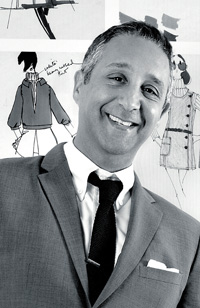
CFDA: Jeff Mahshie is well-versed in fashion and also in theater. Over the past few year, he’s created costumes for several New York City stage productions, including Scott Elliot’s Hurly Burly, Paul Weitz’s Show People and Privilege, and Scott Ellis’s The Little Dog Laughed.


2 comments:
I liked how straightforward this interview is about costume design. Mahshie makes it clear that clothes are not just decoration. They tell you who a character is and give instant hints about personality and status. It sounds obvious, but it is easy to forget how deliberate those choices are. I also thought it was smart that they moved the play’s setting to 1929 instead of sticking exactly to the original period. Accuracy is not always the point. Changing details can make the costumes work better on stage and fit modern bodies. The references to designers like Madame Grès and Chanel were interesting too. Even if people do not recognize the names, you can see how those influences shape the characters’ style, elegance, and attitude. Reading this made me realize how much thought goes into costumes in ways the audience might not even notice.
When working on historical pieces, doing research is very important. How you go about taking inspiration from the past though varies by designer. On this article designer Jeff Mahshie talks about how he created costumes for Fallen Angels on broadway, which is set in 1929. He says that he used big fashion innovations that were happening at the time like the bias cut, but also picked fashion inspiration for eah character. Using Madame Gres and channel as inspiration for two of his characters he creates looks from time time. At the end of the article he says that having this based in 1929 rather than 1925 pushes the costumes to be “more friendly to the modern body” than the flapper style. I’m not really sure what that means exactly but I’d be curious to find out more about it. I found this approach to costume design to be interesting and insightful.
Post a Comment