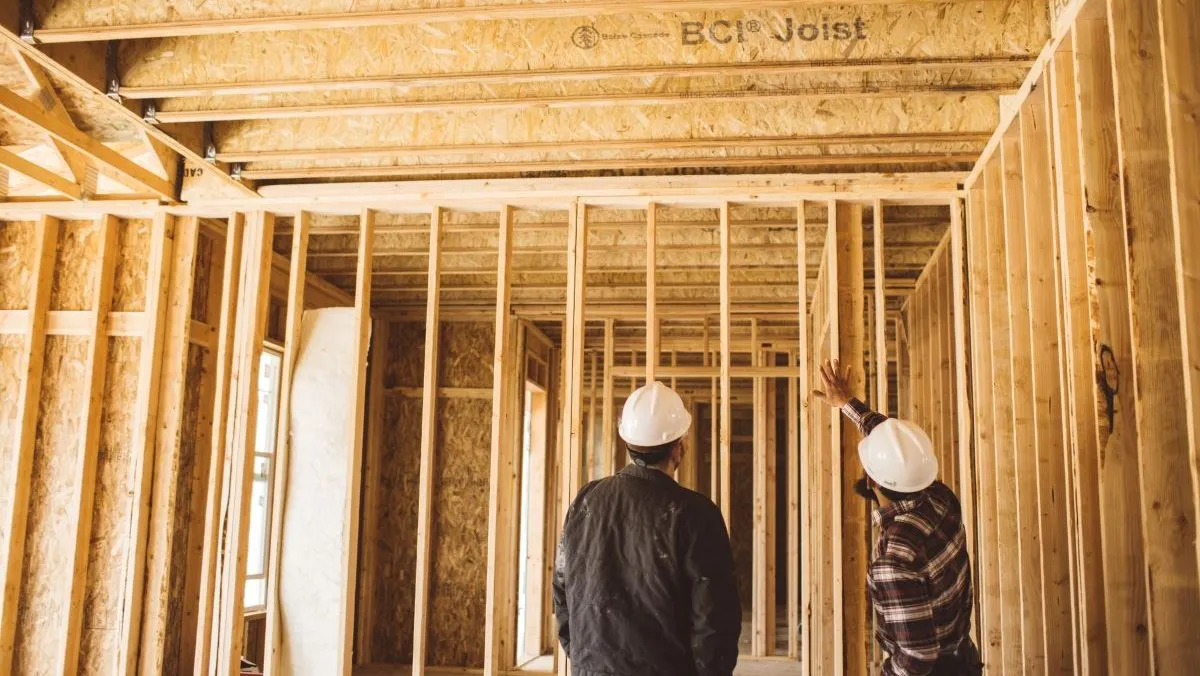
Builder Magazine: If you’re considering a new floor plan on your next project or looking to modify the layout you use, you have some structural decisions to make. That starts with a choice of a floor system: Should you go with dimensional lumber, open web trusses, or I-joists?


2 comments:
It would be interesting to do a budget comparison with I-joists versus studwalls. I think that shifting entirely to i-joists rather than 2x4 for standard platform construction would probably be overkill, and not save a ton of money or time, but because of their added hight and predictability, it might in some case be cheaper to use i-joists to leg up a platform, as the only labor you would really need would be to cut them to size, and no one would have to worry about extremely twisted or knotted up wood that could slow down construction time. Though, it seems the main reason this person likes i-joists so much is because of their long term benefits, which is not typically a thing that we care about in theatre, so its unclear if it would even be helpful from that standpoint. I think it all really depends on the price differential, but I’m sure there is some use case where these would be the right answer.
Prior to reading this article, I had not heard of (or at least can't remember hearing of) I-joists. And I have definitely not worked with them before. Which is not unusual, as I-Joists seem to be mostly for home construction, specifically used for flooring and roofing purposes. The part that sticks out to me as being possibly useful for our applications is their consistency. One of the problems we often run into when using stick lumber is that the quality is inconsistent. Some boards will be free of knots, twists, or bows, while others will be chalk full, twist 90 degrees throughout the length of the board, and have so many splits it's barely usable. The advantage of I joists on the other hand, seems to be that they are consistent, and much more resistant to bows or twists. I also found out that you can order them in lengths of up to 60 feet. While the cost-to-usability ratio might not be very attractive to us, it might be interesting to see how they could alter our workflow for something like deck laying or building ceilings.
Post a Comment