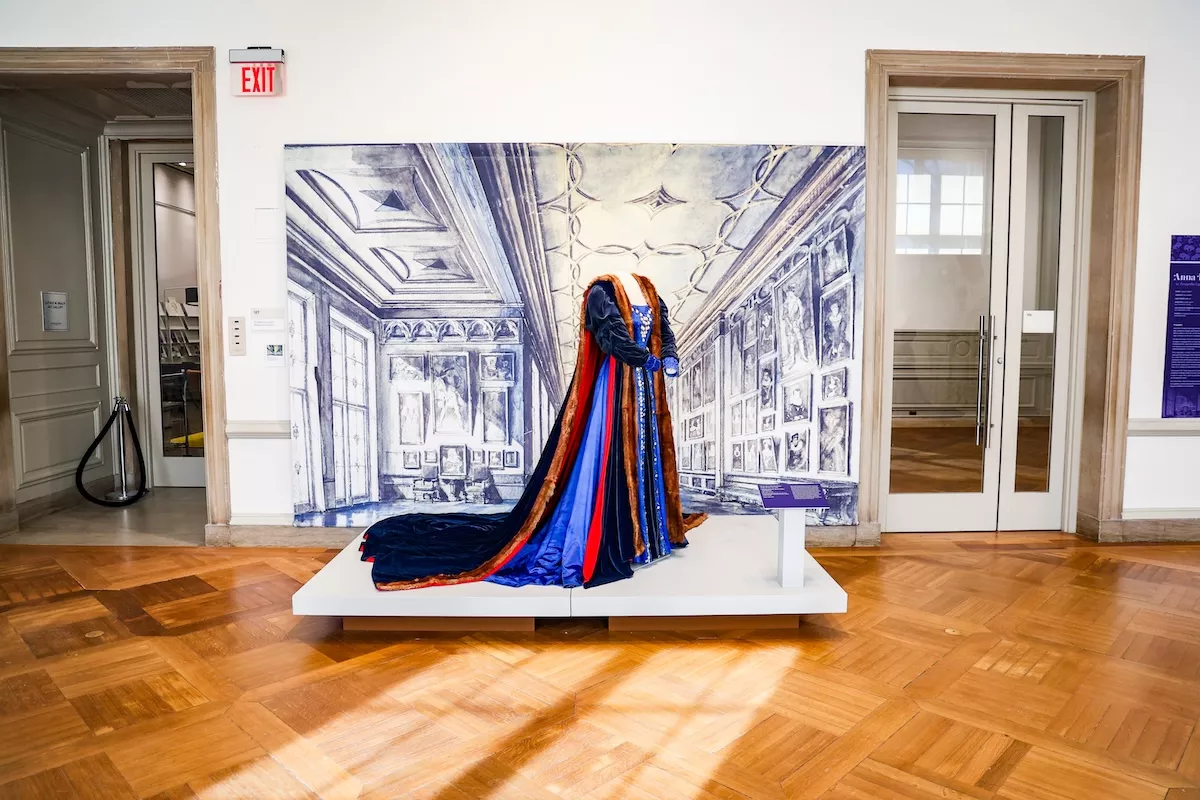
Monaco Life: The costumes, which belong to Milan’s Teatro alla Scala, represent Callas in four roles: Ifigenia in Ifigenia in Tauride, Amina in La Sonnambula, Anna in Anna Bolena, and Fiorilla in Il Turco in Italia. Their journey to the United States was made possible through a joint effort between the Italian Cultural Institute of Washington and the Embassy of Greece.


2 comments:
I love the multi departmental collaboration for the exhibit. I think it's really cool that not only are they displaying the really beautiful costumes but also scenic sketches along with using sound to enhance the exhibit. I also love when you can see a final costume along with the costume sketches and renderings that came before, which is what it seems like this exhibit includes. That really helps me as someone who's interested in costume design to understand what other designers' processes look like which can influence your own. I think especially Opera costuming is so interesting and definitely in my free time I love researching the different overlap between Opera costuming and Theatrical costuming in general, as well as like the techniques that are used, the historical overlaps, etc. I think it's very cool the collaboration between countries to be able to display these really beautiful costumes in the US.
What stood out to me most is how these costumes feel less like objects and more like pieces of the performances themselves. It’s kind of amazing that something like a costume can hold so much history, especially when paired with the sketches and recordings. It makes the whole exhibition feel more alive instead of just something you walk through and look at. I also like that students were involved in researching and writing the labels, because it shows that this kind of work is still relevant and being passed on. At the same time, it makes me think about how much costume design contributes to what we remember from a performance. Without it, a character wouldn’t feel the same. Overall, this exhibition seems like a really effective way of showing how design isn’t just background detail, but a huge part of how theater and opera are experienced and remembered.
Post a Comment