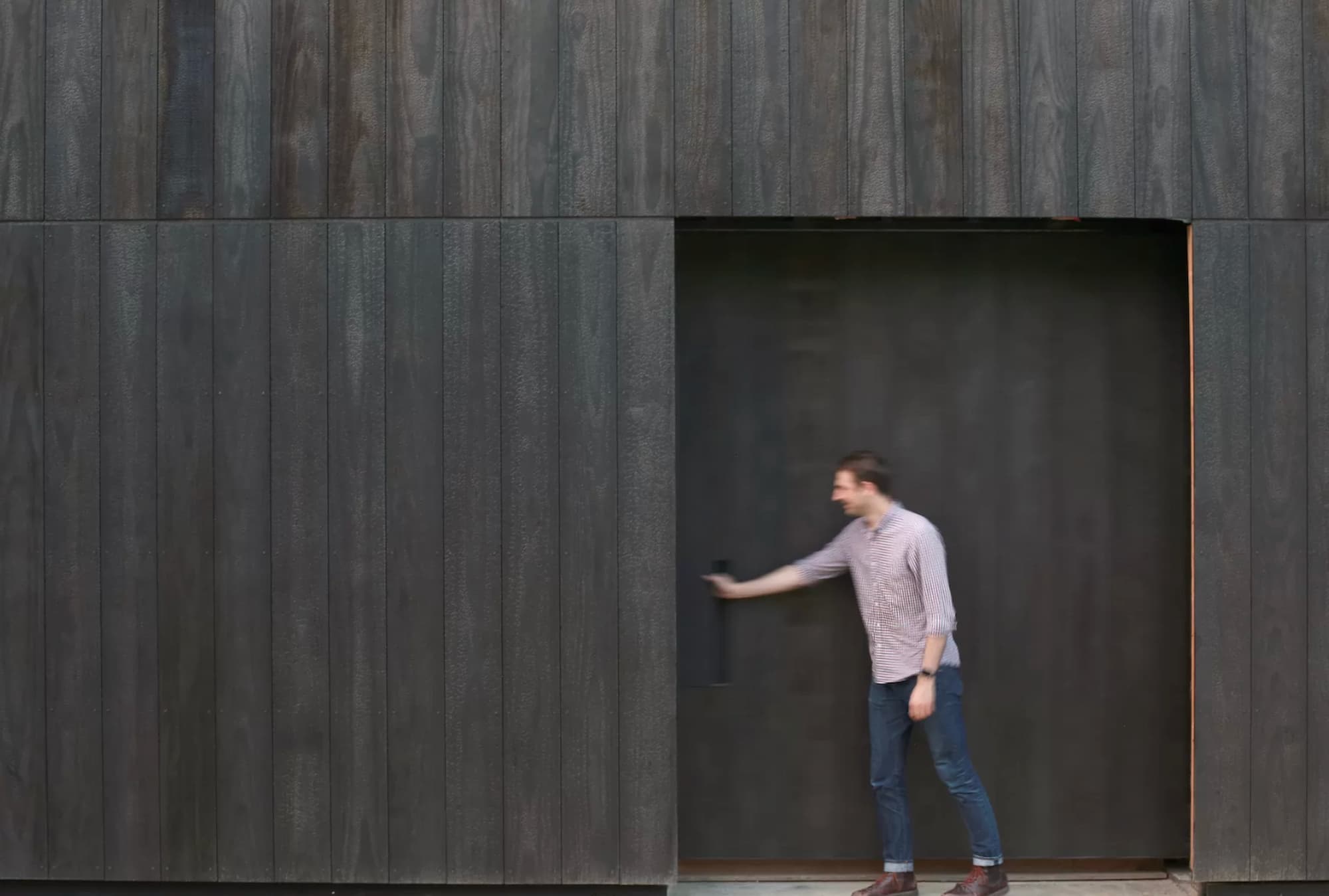
www.jlconline.com: As the popularity of wood-based materials in building construction increases, facade-based applications are becoming more desirable and prevalent. Wood’s susceptibility to decay is a familiar phenomenon, and many established preservation methods exist. However, most wood treatments for external use are problematic from human health and environmental perspectives.


6 comments:
It’s mind-blowing to read about what people can do with wood: Acetic anhydride, a toxic substance, can be processed in a way that leaves no harmful residue and applied to make wood more durable and long-lasting, not merely by creating a protective surface barrier but by literally altering the wood at the cellular level. It’s found it really interesting to learn that this process can limit wood’s ability to absorb water and increase its natural components. It’s also amazing how people can manipulate and alter the fundamental structure of a material. Reading that by using food waste, specifically potato peels and chips, we can better preserve wood is also fascinating, as we’re turning what was originally a problem into a biocompatible protective solution to address a different issue in the process. I honestly can’t wait to see this technology widely implemented and this more durable material being used in society.
In the theatre we do here at Carnegie Mellon, we don’t really have to worry about rot. So many people need experience with scenic construction that we don’t bother keeping much of what we build, meaning it doesn't stick around long enough to rot. But when we go out into the real world, we won’t have that luxury of not needing to reuse scenery. In my work back home at community theatres, I’ve often had to repurpose over twenty year old scenery and simply make it work if the wood’s not up to standard. It’s really exciting to me that new, safer ways of rotproofing wood are in the works but I do worry about costs. For most of the places that need to reuse scenery, if the safer wood is too expensive, they will likely default to the cheaper, more dangerous, stuff, or even forgo rotproofing altogether. As such, I hope keeping costs down is at the forefront of these designers minds as they bring these products to market.
In today's day and age the use of sustainable, renewable materials is ever increasing. Wood could easily be argued as the pinnacle of sustainable and renewable material. Wood can be grown in a variety of types for different use cases, captures and stores carbon from the atmosphere, and is naturally resilient to environmental forces. New bio-friendly wood treatments that increase its lifespan and usability will make wood even more viable for long term cost effectiveness, as a result making it more sustainable.
For use in theatre, more sustainable and longer lasting wood material just makes sense in so many areas. Scenery in shows can be used and abused, and if wood materials could be made more resilient against this the long term savings could be passed on. What first comes to mind is long running Broadway or touring shows whose scenery undergoes a lot of use. Another use could be for permanent or semi-permanent structural elements of a theatre such as framing or the stage floor.
We work in a very interesting architectural field regarding time. While some shows run for years, and some even for decades, the vast majority of our work runs on such a short time span that temporal-related rot is hardly even a consideration. We have to be very aware of other types of damage, and have to consider threats other fields don't ("what if someone has to walk under the building" is one of our favorite dilemmas), but rot? Not so much! However, since we're not the center of the universe, it's really interesting to see how our fellow brothers and sisters in lumber use such a wide variety of techniques to fight against rot (and/or entropy). The intersection of science and art is so large that I hesitate to even call it an intersection, more so just two giant circles laying on top of each other, but it's beautiful to see it laid out so cleanly like this. Good work, rot-fighters! ("Arsenic, a known carcinogen" is both true and very funny)
One element which stood out for me from this article, although she does mention several elements which I will go into further detail later, is that this article focuses on not only the protection against rot, but against fire as well. This fire retardant feature is one of the things which piqued my interest, along with her zinc oxide coating. What her team is now considering is using phytic acid derived from the seeds of soybeans and lentils as another potential fire retardant ingredient. Within theater, it is imperative that all scenery meets fire code, which currently means painting or spraying on chemicals which I personally cannot say for sure are non-hazardous inhalation agents. It would certainly be revolutionary to have something made from food scraps which could solve both of those issues at once. On a personal note, having worked in scenery construction since middle school, there are numerous times I have cut pressure treated wood and learned later that some of those products use arsenic.
It is so interesting to learn about all the different ways people are working to improve the lifespan of lumber. There are currently so many ways to affect lumber's lifespan and improve upon it, but some of these newer ideas are particularly fascinating. While it will likely will never be of particular use for our purposes, I am heavily intrigued by Florida Atlantic University's work in introducing Ferrihydrite into tree's vascular systems, altering the structure on a cellular level. I would love to look into and learn more about this process in the future. While lumber production is already an incredibly sustainable process currently, I am not sure what current environmental drawbacks may be concerning pressure treatment. Given that some contain carcinogens, I imagine that they aren't great. Given this, I hope that some of the work regarding turning old or waste food product into wood treatments works to better the industry. I am also curious if any of these methodologies will ever reach the point of popularity and effectiveness that they create a new adjustment factor for structural analysis.
Post a Comment