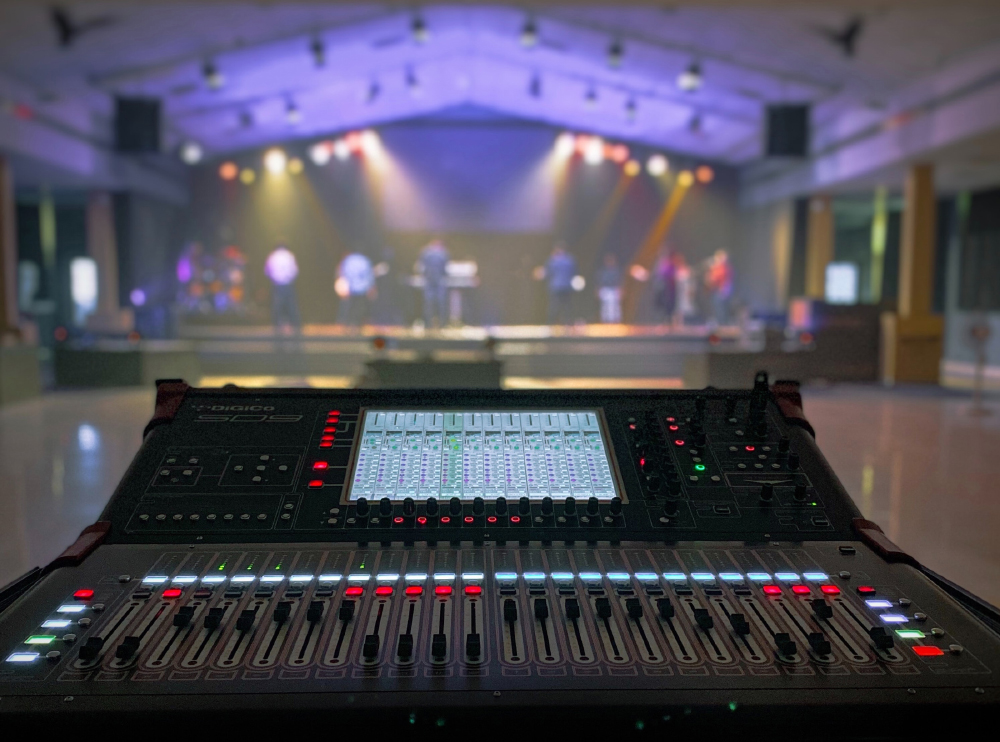
ProSoundWeb: I’m sure that most sound engineers are familiar with the following scenario: you turn up to a venue and the mixing console isn’t where you expect it to be – it might be off to one side, underneath a balcony, in the very back of the room, up high in the stalls or stuck in a corner somewhere.


4 comments:
This was a really interesting read as someone who has very little interest in sound design and seeing how it can apply to a lot of scenarios, especially as a lot of older theatres that I've worked in, according to this article, have very suboptimal sound mixing positions, and how technology has really helped to curb the problems with console and routing placement. Id also be curious as to whether Dante and the mixing and routing control provided with it have allowed designers to willingly move more and not be tied to where the majority of tielines are built into at specific venues or where the mostconvient location to run cables is. I'm also curious about the article's writer and what industry he specifically lives in that gives him these insights, and if its more tour-focused or more theatre-focused, and how that can impact his opinions, ie if touring has more critical mixing location as compared to theatre.
This is a really detailed article on the subject, and that is coming from someone who is not super informed in the sound design area of live entertainment. The reason I said that this is a very detailed article is because the article both gives information in easy to understand terms, and in terms that are more specific for sound design. The term that stood out to me regarding easy to understand terms is the triangular placement of the mixing table. That visual made it easy for me to understand the general area where the table should be placed in the house for live sound mixing. Though based on what the article said it seems that understanding this triangular placement isn't super necessary due to the technology at play in current consoles that help the engineer place the board in the idea location. Now at least in the future if I need to help place a sound mixing console I know how to somewhat properly place the console.
This is something that I am thinking about right now with the shows that are going on. How does where the A1 sit change the experience and change what the show sounds like that night. I have been in places where the board was perfectly center at the back of the house, and places where it was off to one side completely and halfway down the house. What I appreciate about this article is that the author acknowledges the challenges of not being able to choose where your station is or having to deal with some obstacle that forces you to adapt. What I took from this was that whatever the setup is, being able to understand how sound interacts with the space and being able to adapt to the changes is what’s most important. I would like to know more about how they have faces some challenges with mixing and what tools are helpful in balancing a room and making sure everyone has a good audio experience.
As someone who has had soundboards end up in some really weird places, I love this article. Most times I enter a new venue for the first time and look for the sound board, I can’t find it because someone has placed it in an odd and inefficient location. As the article states, placing a sound board somewhere where it's hard to hear exactly what the audience is hearing makes the show really difficult to mix. It's really frustrating when you’re trying to get the sound right but your position makes it harder to tell if everything sounds balanced. One way i’ve counteracted this is by having someone run cues on the actual soundboard while I mix on an iPad in the audience, which I’ve enjoyed doing a lot. However, this isn’t possible for a lot of theatres, so this article comes in handy for those who need to find a perfect way to place their console.
Post a Comment