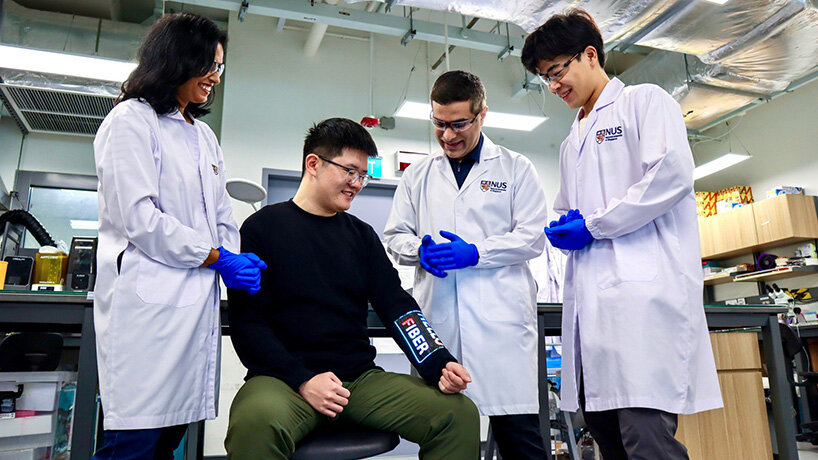
www.designboom.com: Researchers at the National University of Singapore (NUS) have developed a touchscreen integrated directly into a garment using electronic fibers that combine light-emitting diodes (LEDs) and touch sensors. Led by Assistant Professor Tural Khudiyev, the team integrates 54 of these fibers into a sleeve to create a flexible display that shows images and video, responds to finger presses, and connects wirelessly to digital devices.


2 comments:
This is a super cool read and technology that now that its being protoyped I see so many uses in the theatre and live event spaces. If this could be applied to things like scrims or other soft goods I feel like it could be the end of LED walls especially if its lightweight and touchable. My mind immeidatley goes to having interctive peices for shwos that involve water or other textural elements that are veyr hard to replicate with any video and even it as a set peice that replaces muslin. it also being a touch screen makes me veyr interested in very cool either pratical peies ofr ike crew members who may be able to like wear a digital cuelist that is lightwieght and can be turned off. One of the big donfalls I see though is the brightness and or the power draw that could defeatr any potential production possibilities.
This technology seems like the first in its field, and that is always exciting. While I’m not the biggest fan of creating even more screens for us to be encapsulated by, this technology has many other beneficial use cases. As the article says, environmental sensing and health monitoring are both pretty “huge *if true”. Non-invasive environmental measuring will have many applications for getting closer to wildlife without interfering in their lives, and could provide more detailed and specific information when gathering sensor data in various environments. The same could be said for measuring health data.
In the theatrical world my first thought comes to creating intricate and live designs in costuming. The technology is already wireless, so I'm sure implementation, especially given its small footprint, once this technology is developed a little bit more could be relatively easy. I can also see applications into soft goods on stage, whether in hung drops or soft good covered flats. Having a more physical look instead of projected media may be appealing depending on the desired effect.
Post a Comment