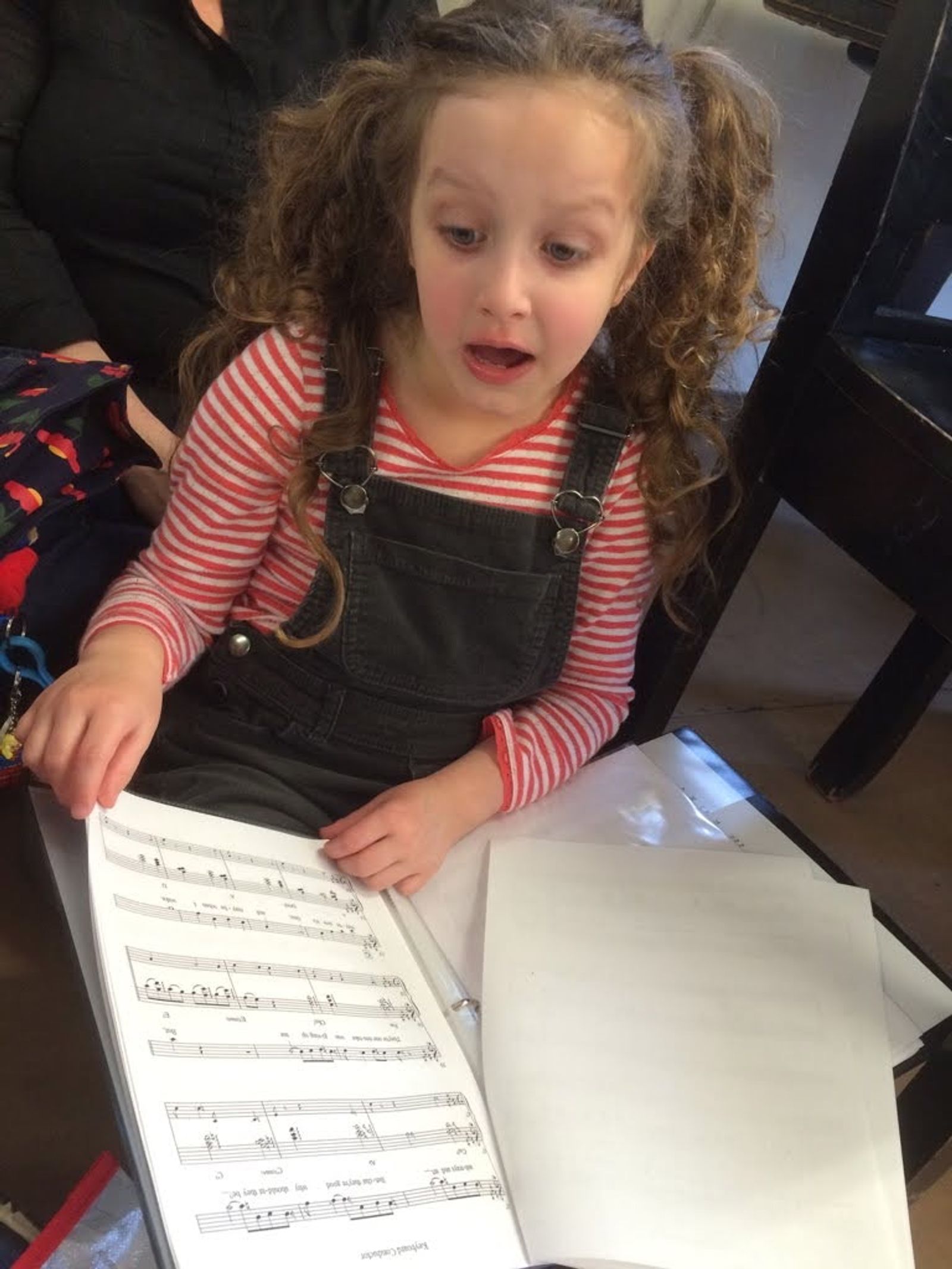
BroadwayWorld: I’ve been acting in the theatre industry since I was four, and I've had the opportunity to perform in productions ranging from school to professional and regional work across Pennsylvania and New Jersey. From a very young age, I learned crucial skills that will stick with me forever and have little to do with talent, acting, singing, or dancing ability.


12 comments:
I think it’s interesting hearing from a child actor who talks about the benefits of being a professional child actor rather than the horrors that come from it. The biggest thing is that it seems that she had a pretty normal life outside of productions. She still did all the things that kids normally do, but she just was really committed to her afterschool activities. I acted in a couple professional shows when I was a kid because it was my dream to be on broadway and I told my parents how important it was to me, but every time I was apart of a production, I ended up struggling in school. My parents made the decision to stop. I sometimes think that if I were a non-disabled student who didn’t need accommodations and all that, I would be in a very different place. Like if I were simply better at being a student and less stressed out in school, I would have continued to love acting – maybe I would be on broadway or something right now! (probably not.)
I found this article to be really inspiring. I’m a big fan and advocate getting kids into the arts - I think it teaches them a lot of life lessons and skills, and I’m a firm believer that it will fundamentally improve their lives. The arts are so important, and this article articulates exactly why; the writer notes the skills and abilities she gained from being in theatre from a young age, including basic (yet important) ones such as empathy and resilience. I’ve been involved in theatre since I was old enough to sit quietly in a venue, and I truly believe that it has given me a better life. I’ve learned how to problem solve, and how to logic my ways through issues; I’ve learned how to care for others, and how to lead. Most of all, it’s given me a lot of joy, which is the most important thing!
I think this article really resonates with me because before i started doing a lot of theatre I was kind of a major slacker on even important projects. I think being a part of the arts and theatre especially it is really good for developing kids and teens in many social and workplace skills that might be harder to learn in a less creative environment. After managing the costumes for multiple shows at my high school. My communication skills, time management skills and overall outgoingness had improved dramatically. I was able to talk to the actors about their costumes and make connections that were needed so I could better understand how they felt their character should be portrayed, while also having time to keep inventory and deadlines. This was an aspect that was really important to me so I am glad that theatre as able to teach me these skills.
I really liked this article and it definitely relates to my experience growing up in theatre. I never did a professional show, but I did so many shows at community theatres as a kid along with other afterschool activities that I believe have given me some good habits and life lessons. When I was in elementary school I had a very busy schedule and so I learned time management early. This prepared me so well for high school when my schedule shifted to being in 2 tech weeks at once or rushing from sports to rehearsals that were far away from each other, I think about having to finish my homework in the tech booth during breaks I just got it done so that I had the opportunity to sign up for more shows and projects I was interested in. Additionally in theatre I learned public speaking and storytelling which helped my team in robotics judging sessions, responsibility from learning lines and keeping track of younger kids, and social skills of having to share a small space with a lot of other people.
I always have so much respect for child actors and actresses. It is super hard, not only for them but also for their parents. They need to keep track of their schoolwork and also practice acting, and sometimes singing and dancing. It is something that requires passion. Since I have seen Matilda before, I am super impressed by how much those kid actors can do. What she says about time management is especially impressive. I also really like the part where she says “treat others with kindness and respect, just as I’d want them to treat me.” That is a motto for life. In theatre, or really any job that involves competing with other people, having that mindset is super important. Jealousy is useful because it tells you what you actually want. It is basically looking at something you do not have and wishing you did, and I believe that can be motivating sometimes.
A necessary message, especially for young performers and their parents, the student blogger effectively encapsulates what it means to be a student performer. Even as a technician, I can absolutely relate to the life skills I have learned through my participation in theater. Balancing AP classes, band rehearsals, and a full musical schedule definitely forced me to manage my time wisely. I also learned how to manage people and where to draw lines between professional and student relationships, a tool that I think will serve me well in the future. One thing I wish the blog touched on a bit more was the impact of burnout, and if she ever experienced it. I know my own burnout forced me to reflect on my why behind doing the activities I am involved in, and I think it is important to acknowledge alongside the positives, because truly my burnout taught me the most about resilience to reignite my passion for theater.
I come from a very sports oriented household, we all had to be in sport growing up, and many of us did more than one. Many of the skills listed in this article parallel the same reasons my parents gave for this rule, however I think the article misses a key one. She talks about time management, and needing to find a way to balance both school and theatre. It’s very similar to sports and needing to get work done around a busy game and practice schedule. This is also parallel in her next points about empathy and resilience, she mentions you don't always get the part, sometimes your friends do, or sometimes you get it over a friend. In the same way you don't always make the team or get the minutes you want when you play a sport. I do however think she is missing a big part of what makes both so important, which is community. Both hinge on the relationships you form. In theatre, having good chemistry with a cast can make a huge difference, and it's the same for sports even when they aren't necessarily team sports, like cross country or track. Both activities involve spending a lot of time with a group of people and being able to navigate those relationships are a huge boon when it comes to just being a person in the world.
As someone who has been doing theater in many forms since 7th grade, I completely agree with this article. Another thing I would like to add to the list of things learned, especially for people in tech, is problem solving. Theater is never the same and there are always fun problems to solve. I have always said that theater is great for people with ADHD because it has enough of the same skills every time that you can work on improving them, but also has a novelty that never goes away. There is just enough pressure and tight timelines for us to feel the pressure and need to get things done. I do think that Empathy is one trait that more people in theater need to learn/work on. I think that people should be on the other side of the table at least once to learn that most of the time it is not about talent, but about who is a better fit for the team.
I think this article brings up a really good point. Even while we are learning to put on full productions, we are also learning how to collaborate, problem solve, manage calendars, and balance different expectations and responsibilities. I think this is what makes theatre and the entertainment industry so incredible to me. It’s the fact that everywhere people are working together to make art and that it is a completely unique experience that can bring together all different kinds of people with different skills and still have every one be needed and critical to the success of the show. In my time at CMU I have definitely learned resilience and determination. With long hours and so much to get done in little time, I have learned how to push through doubt and discouragement to get the work done and find a solution. I want to keep working on my management skills both with people and time. Because I can be so goal oriented, it can also mean that I sacrifice other personal goals for the good of the whole.
These skills are fantastic and essential to everyday life, regardless of the profession or path you decide to take. The first thing that baffled me was that this person was a young performer, balancing a full day of school classes and homework with rehearsals and performances for professional theaters. So she really learned how to manage her time at a young age. Second, to be told “no” at a young age is something most younger kids do not have to face as often. Learning how to have thicker skin at such a young age is a skill I wish I had growing up. The last two skills are much more important and broad, and something that every person should really learn and work on. Empathy is something I consider to be super important, and the younger you learn it, the easier it is to practice empathy. Last but not least, responsibility. This is a skill that inevitably, hopefully, everyone learns.
As some people have already said, it’s nice to hear someone who has been doing theatre since they were so young talk about the positive effects instead of just the negative. I think most of us are well aware of the negative effects that devoting yourself to something from such a young age can have; many horror stories about this have been well publicized. But I think most people in theatre, outside of just performers as well, could talk for a long time about all of the positive impact theatre has had on their lives. I know I could at least. And I do think the student who wrote this article highlighted many of the same positive effects I have noticed in my own life. There are a lot of soft skills that you gain through doing theatre, and I think a lot of people underestimate the importance of things like that.
It's really surprising and honestly refreshing to hear someone talk positively about their childhood theatre experiences and the huge lessons and skills they’ve learned from it. I’m not shocked that someone who has done theatre from such a young age has learned so much from it. While I definitely wasn’t performing or doing theatre from the age of four, I’ve definitely been doing it for a while. Because of this, I can relate to author Lucy Spiegel’s lessons she's learned. The first one she touches on is time management, which is big for me, as theatre has also taught me how to balance my rigorous class schedule in addition to designing shows. Spiegel also talks about responsibility and resiliency, which I believe are two huge life lessons that everyone should learn, and I am grateful that theatre has also taught me this. In all, this article has made me realize that theatre, whether I started early or not, has taught me so many valuable life lessons.
Post a Comment