Pittsburgh Arts, Regional Theatre, New Work, Producing, Copyright, Labor Unions,
New Products, Coping Skills, J-O-Bs...
Theatre industry news, University & School of Drama Announcements, plus occasional course support for
Carnegie Mellon School of Drama Faculty, Staff, Students, and Alumni.
CMU School of Drama
Thursday, October 15, 2026
Rachel Zegler Says EVITA Balcony Scene Opened Up 'Accessibility In Theater' Conversation
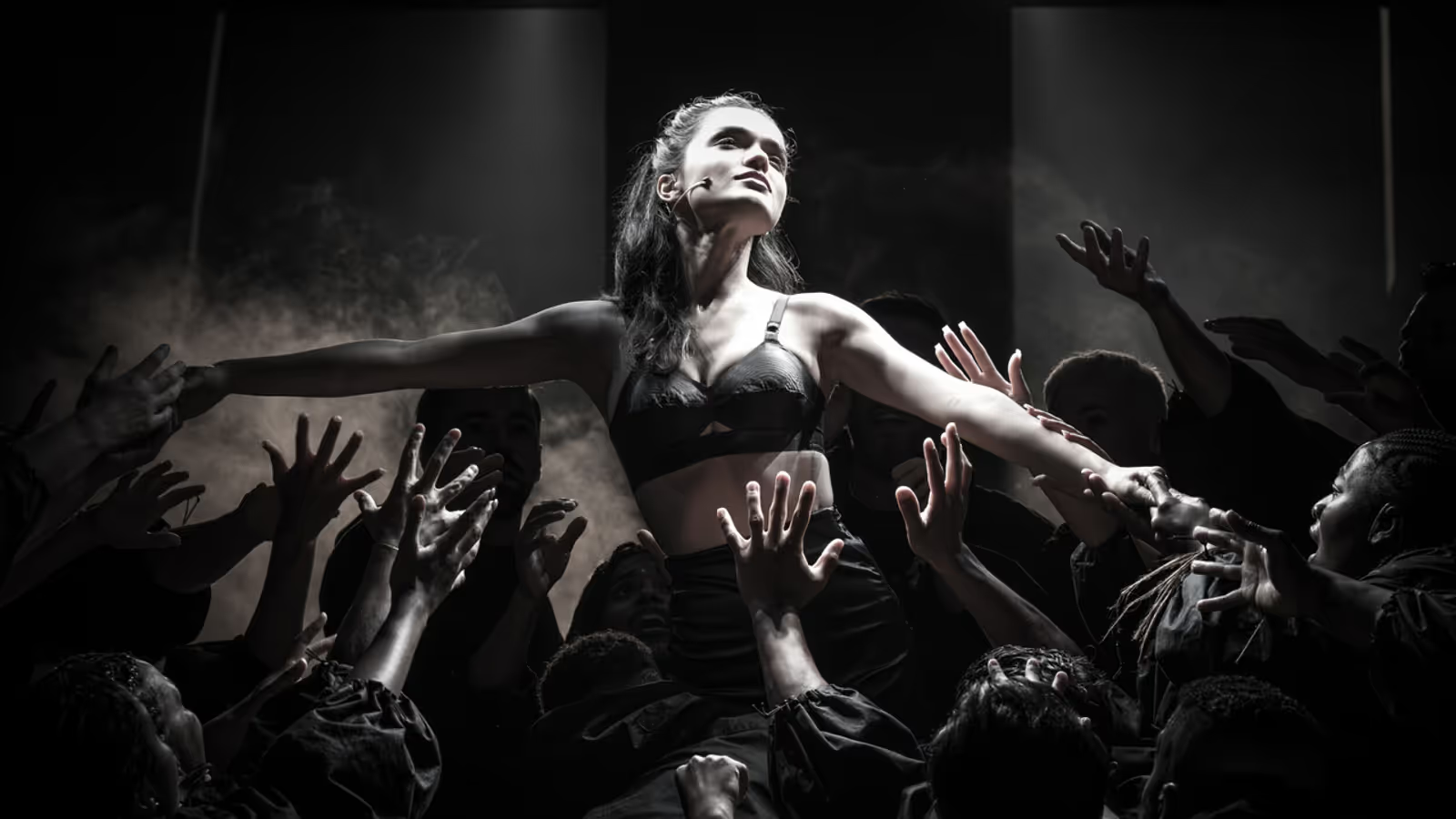
BroadwayWorld: One of the most unforgettable theatre moments of 2025 was Rachel Zegler's balcony sequence in the West End revival of Evita. As audiences from inside the London Palladium watched a livestream of "Don't Cry For Me Argentina," Zegler performed the song for audiences outside the theatre for free.
Okay, while that article was disappoint lacking in any substance or details at all, it was still interesting because it made me aware of an idea that I now wholeheartedly support after having had learned about it. Okay, having a performance on a balcony as part of a show (or similar) for the non-paying general public to see. Sounds like a good idea? Absolutely, it is! First off, what great marketing for your show! I mean, its like an advertisement without having to pay, and people are almost certainly going to stop and se, particularly if there is already a crowd. Secondly, it is a boon for the wider theater industry as a whole, possibly exciting and drawing people into seeing shows, just from one glimpse from the street. All and all, I am definitely in favor of more theaters implementing this idea of public performances, all them previews, bringing people into theater who otherwise might not have explored it.
Personally I believe this is dumb. Theater accessibility has come so much farther than just Rachel Zigler singing a song on a balcony to the masses. Although it does bring art to people for free it brought literally one song from a whole musical. People could come and view a singular second from a whole story. Many theater companies do a plethora of free full shows or even just Shakespeare in the park which is a common form of free theater that is done to bring classic theater to new audiences. Many of the people viewing Rachel Zigler's performance are those who are already fans of theater or are just fans of Rachel herself. If the conversation is about accessibility those people will probably never be given the opportunity to see the full production or experience even just a second more than that one song. Overall I do believe it does bring up the conversation of accessibility and why we lock our performances behind a paywall but the answer to that is just capitalism and at the end of the day we all need to make money in order to survive.
I'm excited to see what the Broadway production does with this scene. I remember distinctly when the London production opened seeing complaints about the balcony scene, about the audience who paid lots of money to be there not being able to have the full experience, see the full show, instead having people on the street view the show stopping number. I do think that's the point of this choice though to alienate those who were able to afford those seats to bring the character and the theater to the people but with Broadway so inaccessible and so isolated I am really curious to see if they will really be able to preserve that same Spirit of the scene or if in some way they will be forced to fall back into the isolationist existence of Broadway, the only thing that surrounds it is more Broadway.
I thought that this was an interesting article about the Evita balcony scene, something I recall there being a lot of discourse about when it originally happened at the West End production. I thought that the iconic song and scene being performed outside was a very cool creative concept that worked well with the show, and additionally, gave many more people a chance to watch a very talented actress perform an iconic song. It makes sense that the exact set up of the West End version would not work well in New York City, but I am curious about how the production adapts the concept for the New York version. However, I don’t think having the song be performed outside necessarily creates theatrical accessibility, since in many ways, it’s not much different from an advertisement video of a song from a musical being posted on YouTube or something. Allowing people to watch one song does not make theater more accessible, it is just a really unique form of advertisement.
I found the gimmick of the balcony really interesting, especially when Evita was only in previews in England. It got people to talk about the show more and then made people want to go and see it everyday that they would stand for hours just for that song. Having seen small bootlegs of what it looked like in the theater, I thought the image created ended up working really well. When news of a broadway transfer came out (I lowkey heard the news through Sweaty Oracle before it actually was announced but you know) ideas of how unsafe it would be to have Rachel Zegler stand on a balcony in Times Square started to cross my mind. I’m really curious to see how they change the scene to be safer for those involved and see if it still holds the same effect that it did in London. I can think about how Jamie Loyd utilized the space of Times Square for Sunset Blvd, but I really cannot imagine how they are going to change the scene and make it as impactful as the large crowds outside of the theater were.
I have to say. While I agree on a surface level that yes, having a scene take place outside of the theater for other audiences to see does make it more accessible. It does sound slightly out of touch. Though the concept was to perform this iconic number to the people, just like Eva person does in the musical is a very smart, unique and new idea, which I can absolutely appreciate. At the same time, that in no way really does make theater more accessible. It is four minutes of a three hour show, and then Rachel Zeglar goes back inside and once again the public is shunned from the theater. What I would really appreciate is if along with this performance for the crowd they somehow made ticket prices cheaper or had some kind of lottery that was more than typical broadway lotteries.
I think that the balcony scene in Evita not only opened up accessibility options in theater, but it also opened up a lot of new technical opportunities in theater. There are so many fun things you can do with live camera work especially if it is outside the theater. I agree with Rachel Zegler that it is wonderful that these people who waited outside on the streets got a free show and got to be involved in the show. I am curious about how the scene will play out in New York with the busyness of Broadway. They will have to choose their theater carefully and think about this scene when they make the change of location. I wonder if they will attempt to close down the street and only allow a certain number of people through or if they will just allow it to be like it was in the West End.
When I first read the title of this article, I was confused about how the scene would change accessibility within the theater, but after reading the article, I have realized that it is creating accessibility to the theater. I think this kind of thinking shows how privileged theater has become, where only very few get to experience live performances and even fewer get to see award-winning productions like Evita. I am somewhat shocked by myself in that I did not understand the initial title because of my experience in the theater industry. I think that by making theater more accessible, we can’t just focus on bringing in more diverse experiences and perspectives, but also on bringing theater to more diverse audiences. I think Rachel Zegler’s performance shows how theater is and can be appreciated by the public and that this should be supported in the future. Just as indie TV shows and movies have gained popularity, opening up the field to new artists and audiences, I think the same should be true in theater. We should look for ways to evolve the experience past the 41 theaters on Broadway and highlight the works of smaller productions to the public’s eye.
This question truly inspires me to delve deeper into the reason behind the chosen staging, yet even the main feature of the production provides me with genuine satisfying food for thought. By employing a balcony scene as a starting point for discussing accessibility, it indicates that it isn’t only aesthetically pleasing but makes people question who can see what and from where in the theatre, which probably isn’t discussed often enough in the industry. (At all) I really admire a situation when such a well known production accidentally brings to the surface a structural problem because a celebrity like Rachel Zegler discussing it publicly makes it more visible than when only an accessibility expert is involved in said process. I do wonder how many staging decisions unintentionally neglected some groups of audiences without anybody becoming aware of it. (Probably a lot).I am happy this issue was raised instead of being a casual statement, and I really want to know if there are going to be any changes made.


9 comments:
Okay, while that article was disappoint lacking in any substance or details at all, it was still interesting because it made me aware of an idea that I now wholeheartedly support after having had learned about it. Okay, having a performance on a balcony as part of a show (or similar) for the non-paying general public to see. Sounds like a good idea? Absolutely, it is! First off, what great marketing for your show! I mean, its like an advertisement without having to pay, and people are almost certainly going to stop and se, particularly if there is already a crowd. Secondly, it is a boon for the wider theater industry as a whole, possibly exciting and drawing people into seeing shows, just from one glimpse from the street. All and all, I am definitely in favor of more theaters implementing this idea of public performances, all them previews, bringing people into theater who otherwise might not have explored it.
Personally I believe this is dumb. Theater accessibility has come so much farther than just Rachel Zigler singing a song on a balcony to the masses. Although it does bring art to people for free it brought literally one song from a whole musical. People could come and view a singular second from a whole story. Many theater companies do a plethora of free full shows or even just Shakespeare in the park which is a common form of free theater that is done to bring classic theater to new audiences. Many of the people viewing Rachel Zigler's performance are those who are already fans of theater or are just fans of Rachel herself. If the conversation is about accessibility those people will probably never be given the opportunity to see the full production or experience even just a second more than that one song. Overall I do believe it does bring up the conversation of accessibility and why we lock our performances behind a paywall but the answer to that is just capitalism and at the end of the day we all need to make money in order to survive.
I'm excited to see what the Broadway production does with this scene. I remember distinctly when the London production opened seeing complaints about the balcony scene, about the audience who paid lots of money to be there not being able to have the full experience, see the full show, instead having people on the street view the show stopping number. I do think that's the point of this choice though to alienate those who were able to afford those seats to bring the character and the theater to the people but with Broadway so inaccessible and so isolated I am really curious to see if they will really be able to preserve that same Spirit of the scene or if in some way they will be forced to fall back into the isolationist existence of Broadway, the only thing that surrounds it is more Broadway.
I thought that this was an interesting article about the Evita balcony scene, something I recall there being a lot of discourse about when it originally happened at the West End production. I thought that the iconic song and scene being performed outside was a very cool creative concept that worked well with the show, and additionally, gave many more people a chance to watch a very talented actress perform an iconic song. It makes sense that the exact set up of the West End version would not work well in New York City, but I am curious about how the production adapts the concept for the New York version. However, I don’t think having the song be performed outside necessarily creates theatrical accessibility, since in many ways, it’s not much different from an advertisement video of a song from a musical being posted on YouTube or something. Allowing people to watch one song does not make theater more accessible, it is just a really unique form of advertisement.
I found the gimmick of the balcony really interesting, especially when Evita was only in previews in England. It got people to talk about the show more and then made people want to go and see it everyday that they would stand for hours just for that song. Having seen small bootlegs of what it looked like in the theater, I thought the image created ended up working really well. When news of a broadway transfer came out (I lowkey heard the news through Sweaty Oracle before it actually was announced but you know) ideas of how unsafe it would be to have Rachel Zegler stand on a balcony in Times Square started to cross my mind. I’m really curious to see how they change the scene to be safer for those involved and see if it still holds the same effect that it did in London. I can think about how Jamie Loyd utilized the space of Times Square for Sunset Blvd, but I really cannot imagine how they are going to change the scene and make it as impactful as the large crowds outside of the theater were.
I have to say. While I agree on a surface level that yes, having a scene take place outside of the theater for other audiences to see does make it more accessible. It does sound slightly out of touch. Though the concept was to perform this iconic number to the people, just like Eva person does in the musical is a very smart, unique and new idea, which I can absolutely appreciate. At the same time, that in no way really does make theater more accessible. It is four minutes of a three hour show, and then Rachel Zeglar goes back inside and once again the public is shunned from the theater. What I would really appreciate is if along with this performance for the crowd they somehow made ticket prices cheaper or had some kind of lottery that was more than typical broadway lotteries.
I think that the balcony scene in Evita not only opened up accessibility options in theater, but it also opened up a lot of new technical opportunities in theater. There are so many fun things you can do with live camera work especially if it is outside the theater. I agree with Rachel Zegler that it is wonderful that these people who waited outside on the streets got a free show and got to be involved in the show. I am curious about how the scene will play out in New York with the busyness of Broadway. They will have to choose their theater carefully and think about this scene when they make the change of location. I wonder if they will attempt to close down the street and only allow a certain number of people through or if they will just allow it to be like it was in the West End.
When I first read the title of this article, I was confused about how the scene would change accessibility within the theater, but after reading the article, I have realized that it is creating accessibility to the theater. I think this kind of thinking shows how privileged theater has become, where only very few get to experience live performances and even fewer get to see award-winning productions like Evita. I am somewhat shocked by myself in that I did not understand the initial title because of my experience in the theater industry. I think that by making theater more accessible, we can’t just focus on bringing in more diverse experiences and perspectives, but also on bringing theater to more diverse audiences. I think Rachel Zegler’s performance shows how theater is and can be appreciated by the public and that this should be supported in the future. Just as indie TV shows and movies have gained popularity, opening up the field to new artists and audiences, I think the same should be true in theater. We should look for ways to evolve the experience past the 41 theaters on Broadway and highlight the works of smaller productions to the public’s eye.
This question truly inspires me to delve deeper into the reason behind the chosen staging, yet even the main feature of the production provides me with genuine satisfying food for thought. By employing a balcony scene as a starting point for discussing accessibility, it indicates that it isn’t only aesthetically pleasing but makes people question who can see what and from where in the theatre, which probably isn’t discussed often enough in the industry. (At all) I really admire a situation when such a well known production accidentally brings to the surface a structural problem because a celebrity like Rachel Zegler discussing it publicly makes it more visible than when only an accessibility expert is involved in said process. I do wonder how many staging decisions unintentionally neglected some groups of audiences without anybody becoming aware of it. (Probably a lot).I am happy this issue was raised instead of being a casual statement, and I really want to know if there are going to be any changes made.
Post a Comment