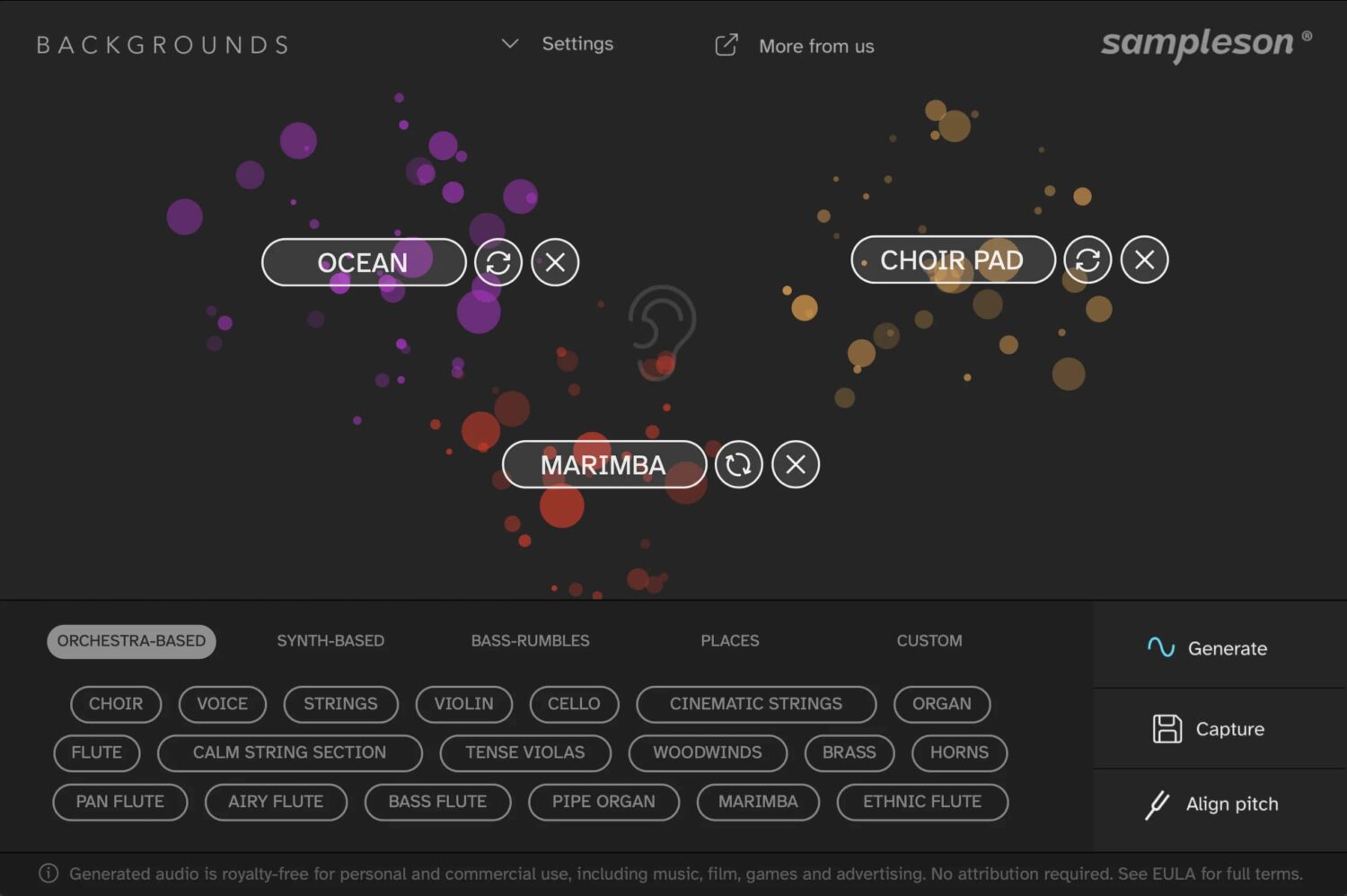
Synthtopia: Backgrounds uses semantic audio retrieval to match words and concepts with a curated library of more than 22,000 audio cells and 11,000 local embeddings. Users can drag keywords onto a canvas and combine concepts such as strings, rain, bass or thunder to create evolving soundscapes.


2 comments:
This soundscape creation tool sounds really cool. I am currently taking a film class, and this for sure seems like a great software to use to help create the soundscape for my film. This software is just like My Singing Monsters grew up. I am kind of curious about where exactly this software is pulling its sound from. It says that it has a curated library, but prior to that, did the founder make all of these sounds, was it AI, was it from YouTube? I wonder where and how these are being produced. The features I am most interested in are the word- and concept-based soundscape creation and the drag keywords onto a visual canvas feature. The film I am creating has no dialogue, so I am heavily relying on sound design and my soundscape to help support and drive the plot forward. I will be testing and using this software to make the soundscape for my upcoming film class project.
I think this is a pretty interesting tool, it seems to me that it is just a sound database that matches what you’re looking for. I think its pretty unique that the interaction is with the words and that is how you manipulate the sound. While all this seems pretty interesting, I’m also aware of the use of AI that this tool and the company that made it uses. I’m also wondering what is specifically unique about this program beyond its user interface. There are a lot of ways to make soundscapes so I would like to know more about what makes this one different from all the other methods. I think I would definitely try out this program to learn more about it and see whether I want to implement it into future work or not. I’m also wondering how granular the control is on the sound that is being created. How much of it pre generated or how much of it is yours.
Post a Comment