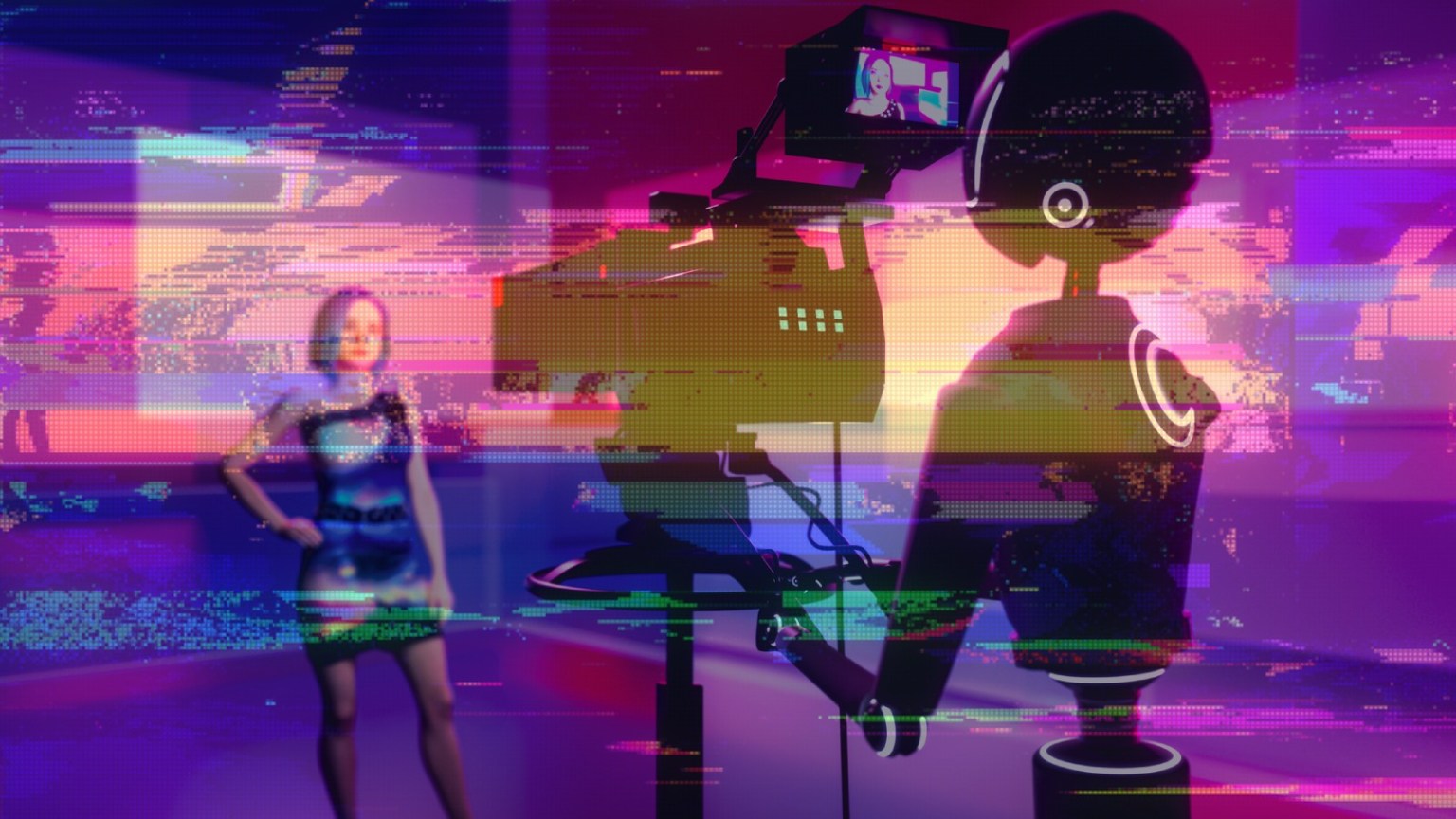
brobible.com: Last year, the world was introduced to Tilly Norwood, who was positioned as the world’s first A.I.-generated actress. However, it would appear that the company behind the nonexistent performer has some kinks to work out after its creation randomly started speaking Chinese in the middle of an interview.


6 comments:
I have heard a lot about this AI 'actress" lately as people have been comparing her to Vocaloid characters such as Hatsune Miku and then Hatsune Miku fans have been going crazy because Vocaloid is not AI and is actually a completely human made 'voice bank' and people just have to rearrange notes and sounds to fit the song they are trying to make or cover. But this Tilly Norwood is no Vocaloid and is genuinely just the worst ever. I watched her music video and was appalled by how terrible it looked. comparing it back to Vocaloid again, Vocaloid music and videos are honestly the furthest from AI you could possibly get, with almost all the videos featuring either a human drawn art piece for the backdrop or even a full animated music video! this AI slop created by the creators of Tilly Norwood is far from artistic and im glad she was banned from being able to get an award at the Emmys or Oscars.
It’s interesting to see how AI is doing much more than simply taking over professions. The people behind these AI “actresses” not only use them to take on jobs, but also advertise and manage them as if they were real-life people. For example, Tilly Norwood has “her own” X account and publishes comments on it. I’ve also seen people using AI “actresses” to generate entire short shows that stream on TikTok, with each AI “actress” having their own TikTok account, interacting with each other, and posting feeds like a real human would. While this concept is interesting at first, it becomes really scary when you think about it more. AI can potentially exist as an entire, seemingly whole person, with an identity, characteristics, and habits just like us, as long as people are behind them managing their presence. The thought of this gives me chills, especially when I think about how many opportunities these AI “people” could potentially take from real humans.
This one made me laugh, but it did make me somewhat uneasy as well. Observing how a so-called actress instantly switched from English to Mandarin during an interview on TV is a very clear example of how Tilly Norwood is a piece of software. The way that the studio handled this issue, trying to make it appear like she actually knows thirty different languages and just wanted to demonstrate it, was an attempt to transform the problem into the feature. What worries me more is the larger context. While a real actor, Tom Conti, was sitting there treating a chatbot like a human colleague, such huge TV channels as CBS and the Today Show decided to book her. Attention is the very product. It should be mentioned that the expected agency deal mentioned by her creator didn't happen yet, and this tells that the industry isn't completely convinced about it. From the point of view of live theatre, this makes me feel quite comfortable.
Watching the AI music video is very strange. The video did not seem like watching an actress sing but just another AI video with a generated person. I cannot see how we can have an AI actress because of the lack of choice and identity in AI. Until AI can have its own experiences and make choices uninfluenced by outside sources, I feel like what Tilly is isn’t an actress but an AI character of an actress. Real actors have lives and opinions about things outside of their practice, whereas I can’t see Tilly living a life separate from her “job”. I think that the largest difference between AI characters, like Tilly, and humans is our complexity and ability to exist outside a series of set instructions and orders. The music video in the article feels unnatural and strange, especially in its assertions that Tilly is an actress like real people.
The concept of an ai actress in 2026 was always weird to me, I understand that ai is very prevalent right now but I just can’t believe that there is a market for an ai actor at this point in time(maybe in the future when ai is 100% uncanny but I still believe that is very far off especially since ai still has very negative opinions surrounding it and rightfully so with things like this happening). I also think that it’s pretty ridiculous to conduct an interview like this to begin with I understand that the news station probably just wanted to show their viewers a live example of how Tilly interacts with people, but an interview with an ai model isn’t an interview but just a chat box conversation, your speaking to the data that the company put in her, no response that is said won’t be specifically altered by the people who made her and obviously so mistakes will filter through
A) this is horrifying, and B) this is exactly why AI can never truly replace actual real, live people when it comes to the arts. I find the concept of an AI generated “actress” to be incredibly disheartening; the thought that some people would rather see a “glorified chatbot” on their screen instead of an actual person who’s spent years honing their craft is really sad to think about. Our world would be so much worse if we had no art, or theatre, or film or music or literature, and it’s crushing to see how the AI movement has begun to try and take over those areas, replacing actual art with stolen and recycled slop. Additionally, I also think the concept of an AI “actress” or “musician” or any other kind of creator to be really concerning, because they’re training themselves on stolen data and performances from actual, live artists; they’re stealing the work of professionals, and reusing it (poorly) to create garbage.
Post a Comment