Pittsburgh Arts, Regional Theatre, New Work, Producing, Copyright, Labor Unions,
New Products, Coping Skills, J-O-Bs...
Theatre industry news, University & School of Drama Announcements, plus occasional course support for
Carnegie Mellon School of Drama Faculty, Staff, Students, and Alumni.
CMU School of Drama
Thursday, March 26, 2026
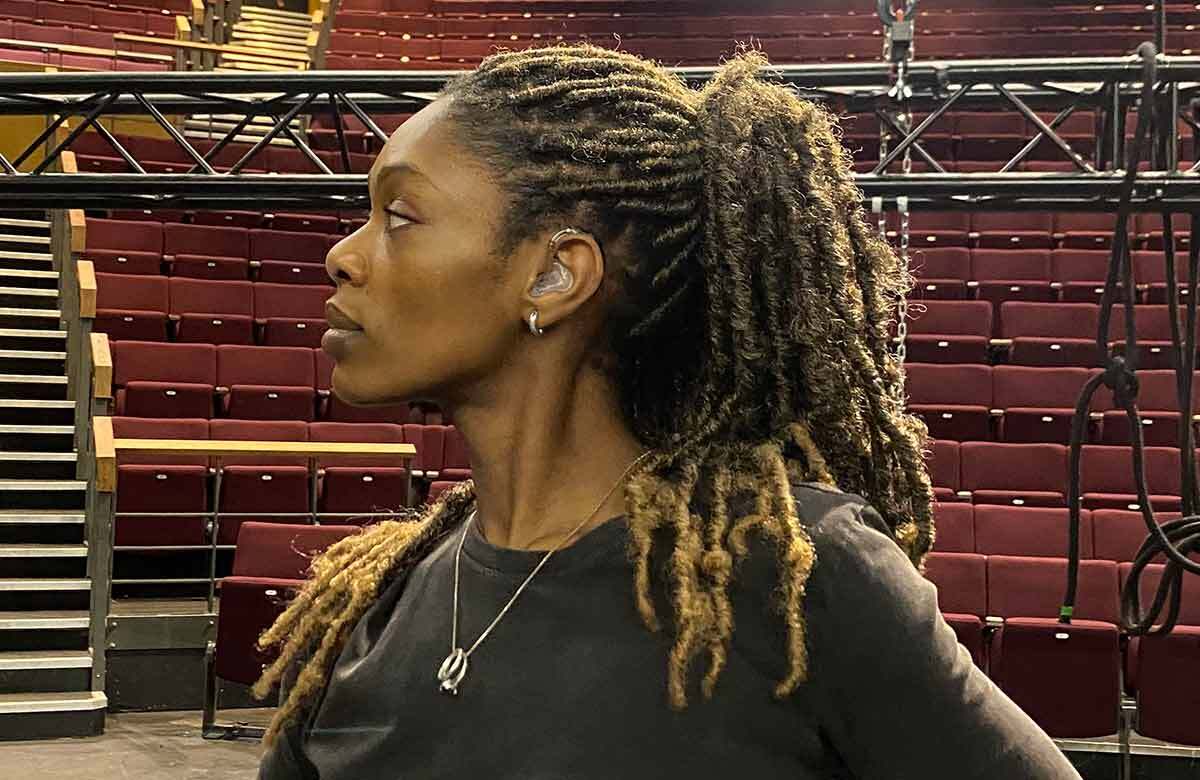
Every show should be captioned for deaf audiences, petition demands
www.thestage.co.uk: Theatre owners ATG Entertainment, Delfont Mackintosh Theatres and LW Theatres are being urged to ensure every performance at their venues has captions in order to be accessible for deaf audiences
11 comments:
Max A
said...
There’s a regional theatre company where I’m from (Trinity Rep in Providence, RI) that offers a captioning section in the audience for every show. This means that every single show is captioned, but audience members don’t have to see the captions if they don’t want to. Not only does this make theatre more accessible, but it also made me realize how captions can function in a show. Trinity used their captioning technology when they put on a play called La Tempestad, which is a spin on Shakespeare’s The Tempest that is partially in Spanish. The play had both English subtitles for the Spanish parts, and Spanish subtitles for the Shakespearean English parts. It was definitely one of the coolest shows I’ve seen, especially because Shakespeare is already so linguistically rich, the Spanish parts made me feel so immersed even though I couldn’t understand what the actors were saying and I was reading words over their heads.
This is a practice and concept that I completely support I agree with what this article is striving to create. Theater and live performance at large should be able to be enjoyed by all across the world regardless of their ability to see and or hear the performance in question. I agree with this article that all theaters should have closed captioning so that those with hearing complication can still enjoy the show. I personally would say that all theaters or live performance venues should strive to have closed captioning and auditory captioning for all of their performances. So that any person who have complications in either sight or hearing can still watch a live production at any venue. A problem with this goal is price as installing or utilizing systems like the ones that would be required for auditory or visual close captioning require additional hardware and design / planning. Which may not be a problem for large theaters, but it could be a price that cripples smaller theaters and theater companies. That is if they are required to have this systems in place in order to have a paid audience see a show.
I really appreciate this company's approach to trying to get every single show with captions, and I think it's an amazing goal, but I am concerned about the cost of this. I'd wish there was a way where the theater industry can create a more accessible ways for more theater industries and organizations to get the ability to put up captions or get the ability to have ASL interpreters for their shows, because I think that ASL interpreter shows are so cool and I absolutely love attending in ASL interpretive show and I find it so interesting and it's an art work and it's telling a story through ASL. I wish it were more accessible for more theater companies to have the opportunity to offer that for their community and their audiences. So in all in all I want this to be a thing, but I am also worried about the cost commitment and what that means.
I think the push towards accessible theater entertainment is super important. In the same way that theaters have to be physically accessible, it makes sense that they would have to be accessible to deaf and hard of hearing individuals as well. Accessibility doesn't just benefit those with disabilities, it benefits everybody. While captioning might be necessary for a deaf or hard of hearing individual, it's also helpful for those who prefer to have captions on the content they consume. There are a few logistical issues that I see with this however. When it comes to media such as movies, you only need to really caption things once, however in theater because of the live nature of the medium the timing of the captions will always be slightly different and that poses a logistical problem of needing somebody to oversee that. I also think the cost of implementing programs like this could be detrimental to smaller theaters. While accessibility in all theaters might be a good end goal, there might be some benefit in starting with a slightly smaller goal of having theaters that are making above a certain level be required to implement this and slowly expanding from there.
Many of my peers have already offered their perspectives on the struggles of this idea of every show having a deaf viewing, and while I support the concept. I find difficulty seeing the possibility of it happening effectively, without extensive funding and hiring. These deaf screenings are made possible because there are people that are willing to learn sign language who are then also willing to do these readings. It becomes pretty difficult to find someone who is willing to do both of those things, and then have them do it for every show. On top of that at least in the United States, there would actually probably be legal barriers in place to prevent a business from having to accomodate. Masterpiece Cakeshop v. Colorado Civil Rights Commission was a supreme court case that basically established that no business has to accept a demand of the costumer, and the one arguing for the change, couldn't base it on it being discrimination. Since every private business has the right to refuse. .
Even people who aren’t hard of hearing can benefit from the ability to read what is being said. I have been to many performances and have only recently tried out a closed captioning option using a phone app that syncs to the performance by using the theater’s wifi. It was really useful to be able to look down at the phone in my lap and see what was just said by the actors. I have difficulty with auditory processing and know many others that have similar challenges, and that isn’t even including people in the deaf community that would like to be able to attend and understand theater performances whenever they want and not just on specific sign language translated days. Making theater more accessible is one way to draw in bigger audiences and I hope that more theater companies will see this and join in on the trend of making theater and performances open to those who need extra accommodations.
ot to completely disregard the human aspect of an ASL interpreter, but I think that technology is the perfect place to adapt in this scenario. There are apps in which closed captions can be created, which should always be able to be given out by request. Also, for those who are hearing impaired and not death, there should be some sort of in ear speaker, or hearing amplifier like hearing aid that theatergoers should be able to get at the box office. I think my grandma used to do something similar when we would go see shows, she would get this device, which would amplify the speakers just for her so she could hear better especially like the voices and stuff and I think that that should be something that is implemented at any theater that has the ability of the budget to do so. Theater like art should make strides to become accessible to all, and if I can’t do to budget or something along those lines, it’s an entirely different story but theater is for everyone in the end.
I love captions. As someone who is personally not a part of the deaf community but has several close family members who are a part of the community. I have now become accustomed to captions and will actively notice the lack of captions rather than when they are a part of the performance. Captions are already so intertwined with performance as opera relies on them to tell stories in different languages. Larger play houses should have the ability to invest in the technology and provide live captions to anybody who is in need without question. In general accommodation is not taken as seriously as it should be in the theatrical industry. We tend to take the easy path out in saying that it's harder to accommodate as the performance is live and that leads us to only accommodate for physical disabilities such as mobility issues. While we fail to make our stories accessible to those who are blind or deaf. Some of this can be blamed on the technology but many other industries have found ways to be accepting and nothing is stopping the entertainment industry from adapting their technology to suit our needs.
I think this is a great idea, everyone should be able to experience live theatre if they would like and should not be limited to which shows they want to see. The only problem that I can see coming from this is the additional cost to do so every night. The idea behind this is important, but how exactly can theatre companies pull this off every performance? I’m sure the cost is gonna cut into the actual budgeting behind creating the show and that could end up removing a lot of different design elements from the show depending on how much money a production has. I do hope that there are multiple ways behind captioning for deaf audiences in a way that won’t hurt the production quality. I have heard of and seen many ways some I think are better than others but hopefully the people behind the petition have those ways in mind.
Theater is for everyone as the saying goes, but the title of this article seems very combative and like the deaf community is demanding pivotal changes to how theatrical events are put on. I don’t know about all of that. I think it is totally fine and even righteous for theaters to provide a means of captioning for deaf audiences who would otherwise struggle to enjoy live theater, but, in the same way turning captions on over a television show is shown to quantitatively impact the viewing experience, I (perhaps selfishly) would not want to watch a captioned performance unless that was a designed in part of the experience. As others have mentioned, providing designated “captioned” sections to the theater and house is a great compromise to this problem, providing the very needed service of allowing deaf and hard of hearing people to enjoy shows the same way hearing people do.
This article makes a pretty clear point about accessibility. Deaf audiences having to plan around specific captioned performances instead of just going whenever they want does not really seem fair. Hearing audiences never have to think about that, so it makes sense why people are pushing for captioning at every show. At the same time, I get why this is not simple to fix. Adding captioning, interpreters, and audio description to every performance would take more money and coordination, especially for smaller theaters. It is easy to say it should happen, but actually doing it consistently is a bigger challenge. Still, the idea that access should not feel like a special event is important. If theater is supposed to be for everyone, then it makes sense to question why it is still not fully accessible in the first place.


11 comments:
There’s a regional theatre company where I’m from (Trinity Rep in Providence, RI) that offers a captioning section in the audience for every show. This means that every single show is captioned, but audience members don’t have to see the captions if they don’t want to. Not only does this make theatre more accessible, but it also made me realize how captions can function in a show. Trinity used their captioning technology when they put on a play called La Tempestad, which is a spin on Shakespeare’s The Tempest that is partially in Spanish. The play had both English subtitles for the Spanish parts, and Spanish subtitles for the Shakespearean English parts. It was definitely one of the coolest shows I’ve seen, especially because Shakespeare is already so linguistically rich, the Spanish parts made me feel so immersed even though I couldn’t understand what the actors were saying and I was reading words over their heads.
This is a practice and concept that I completely support I agree with what this article is striving to create. Theater and live performance at large should be able to be enjoyed by all across the world regardless of their ability to see and or hear the performance in question. I agree with this article that all theaters should have closed captioning so that those with hearing complication can still enjoy the show. I personally would say that all theaters or live performance venues should strive to have closed captioning and auditory captioning for all of their performances. So that any person who have complications in either sight or hearing can still watch a live production at any venue. A problem with this goal is price as installing or utilizing systems like the ones that would be required for auditory or visual close captioning require additional hardware and design / planning. Which may not be a problem for large theaters, but it could be a price that cripples smaller theaters and theater companies. That is if they are required to have this systems in place in order to have a paid audience see a show.
I really appreciate this company's approach to trying to get every single show with captions, and I think it's an amazing goal, but I am concerned about the cost of this. I'd wish there was a way where the theater industry can create a more accessible ways for more theater industries and organizations to get the ability to put up captions or get the ability to have ASL interpreters for their shows, because I think that ASL interpreter shows are so cool and I absolutely love attending in ASL interpretive show and I find it so interesting and it's an art work and it's telling a story through ASL. I wish it were more accessible for more theater companies to have the opportunity to offer that for their community and their audiences. So in all in all I want this to be a thing, but I am also worried about the cost commitment and what that means.
I think the push towards accessible theater entertainment is super important. In the same way that theaters have to be physically accessible, it makes sense that they would have to be accessible to deaf and hard of hearing individuals as well. Accessibility doesn't just benefit those with disabilities, it benefits everybody. While captioning might be necessary for a deaf or hard of hearing individual, it's also helpful for those who prefer to have captions on the content they consume. There are a few logistical issues that I see with this however. When it comes to media such as movies, you only need to really caption things once, however in theater because of the live nature of the medium the timing of the captions will always be slightly different and that poses a logistical problem of needing somebody to oversee that. I also think the cost of implementing programs like this could be detrimental to smaller theaters. While accessibility in all theaters might be a good end goal, there might be some benefit in starting with a slightly smaller goal of having theaters that are making above a certain level be required to implement this and slowly expanding from there.
Many of my peers have already offered their perspectives on the struggles of this idea of every show having a deaf viewing, and while I support the concept. I find difficulty seeing the possibility of it happening effectively, without extensive funding and hiring. These deaf screenings are made possible because there are people that are willing to learn sign language who are then also willing to do these readings. It becomes pretty difficult to find someone who is willing to do both of those things, and then have them do it for every show. On top of that at least in the United States, there would actually probably be legal barriers in place to prevent a business from having to accomodate. Masterpiece Cakeshop v. Colorado Civil Rights Commission was a supreme court case that basically established that no business has to accept a demand of the costumer, and the one arguing for the change, couldn't base it on it being discrimination. Since every private business has the right to refuse. .
Even people who aren’t hard of hearing can benefit from the ability to read what is being said. I have been to many performances and have only recently tried out a closed captioning option using a phone app that syncs to the performance by using the theater’s wifi. It was really useful to be able to look down at the phone in my lap and see what was just said by the actors. I have difficulty with auditory processing and know many others that have similar challenges, and that isn’t even including people in the deaf community that would like to be able to attend and understand theater performances whenever they want and not just on specific sign language translated days. Making theater more accessible is one way to draw in bigger audiences and I hope that more theater companies will see this and join in on the trend of making theater and performances open to those who need extra accommodations.
ot to completely disregard the human aspect of an ASL interpreter, but I think that technology is the perfect place to adapt in this scenario. There are apps in which closed captions can be created, which should always be able to be given out by request. Also, for those who are hearing impaired and not death, there should be some sort of in ear speaker, or hearing amplifier like hearing aid that theatergoers should be able to get at the box office. I think my grandma used to do something similar when we would go see shows, she would get this device, which would amplify the speakers just for her so she could hear better especially like the voices and stuff and I think that that should be something that is implemented at any theater that has the ability of the budget to do so. Theater like art should make strides to become accessible to all, and if I can’t do to budget or something along those lines, it’s an entirely different story but theater is for everyone in the end.
I love captions. As someone who is personally not a part of the deaf community but has several close family members who are a part of the community. I have now become accustomed to captions and will actively notice the lack of captions rather than when they are a part of the performance. Captions are already so intertwined with performance as opera relies on them to tell stories in different languages. Larger play houses should have the ability to invest in the technology and provide live captions to anybody who is in need without question. In general accommodation is not taken as seriously as it should be in the theatrical industry. We tend to take the easy path out in saying that it's harder to accommodate as the performance is live and that leads us to only accommodate for physical disabilities such as mobility issues. While we fail to make our stories accessible to those who are blind or deaf. Some of this can be blamed on the technology but many other industries have found ways to be accepting and nothing is stopping the entertainment industry from adapting their technology to suit our needs.
I think this is a great idea, everyone should be able to experience live theatre if they would like and should not be limited to which shows they want to see. The only problem that I can see coming from this is the additional cost to do so every night. The idea behind this is important, but how exactly can theatre companies pull this off every performance? I’m sure the cost is gonna cut into the actual budgeting behind creating the show and that could end up removing a lot of different design elements from the show depending on how much money a production has. I do hope that there are multiple ways behind captioning for deaf audiences in a way that won’t hurt the production quality. I have heard of and seen many ways some I think are better than others but hopefully the people behind the petition have those ways in mind.
Theater is for everyone as the saying goes, but the title of this article seems very combative and like the deaf community is demanding pivotal changes to how theatrical events are put on. I don’t know about all of that. I think it is totally fine and even righteous for theaters to provide a means of captioning for deaf audiences who would otherwise struggle to enjoy live theater, but, in the same way turning captions on over a television show is shown to quantitatively impact the viewing experience, I (perhaps selfishly) would not want to watch a captioned performance unless that was a designed in part of the experience. As others have mentioned, providing designated “captioned” sections to the theater and house is a great compromise to this problem, providing the very needed service of allowing deaf and hard of hearing people to enjoy shows the same way hearing people do.
This article makes a pretty clear point about accessibility. Deaf audiences having to plan around specific captioned performances instead of just going whenever they want does not really seem fair. Hearing audiences never have to think about that, so it makes sense why people are pushing for captioning at every show. At the same time, I get why this is not simple to fix. Adding captioning, interpreters, and audio description to every performance would take more money and coordination, especially for smaller theaters. It is easy to say it should happen, but actually doing it consistently is a bigger challenge. Still, the idea that access should not feel like a special event is important. If theater is supposed to be for everyone, then it makes sense to question why it is still not fully accessible in the first place.
Post a Comment