Pittsburgh Arts, Regional Theatre, New Work, Producing, Copyright, Labor Unions,
New Products, Coping Skills, J-O-Bs...
Theatre industry news, University & School of Drama Announcements, plus occasional course support for
Carnegie Mellon School of Drama Faculty, Staff, Students, and Alumni.
CMU School of Drama
Wednesday, October 29, 2025
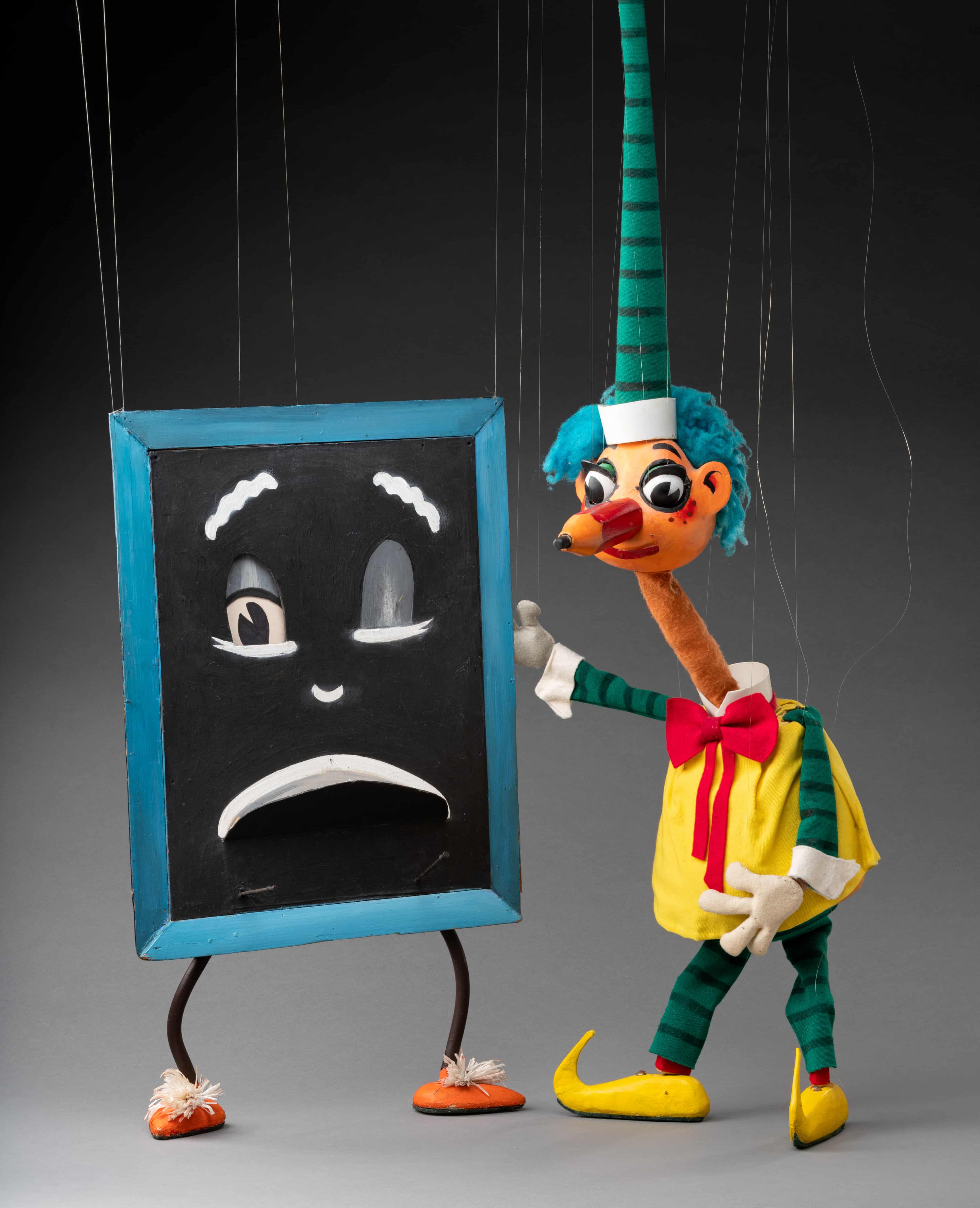
Mr Squiggle, Blackboard and Gus the Snail: inside the wonderful world of puppet-maker Norman Hetherington
Television & radio | The Guardian: Norman Hetherington’s love of drawing and puppets came together when he created Mr Squiggle, the ‘man from the moon’ with a pencil for a nose. His impatient sidekick was Blackboard: ‘Hurr-ry up!’
7 comments:
Mothman
said...
These puppets are super cool. I can clearly tell they are made for children with the bright colors and they are almost nostalgic to me. I love when an artist's craft is so primarily for kids. I think that is so beautiful and I love to see the way artists bring joy to kids. The horse puppet reminds me of Gumby or Toy Story, which is very interesting. I think it's funny that he was interested in making trick puppets, having there be a joke built into how the puppet was made, not just what the puppeteer decides to do. I would love to see what a good puppeteer could do with the more complicated puppets, I think they look like they would be very interesting to watch. The perspective of the artists’ daughter is very sweet, especially when talking about the puppet that was made before she was born.
When I was originally scrolling through this article I didnt even realize that these puppets were going on 40-50 years old. They look so well kept and vibrant. I love how expressive the puppets are, you can tell Norman Hetheringtons fascination with cartoon characters translates into his work. I think my favorite puppet is Tipsy the juggling clown. I love his fingers and how he is posed in the photo just makes him absolutely come to life. The other one that made me crack up was Dr. Pill. I love the idea of creating a character out of something as mundane as taking pills. It is wild that Hetherington taught himself wood carving techniques, as it truly goes to show how practice and determination can make mastery. I also love how each puppet thought incredibly unique also plays to the larger ensemble of puppets and the larger aesthetic of the puppet-maker.
I really love the art of puppetry, and the creation of puppets. These puppets are very beautiful and the ways in which the artist Norman Hetherington has been able to capture unique character in each of them is truly a wonder to behold. One thing I found fascinating while reading this article and looking at the photos attached to it was how in each photo you can see where the strings have been attached to each puppet to allow it to move. The diffrent puppets have a variety of diffrent places in which they can be controlled, which when a puppeteer is then added to the equation allows each one to be further characterized by not only it's base visuals but by its movement as well. The puppets in this article definitely feel nostalgic and like they were made for kids, even as someone who didn't grow up watching these particular pieces of media. I think puppets appeal really well to children, but sometimes people have a tendency to associate them only with media made for children, when I think they can also be a really powerful storytelling device in other contexts as well.
Puppetry is such an interesting facet of theatre. It’s an area that not many people get a chance to really work with unless they really go looking for it or start their own puppet troupe. One of my professors in undergrad was a puppeteer and watching how her brain worked was amazing. The fact that these puppets are 60 and 70 years old and don’t look as though they’ve been through a ringer is a testament to good artistry, upkeep, and maintenance of these pieces. Marionnette puppets take a huge learning curve to be able to do all the tricks and gimmicks without tangling the lines. The mediums used for puppets are endless as Hetherington has shown with his works. I’ve worked with what one designer called “trash puppets” or a better term might be recycled or found object puppets. It was a lot of coordinating dumpster days, knowing when a large box of stuff was being delivered to reuse that box, or finding unused objects in the depths of storage.
Puppetry has always impressed me and these puppets are particularly impressive. My favorite in the article is the two man horse. I love how he was able to make it so that it works as one puppet but then can also come apart and become two puppets. The artistry that went into making all of these puppets is beautiful. It is so clear how much love and effort he put into each and every one of his creations. The juggling puppet, Panchowas, is also very fun and intricate. I would love to see his drawings/draftings for his trick puppets because the engineering of them to make it so they can do all the different things they do must be very intricate. I also appreciate the color palette for all the puppets and how even though they are all very different, they still look like they are all part of the same collection (which they are, but sometimes collections can look incohesive, but not this one).
I LOVE THESE PUPPETS SO MUCH!!! I don’t know if this is any particular tactic but when I saw the puppets I initially thought they were much smaller than they are (hand-sized instead of half human sized). I wonder why most puppeteers make clowns first apparently? I guess it’s because of the showy nature of clowns, as people associate puppets with circus things and fun. I do really wonder what makes a puppet special. For me, with these, it’s the colors and unique silhouette. They all seem to feature three bright main colors, and many of them have odd shapes such as circles and triangles. I wish there was a video in this article so I could see them in action. It’s almost like taking the fun style of animation to real life. I wonder if it’s easy to learn to maneuver them–how heavy are they, how many strings do you have to keep track of.
Recently, I was researching different puppeteers, and found it difficult to find much coverage on puppets that did not have that popular Jim Henson style. Because puppets are not a main-stream form of media, especially when not catered towards kids, there is not a lot of focus on puppeteering as an actual form of art. This is why it is so amazing that Norman Hetherington is getting this recognition for his work in the form of an exhibition in the National Museum of Canberra. I especially love the puppet that is the man in a horse costume. I love this humorous take on puppetry, which I think its recognition as a children’s medium in America definitely opens an avenue for. Scholars in puppetry have noted a path forming as puppeteering begins to be recognized in the fine arts world. I hope that this progression continues, maybe even selfishly because I just want to see more puppets.


7 comments:
These puppets are super cool. I can clearly tell they are made for children with the bright colors and they are almost nostalgic to me. I love when an artist's craft is so primarily for kids. I think that is so beautiful and I love to see the way artists bring joy to kids. The horse puppet reminds me of Gumby or Toy Story, which is very interesting. I think it's funny that he was interested in making trick puppets, having there be a joke built into how the puppet was made, not just what the puppeteer decides to do. I would love to see what a good puppeteer could do with the more complicated puppets, I think they look like they would be very interesting to watch. The perspective of the artists’ daughter is very sweet, especially when talking about the puppet that was made before she was born.
When I was originally scrolling through this article I didnt even realize that these puppets were going on 40-50 years old. They look so well kept and vibrant. I love how expressive the puppets are, you can tell Norman Hetheringtons fascination with cartoon characters translates into his work. I think my favorite puppet is Tipsy the juggling clown. I love his fingers and how he is posed in the photo just makes him absolutely come to life. The other one that made me crack up was Dr. Pill. I love the idea of creating a character out of something as mundane as taking pills. It is wild that Hetherington taught himself wood carving techniques, as it truly goes to show how practice and determination can make mastery. I also love how each puppet thought incredibly unique also plays to the larger ensemble of puppets and the larger aesthetic of the puppet-maker.
I really love the art of puppetry, and the creation of puppets. These puppets are very beautiful and the ways in which the artist Norman Hetherington has been able to capture unique character in each of them is truly a wonder to behold. One thing I found fascinating while reading this article and looking at the photos attached to it was how in each photo you can see where the strings have been attached to each puppet to allow it to move. The diffrent puppets have a variety of diffrent places in which they can be controlled, which when a puppeteer is then added to the equation allows each one to be further characterized by not only it's base visuals but by its movement as well. The puppets in this article definitely feel nostalgic and like they were made for kids, even as someone who didn't grow up watching these particular pieces of media. I think puppets appeal really well to children, but sometimes people have a tendency to associate them only with media made for children, when I think they can also be a really powerful storytelling device in other contexts as well.
Puppetry is such an interesting facet of theatre. It’s an area that not many people get a chance to really work with unless they really go looking for it or start their own puppet troupe. One of my professors in undergrad was a puppeteer and watching how her brain worked was amazing. The fact that these puppets are 60 and 70 years old and don’t look as though they’ve been through a ringer is a testament to good artistry, upkeep, and maintenance of these pieces. Marionnette puppets take a huge learning curve to be able to do all the tricks and gimmicks without tangling the lines. The mediums used for puppets are endless as Hetherington has shown with his works. I’ve worked with what one designer called “trash puppets” or a better term might be recycled or found object puppets. It was a lot of coordinating dumpster days, knowing when a large box of stuff was being delivered to reuse that box, or finding unused objects in the depths of storage.
Puppetry has always impressed me and these puppets are particularly impressive. My favorite in the article is the two man horse. I love how he was able to make it so that it works as one puppet but then can also come apart and become two puppets. The artistry that went into making all of these puppets is beautiful. It is so clear how much love and effort he put into each and every one of his creations. The juggling puppet, Panchowas, is also very fun and intricate. I would love to see his drawings/draftings for his trick puppets because the engineering of them to make it so they can do all the different things they do must be very intricate. I also appreciate the color palette for all the puppets and how even though they are all very different, they still look like they are all part of the same collection (which they are, but sometimes collections can look incohesive, but not this one).
I LOVE THESE PUPPETS SO MUCH!!! I don’t know if this is any particular tactic but when I saw the puppets I initially thought they were much smaller than they are (hand-sized instead of half human sized). I wonder why most puppeteers make clowns first apparently? I guess it’s because of the showy nature of clowns, as people associate puppets with circus things and fun. I do really wonder what makes a puppet special. For me, with these, it’s the colors and unique silhouette. They all seem to feature three bright main colors, and many of them have odd shapes such as circles and triangles. I wish there was a video in this article so I could see them in action. It’s almost like taking the fun style of animation to real life. I wonder if it’s easy to learn to maneuver them–how heavy are they, how many strings do you have to keep track of.
Recently, I was researching different puppeteers, and found it difficult to find much coverage on puppets that did not have that popular Jim Henson style. Because puppets are not a main-stream form of media, especially when not catered towards kids, there is not a lot of focus on puppeteering as an actual form of art. This is why it is so amazing that Norman Hetherington is getting this recognition for his work in the form of an exhibition in the National Museum of Canberra. I especially love the puppet that is the man in a horse costume. I love this humorous take on puppetry, which I think its recognition as a children’s medium in America definitely opens an avenue for. Scholars in puppetry have noted a path forming as puppeteering begins to be recognized in the fine arts world. I hope that this progression continues, maybe even selfishly because I just want to see more puppets.
Post a Comment