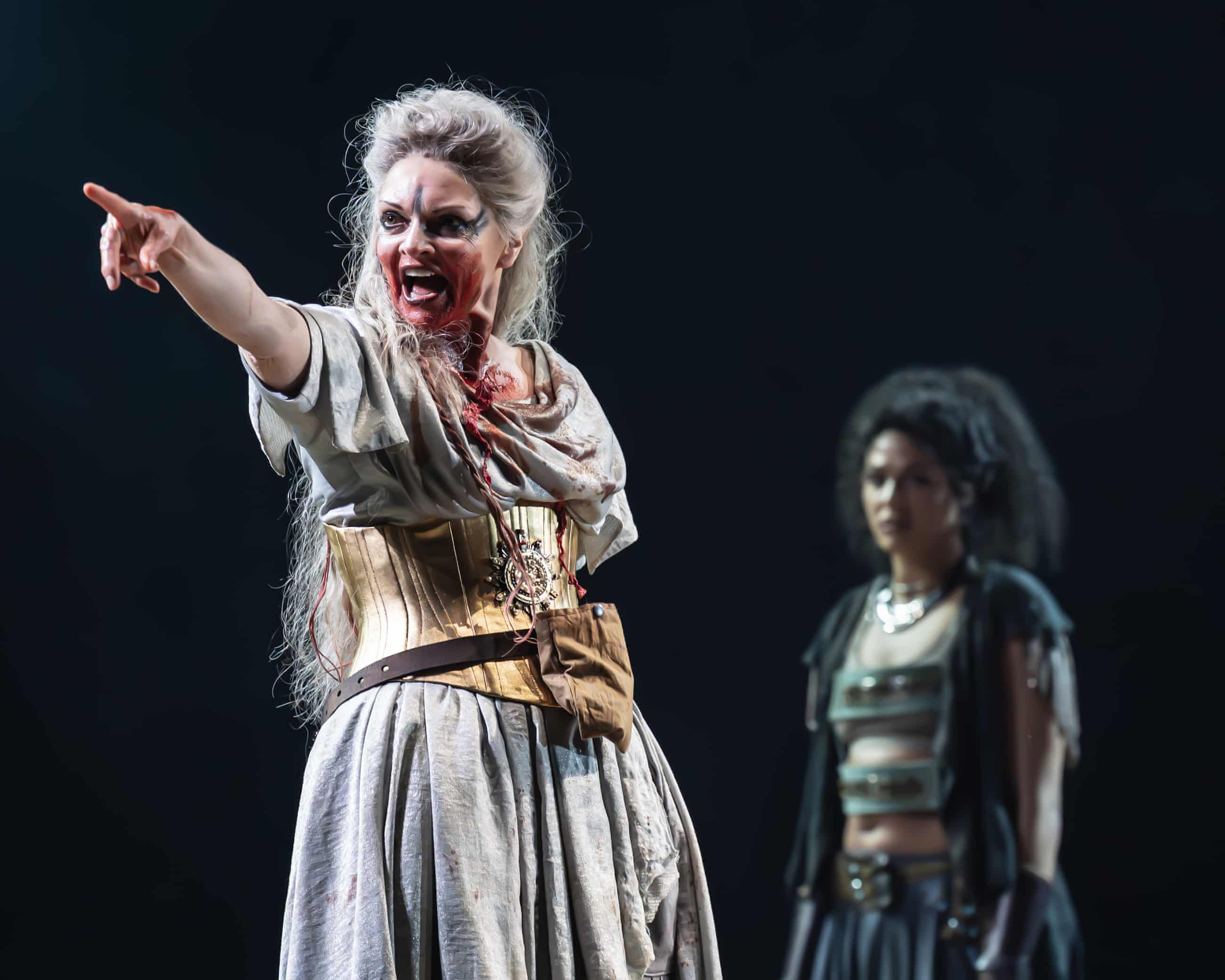
Theatre | The Guardian: How on earth do we stage Greek tragedy today? Broadly speaking, there are three possible approaches: re-creation, updating and rewriting. All three have been tried at the National Theatre across 30 productions, starting with Philoctetes in 1964 and leading to Nima Taleghani’s new Bacchae. Having seen virtually all of these, and visited the excellent exhibition about them in the Olivier’s Wolfson Gallery, I should be able to decide which is the best method. Yet, in all honesty, I find the National’s approach to the Greeks a strange mixture of hit and myth.


1 comment:
Seeing a productions’ approach to staging ancient plays is always indicative to me of how the director wants the audience to connect with that production. Staging a greek play as accurately as possible to its original staging can feel foreign to modern audiences, but serves as a reminder that ancient stories carry universal truths and are deeply recognizable. On the other hand, situating the play in a new setting ties old stories to modern issues, which expresses a universal truth to the audience in a different way. I find as an audience member that while I often relate more to productions done in this method, sometimes they can feel far fetched or contrived. Plays inspired by greek tragedies leave much more room for interpretation, which I find can sometimes miss the nuances of the original text. At CMU, our season has many greek plays this year, and I’m very interested to see how different directors and design teams approach these texts in vastly different ways even just in our school.
Post a Comment