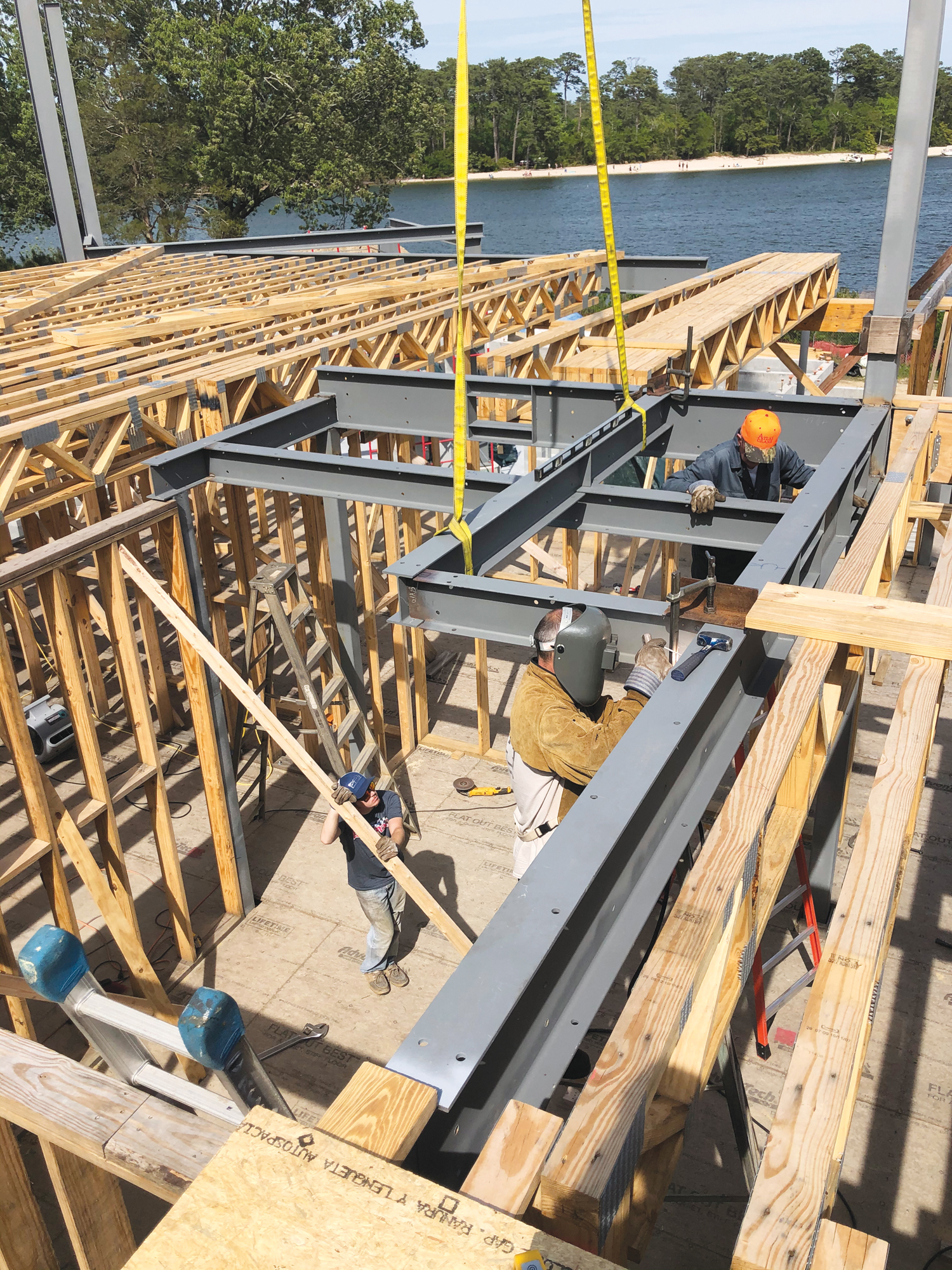
www.jlconline.com: Not every job requires it, but steel has become increasingly common on our projects as engineers continue to raise the bar on their tolerances for deflection and shear strength. For anyone not familiar with the details of steel construction, it can be intimidating at first to unroll a set of structural plans with a lot of steel called out


3 comments:
I wasn’t quite sure what I was expecting from this article, as the concept of hybrid wood and metal construction is something that I know is common in the theater and construction industries. I suppose when I went to read this article I was expecting to read about metal to wood joinery techniques, but that is not what this article was about. There is one statement that this article made that I know applies to both construction and theatrical fabrication. Which is that as designers and engineers expect the final product of the build to have tighter tolerances there will be an increasing need for metal in the fabrication of buildings and sets. Due to the simple fact that metal is stronger and a more reliable material then metal when it comes to how straight and accurate it is. This is especially true when you consider 3D modeled renderings that then get used as a blue print for a build. These models can have ridiculously tight tolerances that leave little to no room for error. Which then leads to build teams needing to use more and more metal to accomplish the job that the designer or engineer laid out for them in said model.
This article was a really fun read. Going in, I was expecting a pros and cons list of wood vs steel construction. Something about how steel is stronger, but is more expensive and requires more training to use effectively, while wood needs more support but is cheaper, and easier to provide training for. However, I instead got to read about the process involved when constructing a building using both wood and steel. I found this to be very enlightening. While we are good at our jobs, and tend to be quite knowledgeable about wood and steel construction, framers and other tradesmen spend all day every day making buildings and working with both materials at a high rate of speed. Meaning we can learn a lot from their process. I found the bit about how they get their steel columns perfectly plumb to be particularly interesting, as I had always wondered how it gets don so perfectly every time. I think it would be really interesting to continue to follow along in this process, and learn about all the steps that were taken in the construction of this building from start to finish. I am particularly curious about how they would approach solving any problems that arise later in the construction.
This was a fascinating look into a world that I don’t normally see. I generally understand that large houses are built of a combination of wood and steel, but it was very interesting to get an insiders perspective into what this process is. I have done some light construction with 2x4 studs and wooden roof trusses, and I have watched massive skyscrapers being built out of all steel and welded, but nothing in between.
It was neat to see how the steel was very much being used as the skeleton of the building structure, but the primary framing of the house was all lumber. This contractor was definitely more comfortable working with wood, and was trying to figure out the way to transition from the steel skeleton to the lumber pads that are easier to attach joists to. I think that as projects become bigger and bigger, people get more and more used to using more refined building techniques, but it also takes training and skills in order to actually build buildings in this way.
This was a fascinating look into a world that I don’t normally see. I generally understand that large houses are built of a combination of wood and steel, but it was very interesting to get an insiders perspective into what this process is. I have done some light construction with 2x4 studs and wooden roof trusses, and I have watched massive skyscrapers being built out of all steel and welded, but nothing in between.
It was neat to see how the steel was very much being used as the skeleton of the building structure, but the primary framing of the house was all lumber. This contractor was definitely more comfortable working with wood, and was trying to figure out the way to transition from the steel skeleton to the lumber pads that are easier to attach joists to. I think that as projects become bigger and bigger, people get more and more used to using more refined building techniques, but it also takes training and skills in order to actually build buildings in this way.
Post a Comment