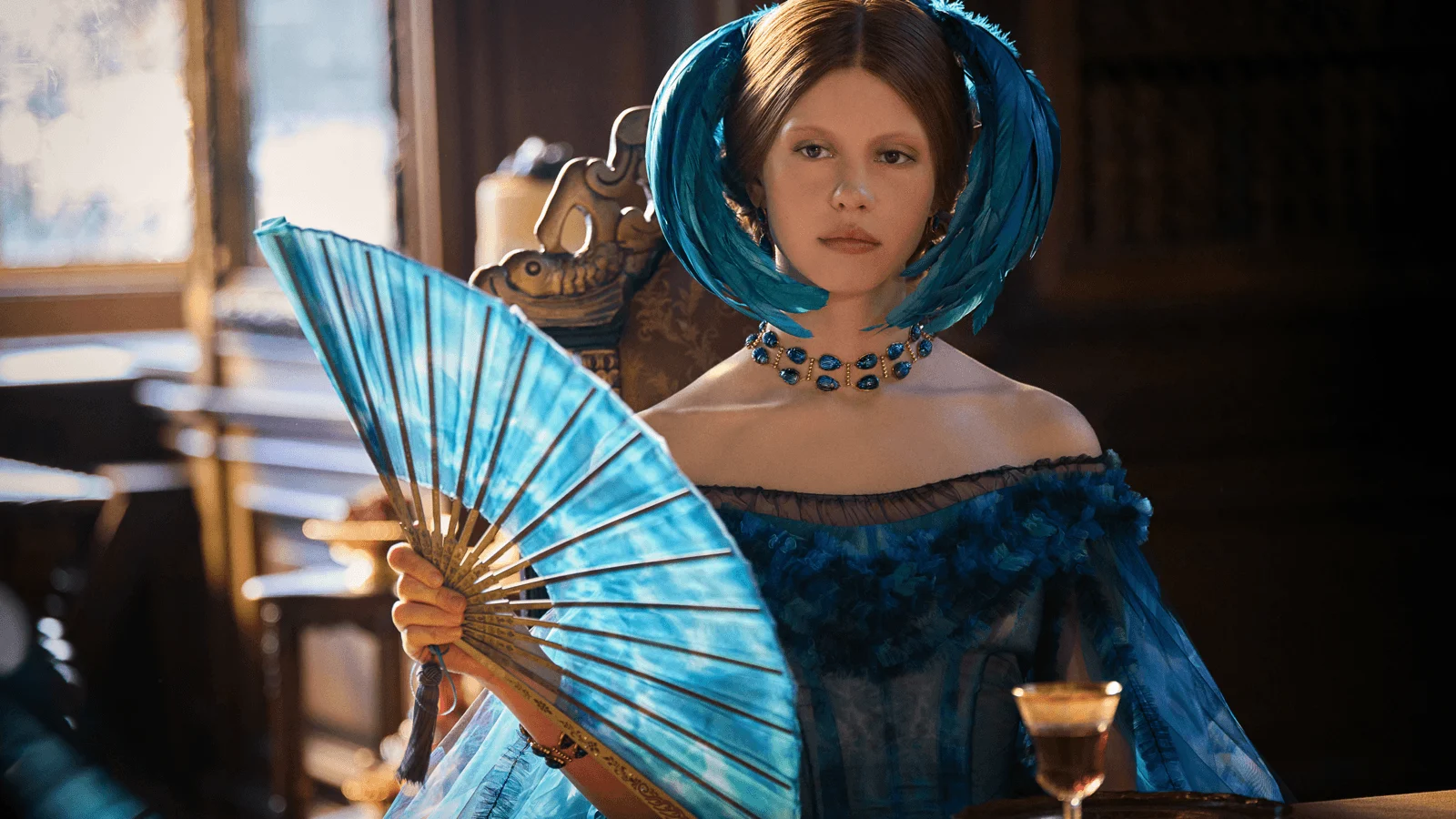
Wonderland: What does it take for someone to turn one of our time’s biggest heartthrobs into a creature? For Kate Hawley it took years of extensive research and a complete trust on Guillermo del Toro’s vision. On a brisk afternoon in London, I make my way to one of the many hotels in Soho. As I approach the building, what must be at least a 40-foot poster of Frankenstein, featuring the Creature, aka Jacob Elordi, greets me just opposite the hotel doors.


7 comments:
I love to read about the story and experience of a successful woman in this world, and Hawley is absolutely fabulous. I really enjoyed reading the part where the article mentions Hawley’s design process. She often isolates herself from the script and lets the characters’ inner lives guide her, which is really interesting and inspiring. I know that costume is more of a research-based design discipline; not only does the costume need to fit the characters, but it also needs to reflect the time/location/culture in which the whole play takes place. With that, I feel so obsessed with her way of designing. It’s similar to how an actor wants, but it requires hundreds and thousands of practices to really let the lives of the characters guide them.
When I watched this movie with my friends, I didn’t come away with a particularly favorable opinion of many of the choices made in adapting it, particularly because I felt that the characterization of Frankenstein was very misaligned with his character in the original book. (The most egregious point of divergence to me is that while in the book Frankenstein immediately regrets bringing the Creature to life when it awakes and then goes into a monthslong psychotic haze, the Frankenstein of this movie is totally chill with it and just starts abusing the creature.) However, the costumes were a design element which definitely stood out to me. I was especially taken with the costumes of Frankenstein’s mother with their striking colors and forms. It was very interesting to hear about the costume designer’s process. I particularly really appreciated her statement that Frankenstein becomes more beastly throughout the film while the creature becomes more eloquent and that her design mirrored their respective trajectories.
While watching Frankenstein, I don't remember being particularly taken by any of the costumes, other than perhaps a few of Elizabeth’s dresses, but perhaps that is the sign of good costume design. As Take Hawley expresses, its important for all the designers and the director to be speaking the same visual language so that everything feels cohesive. It's always a bit obvious when a show comes together and it feels like the designers weren't talking to each other at all. At the end of the day, the design is meant to elevate the story, so you don’t want to pull the audience out of the story with audacious costumes or sets, as fun as they many be to design. All though there were a few pretty heavy handed moments in this movie involving gloves that felt a little over the top in the moment. Other than that, I think the costumes in this film did an excellent job of adding to the creation of the world.
I have yet to watch the movie, but it would have been impossible for anyone online and interested in costuming or the horror genre to avoid hearing the overwhelming praise for the beautiful costumes that Kate Hawley has managed to create. There have been so many different interpretations of the Frankenstein story since it was written by Mary Shelley all the way back in the 1810s. It is fascinating how a tale from so long ago has remained in the public eye for so long. I wonder what in specific causes this tale to capture the attention of so many creatives who wish to incorporate it into works of their own. There have been over 400 film adaptations of the story, and that’s not even including the many tv series that have come out! The major aspect that sets this adaptation apart in my opinion, other than its masterful directing, is how amazing the costumes are.
I’ve never been someone to feel super connected to costume design, especially because I barely know anything about executing it, so I feel that I can’t judge too much. Kate Hawley’s Frankenstein costume design, on the other hand, totally blew me away. It constantly caught my eye, which was unique for films in my experience, as I was so shocked by the creativity and genius. Guillermo del Toro, the cinematography, and many other design aspects absolutely emphasized this for me, creating such beautiful frames paired with moving performances from the cast, and environments that interacted so well with the costumes. It’s also really cool to see one of the drawings of the design! I feel like I rarely see parts of the design process in recent high-profile films, so it’s very fun to look at what led to the final product. I also really appreciate what Hawley says at the end regarding discourse in costume design, discussing how art doesn’t have to please everyone to be meaningful, and that designers have to be brave and try something new to keep creating unique, meaningful pieces.
This Frankenstein costume created by designer Kate Hawley reminds me of a refined version of the suits that artists Daisy Collingridge creates. Collingridge uses movement to guide her body suits, as she calls them, creating an abstracted vision of the human form. However, it seems that Hawley has a more research focus behind her costuming. The shapes in Frankenstein’s costume more closely resemble the shapes of muscles under the skin, which taps into a more gruesome or realistic depiction of this body horror. I also appreciate the cleanliness of this Frankenstein costume, because without the blood it feels much more like an appreciation for the artistry and the softness of this movie. On the other hand, Collingridge seems to tap into this performance art territory where the visuals are instead meant to challenge the viewer’s perception of the human form. I love that there are so many artists that are exploring views of people and their movement.
This article provides a lot of valuable insight into the designer Kate Hawley and her design process. Every designer approaches things differently, and that is very clear every time you talk to a designer. In this article, the designer says that she really tries to isolate herself with the script and then “letting the narrative and the characters’ inner lives guide her, writing down her emotional response as she reads.” I thought this was very interesting and allows for a very instinctual, yet in-depth process. I think that following instincts is great, but also that sometimes if you aren’t looking at things in enough detail, then your instincts can be wrong, or you could have had a better idea if you had looked a little deeper. However, if you go too deep you can end up with an idea that is too far removed and won’t necessarily resonate with the audience. I think this strikes a happy medium.
Post a Comment