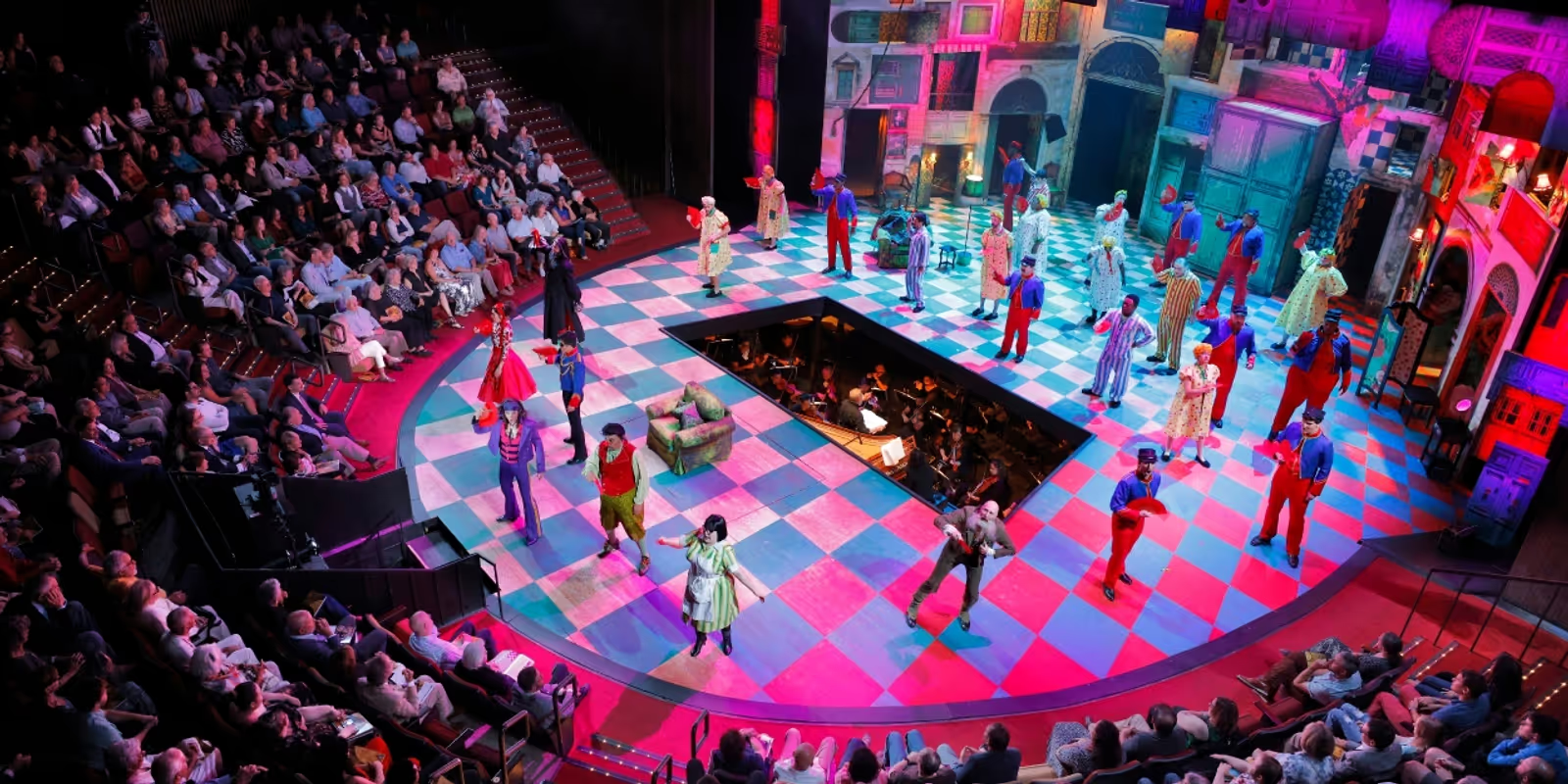
www.broadwayworld.com: It sounds like boot camp. An 89.5 hour workweek. Back to back 14 hour days. Overtime pay a rarity (and lack thereof legally sanctioned). Working in a warehouse where temperatures exceeded 100. Bullying. An open pit with no proper safety barriers. An employee so depleted and delirious that a doctor asked whether they were a victim of human trafficking. People in tears. Others too stressed to sleep. Dozens of employees sharing a single kitchen, with one stove and one refrigerator.


3 comments:
I think this is a very important exploration of how summer stock style work opportunities can become exploitative and harmful. These employees are being severely overworked and placed in dangerous conditions. Not only is this inhumane practice on the company’s part, but also shows how underfunding of the arts can lead to companies feeling that they need to employ workers in these conditions. Many Carnegie Mellon Drama students work in summer stock opportunities during their summers, and I will likely do so at some point. It is very important as an employee to not accept unsafe working conditions, both for your sake and for the safety of others and the quality of work you produce. When working conditions are as unsafe and inhumane as they appear to be in this article, the quality of art produced must surely suffer as well. I believe it is always worth it for management to examine a workplace’s practices and create good conditions for workers as it improves the safety and morale of the company but also the quality of the work being produced.
Theatre production environments are known to be tough work environments. The question starts to arise when individuals are being worked to the point of injury and still expected to show up the next day. That people are working long hours and getting little rest results in more injuries. The amount of times I raised my eyebrows at what I just read in this article was more than it should have been. There is absolutely no reason that a company working on that level should be forcing their employees to work in that environment. Articles like this have the effect that talented production professionals won’t work there. They can do the same level of work with better conditions and more support. Des Moines Metro Opera is shooting themself in the foot treating their production employees this way. I have had my experiences working at summer stocks for little pay. I now tell people to not work at those places because the work and hours that was expected of me was too much. I was concerned for my and others safety. I'm grateful that more places are being exposed for how they are choosing to treat their employees.
This story is just absolutely devastating. Theatrical technicians being overworked is unfortunately nowhere near new in this industry, but because this is an artistic passion and competitive field to even get into for many, it will often go overlooked by workers. That is not at all the case here. Safety is always meant to be above all else in theatrical (really, ANY) working environments, but from falling eight feet due to floor giving out to exhaustion to leading to the point of a concussion, safety clearly takes no precedent at this company. As this article points out though, there are many stories like this we may never know due to the success and secrecy of the entertainment industry. And though the situations in big theatre scenes such as New York, Chicago and Los Angeles are often protected from this due to organized unionization, it is still an existing problem that can happen anywhere. Ambitions aren’t worth the consequences that can arise from them when they exploit the people used to reach them.
Post a Comment