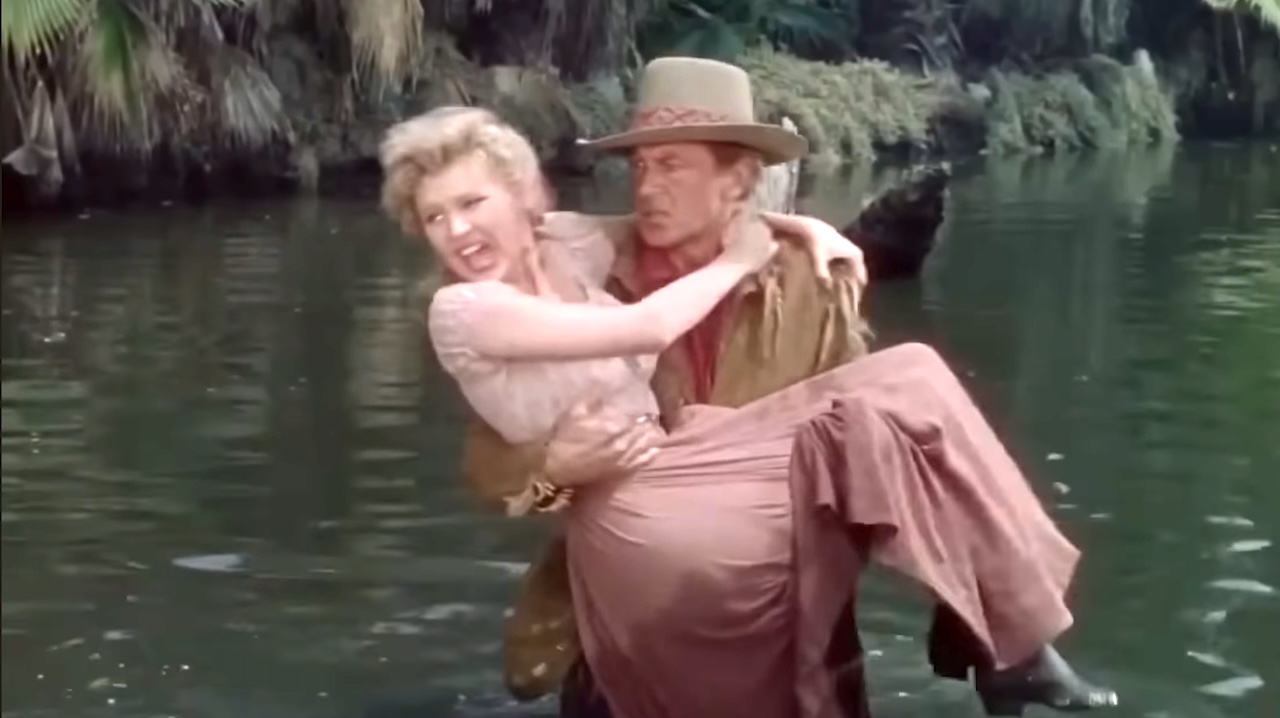
laughingsquid.com: The music and audio channel Mixed Signals looked at the history behind the famous “Wilhelm Scream”, a sound effect widely used to portray abject fear. This scream, thought to be voiced by Sheb Wooley, originated in the 1951 Warner Brothers film Distant Drums, even though the name was attributed to the ill-fated Private Wilhelm in the 1953 film The Charge at Feather River.


5 comments:
The fact that one sound effect has been used in over 400 movies in an outstanding number. I’ll have to be more attentive in movies that I watch as I’m sure I’ve missed them before. I’m surprised that it has been left in things such as Lord of the Rings, Indiana Jones, and Start Wars. I wonder if the first few uses anyone noticed, especially directors of if they just went “yea, that sounds good. Keep it.” I do appreciate that the use of thee Wilhelm Scream started as a joke between classmates and has become an inside joke amongst the film industry. I know that the archives can be a boring place to some, but some of the best jokes come out of long forgotten history. I don’t know if I actually knew about the Wilhelm Scream, but I’ve known about the Goofy Holler for a really long time, so seeing that they are possibly connected is interesting.
The Wilhelm Scream sound effect has been around for so long that it sometimes feels like it simply always existed. It makes a lot of sense that it was originally brought into the mainstream by film students as a joke, I don’t think that I’ve ever heard it in a movie and felt that it was an actual fit for the film (except for some comedy movies). At first glance it feels strange that one sound appears in over 400 movies but this particular sound is only notable for this due to being relatively unique making it easy to tell when it was used as opposed to other sound effects where it can be relatively difficult to tell if the similarity is simply due to both sound effects mimicking the same thing rather than being actually the same original recording. With all the money put into films and the quality of the finished products it’s easy to forget the fact that at the end of the day the people behind the film aren’t always taking it fully seriously and sometimes something is only in the film as a joke between friends.
As a theatre student at CMU studying design and production, reading that article about the Wilhelm scream effect made me smile—and think. That iconic scream, which has echoed through so many films and soundtracks almost like an in-joke among sound designers, reminds me that all disciplines—even ones that feel “small” or hidden—carry personality, history, and intention. The fact that sound designers add this scream almost as a signature nod shows how even what seems background or “just noise” is an opportunity for craft, connection, and playful identity. It also pushes me to consider how sound in theatre (or any performance medium) can carry those layers: not just realistic effects but subtle motifs, codes, or recurring “Easter eggs” that reward attentive audiences or fellow practitioners. In design & production, we often focus on the visual or spatial elements, but what if we inject small, meaningful touches in sound that resonate over time? That kind of layered thinking—where every detail can carry weight—feels like part of what elevates work from “good enough” to deeply alive.
I have very mixed feelings about the Wilhelm scream. It's always a fun little easter egg when it pops up in what I’m watching, but it has the automatic effect of making me think about the people in sound that made the decision to put it in there, and if I had any immersion before that moment, it will have been instantly and usually irreparably broken. It's one of the quickest ways to let your audience know “HEY! You’re watching a MOVIE!” and if the movie isn’t meant to be immersive, it's usually fine, but it also has the unfortunate effect of bringing this to earlier movies it was used in, like Star Wars. While it was not originally used for comedy, it’s become so synonymous with movies and easter eggs to me that I can unfortunately not see past it. I definitely feel like it’s lost it’s favor and will soon be seen as a trend of the past.
I’ve always found the history behind the iconic Wilhelm scream super interesting. It is fascinating to me that a singular sound effect has found itself a way into so many different movies and TV shows over the years. I have definitely heard about this history before, but had forgotten a lot of the story, so it was fun to read this article and refresh my memory of the history of this scream. Something that I have noticed is that ever since I first heard about the concept of the “Wilhelm scream,” is that I feel like I notice it much more and it just pops up a lot in the most random commercials and stuff. It’s definitely a super distinctive sound. This scream gets used as basically the only example of an effect that is used by basically the entirety of the film industry, and I’m curious if there are other sound or visual effects that aren’t as commonly known, but are still used in this way.
Post a Comment