Pittsburgh Arts, Regional Theatre, New Work, Producing, Copyright, Labor Unions,
New Products, Coping Skills, J-O-Bs...
Theatre industry news, University & School of Drama Announcements, plus occasional course support for
Carnegie Mellon School of Drama Faculty, Staff, Students, and Alumni.
CMU School of Drama
Thursday, September 11, 2025
This viral comedian's 'clanker' skit has ignited debate over robot slurs
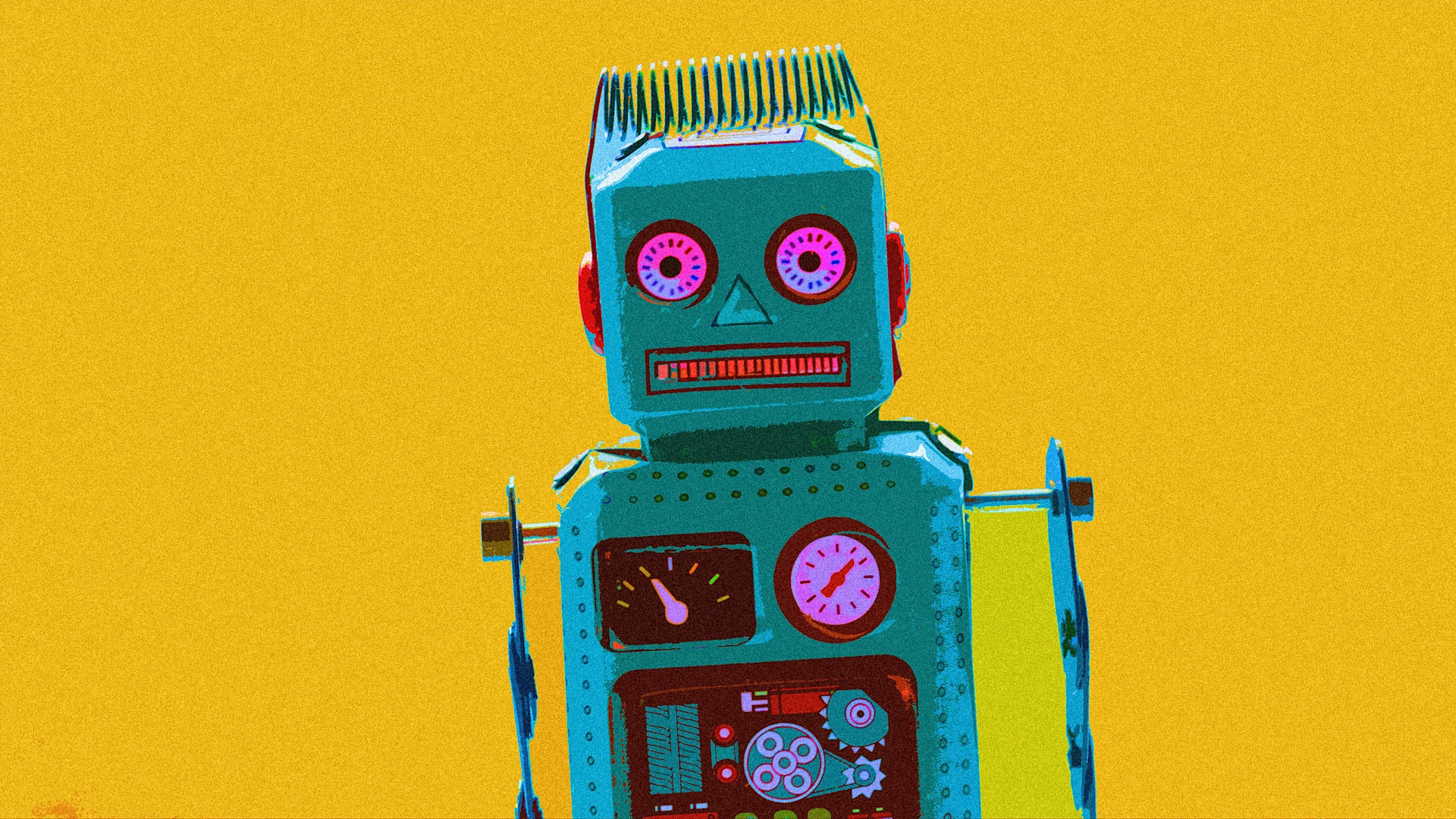
Fast Company: A TikTok comedian has sparked debate after riffing on the viral term “clanker,” which in recent months has surfaced as an insult for robots, AI systems, and those who rely on them.
11 comments:
Jordan G
said...
This was a situation/debate that I personally was not aware of. I am a Star-Wars fan, and when I hear the word "clanker" all I can think of is the scenes in the clone wars show where the clones are calling the droids "clankers". When I hear this words I just think of fond memories from watching this show when I was younger, but upon thinking about it more I do see the similarities more between the use of that word and other slurs. I am not sure how I feel about the use of these words to refer to robots. At this point in society / robotic-development I don't see the need to respect robots to the point of not using such words to describe them. As at this point they are not sentient enough to be offended by said words, but if this changes I would respect their autonomy and not use such terminology. Regardless the skits that are described in this article are simply awful it is literally just copying and pastes actual racists jokes and swapping out two racial groups for humans and robots. These actions are belittling the racism that racial groups have suffered from and should not be done, and the same goes for taking a racial slur and switching it to make it refer to robots. Now I can see an argument for "clankers" being such a term, and I would respect anyone who has this opinion.
Okay personally I think this is pretty stupid. Robots aren't human and to think of them like they are is an incredibly dangerous mentality that has been the theme of many science fiction pieces. When it comes to a skit about robots, and calling them "slurs" and the disscussion is about weather or not disrespecting in animate objects is okay I just have to think people are overreacting. I think the only valid argument in this article is about how some of the anti robot slurs are too similar to slurs that real people are called, but I also think the original video is clearly meant to be satirical. In the CMU gift shop there is a shit that says robots are people too, which sparked a conversation among me and several of my friends on the topic of how we view robots. As the world of artificial intelligence continues to evolve how human we consider robots will be a topic of conversation, and already is something we have started to talk about.
When I first read the title of this article I had the very knee-jerk reaction of “oh this is just some article trying to ragebate for views”. I wasn’t aware of the skits made by Stanzi Potenza and Samuel Jacob and had only ever seen the term used in a very joking way to poke fun at the recent progress made with AI and what it might mean for the future. However, after reading the article I can definitely understand how these skits made what was once a harmless joke into something that feels very insidious. When the article mentioned some of the made up “slurs” being used I was shocked because it felt so on the nose to make light of actual slurs. Regardless of the intentions of the skits, it seems that these individuals do not grasp the severity of the situations they are portraying. I think if the made up “slurs” did not resemble read slurs it might be another story but the similarities make it seem as though they are downplaying the severity of how these slurs have been used to hurt real people.
I did not know about this controversy.” I am not surprised by the fact this stemmed from stand-up. Comedy shows are often divisive depending on the comedian’s social and political leanings. I don’t think making fun of robots is bad at all because (as far as we know) they don’t have feelings. I think reusing slurs against real marginalized groups of people is obviously wrong and if we’re gonna make fun of robots we should just make up new names to call them. The comedian exhibited that he has no creativity if he used real slurs with changed letters and terms to make fun of technology. Like at least exercise some intelligence and make better names than the ones noted in the article. I think in the end people should dog on this man for using altered real life slurs rather than the fact he’s making fun of goofy technology.
This is the kind of stupid 21st century culture war battle I just can’t stand. Someone made a funny skit online and now the media and its consumers are picking it apart for whether or not it is allowed to be funny or not based on the current subjective rules of language and engagement. I think we might be cooked. At risk of explaining the joke, I think the subtext behind these kind of jokes and skits is not only to hate on inanimate objects and those who view them as equal to humans (which is ridiculous) but to make fun of and shame those who used to or currently hold similar views about other human beings. I think the “robophobia” and broader anti-ai anti-robot sentiments expressed in our media show an ingrained sense of human-supremacy which I don’t think should be seen as a negative. Either way, as with most opposition to this kind of media, it’s rarely the actual communities that are the “victims” of this kind of stuff that have problems and speak against it and more often its privileged communities who have no skin in the game making a fuss to score internet points. That’s fine, but we shouldn’t need to take their bad faith opinions as an actual position in this. I think the broader focus of this kind of media being made should be a discussion on what we as a society will do if, and when, AI achieves singularity and becomes “sentient” in one way or another, which studies say may happen as early as 2028. I know I’ll be on the side of Potenza and the robophobes, but if we’re too busy falsely conflating modern technology with anti-racist movements of 75 years ago then we might be in more danger than we think.
whenever i bring this up in casual conversation people look at me like i'm a raging liberal sjw who just grew seventeen blue-haired heads. but THANK YOU because it is WEIRD. It is WEIRD to say "the clankas are going to be sitting in the back of the bus." Why are you emulating speech patterns of real slurs? you wanna say the n word SOOOOO BAD. People (SOME cishet white men) LOVE the idea of being able to say slurs even if they're fake i swear to god. It's so freaking stupid. Someone says "oh maybe you shouldn't joke about clankers that way it's kind of reminiscent of real history and oppression maybe you should just keep the joke fictional and not tied to actual racism" and mfs go "well it's just a joke!!! it's just a joke!!!!! you don't understand satire!" like my brother in christ it's not that hard to avoid saying something. Also. To be clear: the clanker bit is HILARIOUS, and as a die hard star wars fan I love it. But i think it has a better lane in making fun of ACTUAL robots, not subbing them in for black people. like "saw a clanker on the road today and almost smashed his car" (self-driving cars). Also tbh... I'm what some may call "robophobic." And i think it's funny that the word clanker is rising in society when it has an actual foothold (eg the rise of AI and more automated tech), and therefore can actually be USED as a "derogatory" term (as robots don't actually have feelings.) The point I'm making I guess is that the word clanker is FUNNY, but the people who are just using it as a cop out for the n word aren't even using it to its full potential.
Though this is rather stupid it brings to light common controversies that happen with this generation's comedic trends. I think the term clanker is pretty funny on its own, especially with the way our society is going with its use of ai and its growing sentience. However, people aren't wrong that it's a bit messed up to work off of racial slurs to make slurs for robots. It's almost the equivalent of just saying the slur, it's what so many comedians already do, they dance on the edge of something very offensive. But it's important to not cross the line, which a lot of comedians do, and what a lot of internet “dark humour” does. But this isn't the only instance of the use of clanker. People are making fun of robots and how they are becoming humanized. But why are people humanizing them and insulting them in a bigoted manner? There are more creative ways to make fun of robots.
This is a little bit stupid and blown way out of proportion. The origins of this are quite comedic though, as the term originally came from the Star Wars: The Clone Wars TV series in the early 2010s. The fact that it has gained popularity in the modern age of social media isn’t particularly surprising, and the fact that people decided to invent slurs for robots isn’t particularly surprising either. There’s also some merit to the argument that some of the ‘robotic slurs’ are a little close to slurs used against actual minorities, so maybe those particular words should be toned down. Regardless, the entire debate is still blown way out of proportion, given that it’s over artificial intelligence and robots.
I personally don’t believe that the use of the word ‘clanker’ is wrong, but I do think that Potenza is probably flying too close to the sun with this TikTok. In my opinion, critics aren’t wrong to say that it mimics historical real-world racism too directly, but I think there’s an argument either way. Jacob’s video is worse and again mimics real world problems too directly, for my taste anyways. The ‘George Droid’ line of Jacob’s video is way too far over the edge. I don’t think it’s bad to be making fun of robots and AI, but there are funnier and more original ways to do it than how these two creators did. It is concerning that there are some people who will defend AI like some of the comments do, when at the end of the day it’s just a computer that can be pretty problematic for artists and other real people.
This is an interesting article to read. I have seen some skits similar to the one referenced in this article, but not this exact skit. the ones that I have seen did not sort of harken back to any actual slurs that a group of people might find too similar to their own derogatory references.I think that it's definitely a bit of a gray area in terms of comedy, as some might argue that comedy is supposed to make you feel on some level uncomfortable, and that perhaps the intention of this creator was to create that sort of level of uncomfortably close to reality type feeling. However, I do think that the complaints mentioned in these articles are valid. I don't think that it's right to, in a comedy skit, create slurs that are similar to real life slurs. I think it would be a very different conversation if these robotic slurs were completely original and not hearkening back to actual struggle that actual people are going through.
As someone interested in how media and performance intersect with social issues, I found this article on the “clanker” skit really thought-provoking. On one hand, satire often pushes boundaries, and science fiction has long used robots as metaphors for marginalized groups. Shows like Star Trek or Star Wars explored discrimination allegorically, so it makes sense comedians today would lean into similar tropes. However, the concern here is that these skits don’t just parody prejudice—they risk trivializing real slurs and historical oppression. When Stanzi Potenza uses terms like “wirebacks,” it directly parallels racist language in a way that can feel exploitative rather than insightful. Humor is powerful when it critiques systems, but it gets murky when it mimics slurs without adding clear commentary. I think this debate highlights a bigger question: how do creators responsibly balance satire, comedy, and cultural sensitivity in a digital age where content spreads instantly and globally?


11 comments:
This was a situation/debate that I personally was not aware of. I am a Star-Wars fan, and when I hear the word "clanker" all I can think of is the scenes in the clone wars show where the clones are calling the droids "clankers". When I hear this words I just think of fond memories from watching this show when I was younger, but upon thinking about it more I do see the similarities more between the use of that word and other slurs. I am not sure how I feel about the use of these words to refer to robots. At this point in society / robotic-development I don't see the need to respect robots to the point of not using such words to describe them. As at this point they are not sentient enough to be offended by said words, but if this changes I would respect their autonomy and not use such terminology. Regardless the skits that are described in this article are simply awful it is literally just copying and pastes actual racists jokes and swapping out two racial groups for humans and robots. These actions are belittling the racism that racial groups have suffered from and should not be done, and the same goes for taking a racial slur and switching it to make it refer to robots. Now I can see an argument for "clankers" being such a term, and I would respect anyone who has this opinion.
Okay personally I think this is pretty stupid. Robots aren't human and to think of them like they are is an incredibly dangerous mentality that has been the theme of many science fiction pieces. When it comes to a skit about robots, and calling them "slurs" and the disscussion is about weather or not disrespecting in animate objects is okay I just have to think people are overreacting. I think the only valid argument in this article is about how some of the anti robot slurs are too similar to slurs that real people are called, but I also think the original video is clearly meant to be satirical. In the CMU gift shop there is a shit that says robots are people too, which sparked a conversation among me and several of my friends on the topic of how we view robots. As the world of artificial intelligence continues to evolve how human we consider robots will be a topic of conversation, and already is something we have started to talk about.
When I first read the title of this article I had the very knee-jerk reaction of “oh this is just some article trying to ragebate for views”. I wasn’t aware of the skits made by Stanzi Potenza and Samuel Jacob and had only ever seen the term used in a very joking way to poke fun at the recent progress made with AI and what it might mean for the future. However, after reading the article I can definitely understand how these skits made what was once a harmless joke into something that feels very insidious. When the article mentioned some of the made up “slurs” being used I was shocked because it felt so on the nose to make light of actual slurs. Regardless of the intentions of the skits, it seems that these individuals do not grasp the severity of the situations they are portraying. I think if the made up “slurs” did not resemble read slurs it might be another story but the similarities make it seem as though they are downplaying the severity of how these slurs have been used to hurt real people.
I did not know about this controversy.” I am not surprised by the fact this stemmed from stand-up. Comedy shows are often divisive depending on the comedian’s social and political leanings. I don’t think making fun of robots is bad at all because (as far as we know) they don’t have feelings. I think reusing slurs against real marginalized groups of people is obviously wrong and if we’re gonna make fun of robots we should just make up new names to call them. The comedian exhibited that he has no creativity if he used real slurs with changed letters and terms to make fun of technology. Like at least exercise some intelligence and make better names than the ones noted in the article. I think in the end people should dog on this man for using altered real life slurs rather than the fact he’s making fun of goofy technology.
This is the kind of stupid 21st century culture war battle I just can’t stand. Someone made a funny skit online and now the media and its consumers are picking it apart for whether or not it is allowed to be funny or not based on the current subjective rules of language and engagement. I think we might be cooked. At risk of explaining the joke, I think the subtext behind these kind of jokes and skits is not only to hate on inanimate objects and those who view them as equal to humans (which is ridiculous) but to make fun of and shame those who used to or currently hold similar views about other human beings. I think the “robophobia” and broader anti-ai anti-robot sentiments expressed in our media show an ingrained sense of human-supremacy which I don’t think should be seen as a negative. Either way, as with most opposition to this kind of media, it’s rarely the actual communities that are the “victims” of this kind of stuff that have problems and speak against it and more often its privileged communities who have no skin in the game making a fuss to score internet points. That’s fine, but we shouldn’t need to take their bad faith opinions as an actual position in this. I think the broader focus of this kind of media being made should be a discussion on what we as a society will do if, and when, AI achieves singularity and becomes “sentient” in one way or another, which studies say may happen as early as 2028. I know I’ll be on the side of Potenza and the robophobes, but if we’re too busy falsely conflating modern technology with anti-racist movements of 75 years ago then we might be in more danger than we think.
whenever i bring this up in casual conversation people look at me like i'm a raging liberal sjw who just grew seventeen blue-haired heads. but THANK YOU because it is WEIRD. It is WEIRD to say "the clankas are going to be sitting in the back of the bus." Why are you emulating speech patterns of real slurs? you wanna say the n word SOOOOO BAD. People (SOME cishet white men) LOVE the idea of being able to say slurs even if they're fake i swear to god. It's so freaking stupid. Someone says "oh maybe you shouldn't joke about clankers that way it's kind of reminiscent of real history and oppression maybe you should just keep the joke fictional and not tied to actual racism" and mfs go "well it's just a joke!!! it's just a joke!!!!! you don't understand satire!" like my brother in christ it's not that hard to avoid saying something. Also. To be clear: the clanker bit is HILARIOUS, and as a die hard star wars fan I love it. But i think it has a better lane in making fun of ACTUAL robots, not subbing them in for black people. like "saw a clanker on the road today and almost smashed his car" (self-driving cars). Also tbh... I'm what some may call "robophobic." And i think it's funny that the word clanker is rising in society when it has an actual foothold (eg the rise of AI and more automated tech), and therefore can actually be USED as a "derogatory" term (as robots don't actually have feelings.) The point I'm making I guess is that the word clanker is FUNNY, but the people who are just using it as a cop out for the n word aren't even using it to its full potential.
Though this is rather stupid it brings to light common controversies that happen with this generation's comedic trends. I think the term clanker is pretty funny on its own, especially with the way our society is going with its use of ai and its growing sentience. However, people aren't wrong that it's a bit messed up to work off of racial slurs to make slurs for robots. It's almost the equivalent of just saying the slur, it's what so many comedians already do, they dance on the edge of something very offensive. But it's important to not cross the line, which a lot of comedians do, and what a lot of internet “dark humour” does. But this isn't the only instance of the use of clanker. People are making fun of robots and how they are becoming humanized. But why are people humanizing them and insulting them in a bigoted manner? There are more creative ways to make fun of robots.
This is a little bit stupid and blown way out of proportion. The origins of this are quite comedic though, as the term originally came from the Star Wars: The Clone Wars TV series in the early 2010s. The fact that it has gained popularity in the modern age of social media isn’t particularly surprising, and the fact that people decided to invent slurs for robots isn’t particularly surprising either. There’s also some merit to the argument that some of the ‘robotic slurs’ are a little close to slurs used against actual minorities, so maybe those particular words should be toned down. Regardless, the entire debate is still blown way out of proportion, given that it’s over artificial intelligence and robots.
I personally don’t believe that the use of the word ‘clanker’ is wrong, but I do think that Potenza is probably flying too close to the sun with this TikTok. In my opinion, critics aren’t wrong to say that it mimics historical real-world racism too directly, but I think there’s an argument either way. Jacob’s video is worse and again mimics real world problems too directly, for my taste anyways. The ‘George Droid’ line of Jacob’s video is way too far over the edge. I don’t think it’s bad to be making fun of robots and AI, but there are funnier and more original ways to do it than how these two creators did. It is concerning that there are some people who will defend AI like some of the comments do, when at the end of the day it’s just a computer that can be pretty problematic for artists and other real people.
This is an interesting article to read. I have seen some skits similar to the one referenced in this article, but not this exact skit. the ones that I have seen did not sort of harken back to any actual slurs that a group of people might find too similar to their own derogatory references.I think that it's definitely a bit of a gray area in terms of comedy, as some might argue that comedy is supposed to make you feel on some level uncomfortable, and that perhaps the intention of this creator was to create that sort of level of uncomfortably close to reality type feeling. However, I do think that the complaints mentioned in these articles are valid. I don't think that it's right to, in a comedy skit, create slurs that are similar to real life slurs. I think it would be a very different conversation if these robotic slurs were completely original and not hearkening back to actual struggle that actual people are going through.
As someone interested in how media and performance intersect with social issues, I found this article on the “clanker” skit really thought-provoking. On one hand, satire often pushes boundaries, and science fiction has long used robots as metaphors for marginalized groups. Shows like Star Trek or Star Wars explored discrimination allegorically, so it makes sense comedians today would lean into similar tropes. However, the concern here is that these skits don’t just parody prejudice—they risk trivializing real slurs and historical oppression. When Stanzi Potenza uses terms like “wirebacks,” it directly parallels racist language in a way that can feel exploitative rather than insightful. Humor is powerful when it critiques systems, but it gets murky when it mimics slurs without adding clear commentary. I think this debate highlights a bigger question: how do creators responsibly balance satire, comedy, and cultural sensitivity in a digital age where content spreads instantly and globally?
Post a Comment