OnStage Blog: Let’s get real. Theatre fandoms are some of the most passionate groups you’ll find anywhere. We obsess over every note, every costume detail, every twist and turn in the story. That kind of passion is awesome. But sometimes it goes sideways and turns into straight-up toxicity. When that happens, what should be fun ends up full of drama.


12 comments:
Ok this one’s kind of funny. It feels gauged towards chronically online theater kids who’ve never had a job before. No hate but you know what I mean. I think my favorite parts are when the article recommends not harassing actors and real people when they don’t fit or agree with your imaginary “ships” and the idea that you should “take a break from social media” if “fandom drama” gets too “exhausting”. I’m not trying to hate because I think this blog was written in good faith but seriously, I’d like to untether personal identity from media and consumption. I don’t think the media we enjoy and that connects with us should impact our selfhood to the extent that this article insinuates that it does to some members of the “theater fandom”. Can we get back to a place where we take what we want from the art we consume without letting that media consume us? I really enjoy movies and tv and theater as well, but I like them for the stories they tell, the themes they explore, and the messages they espouse. I don’t think any piece of media can be perfect (except for Phish’s A Live One album) and I think by linking our selfhood to a piece of media we are setting ourselves up to have to defend an imperfect piece of art or else face admitting that we ourselves are imperfect. I think a better course of action would be to use art to explore our differences and faults, and use it to examine ourselves and grow as people. I hope that’s not too toxic of an idea.
I think what this article is talking about goes much deeper than what is being discussed however I do think that what it is getting at is important. It is not very applicable to those of us that work in the field because we really do not interact with “fans” much at this point in our education but outside our bubble I think it is very toxic. I like that this reminds people that actors are people. I see this most in films with big celebrities but I know it applies everywhere. Sometimes there is a lot of excitement about a person and that is great but I know of a lot of situations where it has become unsafe or someone left the field because they could not do it anymore. I also think that people should be able to do controversial work. Not every story or character has to be perfectly aligned for someone to be ok art.
I also agree that this gets to a point that sounds a little bit ridiculous. I do not at all want to sound like I am making fun of any particular person that is very interested in fandoms or online culture, but I think that this blog alone displays a much larger issue in our society and specifically with younger generations who have grown up on the internet.
The issue of parasocial relationships is another big topic that can be brought to this conversation, and this overall shows just a wild entitlement that comes from spending so much time in online echo-chambers. While these are real issues, in the current point in history that we have found ourselves in, petty fandom arguments are distracting us from a larger fight for free speech and self expression.
I believe that the toxicity discussed in this article is not just present within theater fandoms, but within fandoms in general. This is part of a bigger issue within fandom culture as a whole. Fandom culture can be beneficial; it allows people with similar or shared interests to come together and find/make spaces to talk about their said shared interests. They can help people make friends or express their passions or even hone their artistic skills. As someone who has participated in fandom culture, I can say for sure that my desire to participate in a fandom has driven me to improve my artstyle and draw/write more often. I’ve also made great friends through fandoms. Passion makes up a fandom and drives it which is what makes them so special and incredible at times. However, too much of anything can be a bad thing. Passion in excess is often what leads to toxicity within fandoms. Someone’s passion for a ship, headcanon, character, etc. can make them act irrationally such as getting into shipping discourse and/or developing an unhealthy obsession with a character, the actor behind the character, and/or the actor’s relationship and life. These are just a few examples. People who are passionate when it comes to their beliefs can often feel threatened if someone else disagrees with their beliefs. Thus, causing them to defend their beliefs and/or lash out and then that leads to more discourse, fighting, and irrational behavior. This problem is only further amplified by echo chambers within the fandom, immature behaviors picked up from being too chronically online, social media, isolation, and often the real life circumstances of the people involved. This is why it is so important that people in fandom spaces learn to be more mindful, courteous, and understanding of each other. A lot of toxicity could be solved if people could learn to keep a more open mind and be respectful of each other’s ideas and opinions. As passionate as you may be about something and as much as you may believe certain things, you have to remember that some people may not be as passionate and may not even share the same beliefs as you and that that is okay. Fandom culture can be incredible, you just need to know how to approach it and, as most things are with society and collaborative settings, people need to be more understanding of each other and more open-minded.
This is so interesting to read about, since (even as a design and production student,) I’ve never really found myself into the hyper-aware musical obsessed side of the internet. These little steps to create a better online theatrical community aren’t only helpful to those who are interested in musical theater, but anyone else invested in an online community as strong as this. So much of our digital modern world is so heartless, so inhuman. Everyone is so comfortable hiding behind a screen we forget to view humanity through to the other side of a screen. It’s incredible that we’re at a point in our society that we have to create a set of guidelines within a digital community as a reminder that we’re interacting with other humans, one of my favorite music artists touches on this topic a lot in her work. “We want the humans to grind, we want the engines to bleed,” is a line from her song, Crowd Caffeine, which addresses the modern use of technology in place of human connection, and the humanity we are in turn attaching to machines. It begs the question: can a digital community such as this one truly ever be as meaningful as a physical human connection? The toxicity of modern theater fandoms, in my personal opinion, does not stem from the habits of any individual, but instead the habits that we have as a society to excuse a lack of human connection with our modern technology.
this was an interesting (though rather surface level) piece on theater fandoms. I think that fandom culture as a whole is a super complex and rather odd phenomenon. on the one hand passion for things, such as the case with theater has a huge hand in keeping our industry alive. these online spaces can provide people with meaningful connections, and places to express themselves especially younger people who may have a hard time fitting in. However as is the case with pretty much every online fandom things can go down hill very quickly. online it is far easier to forget that actions impact others, and that there are real people behind the screens. things can often escalate, with people feeling like they need to be the "biggest" fan of something to the point where they are obsessive, and even end up violating the personal boundaries of other people. this fan culture is incredibly unfortunate because something that had the potential to be good has now been poisoned with the toxicity of the internet.
okay so I forgot to put my name on this before i posted it thats totally my bad
Great message, although I honestly feel like this is a problem you run into nowadays with any type of fandom due to a.) their prevalence in online spaces and b.) accessibility of online spaces. Because fandom is open to anyone, it often creates a home for less sociable people (hence, fandom IS their only form of socialization). To be clear this isn't a problem! Lots of people (myself included) find kinship & enjoyment in fandoms. I really wish there was a way to make any fandom less toxic, but the things that make it toxic (aka people who have no idea how to interact with others in healthy manners so they act weird online) are also representative of what makes fandom GOOD: that it's usually a space for ANYONE to gather and discuss media that we as groups all enjoy. Also, part of the reason a lot of people act so weirdly in fandoms is that a lot of them are super young. Sometimes the bringers of the most drama, the most passionate "shippers," and the people who get "exhausted" by fandom drama and are unable to step away are people who shouldn't really be on the internet in the first place due to their age. I've also seen and experienced sometimes in theatre fandoms that some fans act TOO understanding of the performers to the point of infantilization. (This happens a lot with male performers in particular.) TL;DR, what makes fandoms good (free speech, accessibility) can also make them toxic (overly intense enjoyment.)
I somehow found myself getting a lot of toxic fandom videos directed at my feed after searching a show on TikTok after seeing it to see other peoples thoughts and opinions. For the most part, it seemed pretty normal and harmless. It was mainly people making edits of their favorite characters or posting fan theories which is seemingly pretty normal. It got weird when I would come across pictures taken of actors when they are minding their own business away from the show or "ships" that made no sense and were clearly just desires of the people that wrote them. The article also mentioned that people had different opinions and not to "cancel" those we don't agree with, however I do understand (as someone who never comments online or calls anyone out) why people feel the need to call out those who made outright offensive comments of microagressions.
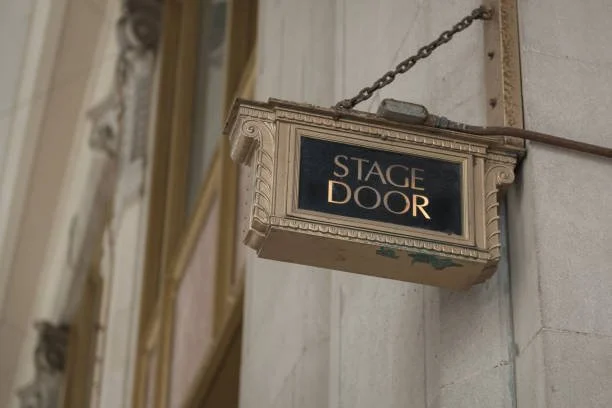
While I definitely agree with what this article has to say about theatre fandoms and toxicity, I’d like to specifically elaborate on the inclusion and focus of a “stage door” image in relation to this article. There are many stories and experiences shared by stand-out actors on getting swarmed at stage doors. The overwhelmingness of it all (and having to deal with it sometimes on a daily basis) causes many performers to avoid it or run past fans without signing playbills, talking to them or taking pictures. After a long, exhausting show, it’s quite understandable as they are humans and need space. I think it’s important that theatre fans (especially of these kinds of actors), allow for understand of space and boundaries, straying away from parasocialism. This relates directly to the article’s point of remembering that “These Are Real People”. Thus why the inclusion of the stage door image adds another external layer to the validity of the article.
This article was very interesting and overall good at summarizing the issues with intense fandoms as they see most often in theater but I see these issues with hardcore fandoms in all forms of media. One of the biggest issues I see in fandoms is fans unhealthy disagreeing which they talked about in this article and I think made very good points. I know many forms of media purposely play into the two fandoms that fans are supposed to argue over plot lines or characters but it becomes an issue when people take things too personal leading them to take it too far. Which usually includes attacking the actors as if they have a say in what their characters do or attacking the writer for making the choices they did. Another big issue I’ve seen a lot in the media that wasn’t talked about in this article is fetishizing actors/ characters and making inappropriate comments or edits about actors that cause said actors and their partners to be uncomfortable.
This article was very interesting and was very accurate from my personal experience. From some comments online I have come to the conclusion that it is also difficult for some people within fandoms to separate the characters from the actors and that the artistic choices were made my actual people and not just made up out of thin air. I fully agree with the overall message of the article that fandoms can be toxic but they can also bring people together such as hating the same character, but this also has to include hating the character and separating them from the actor.
Post a Comment