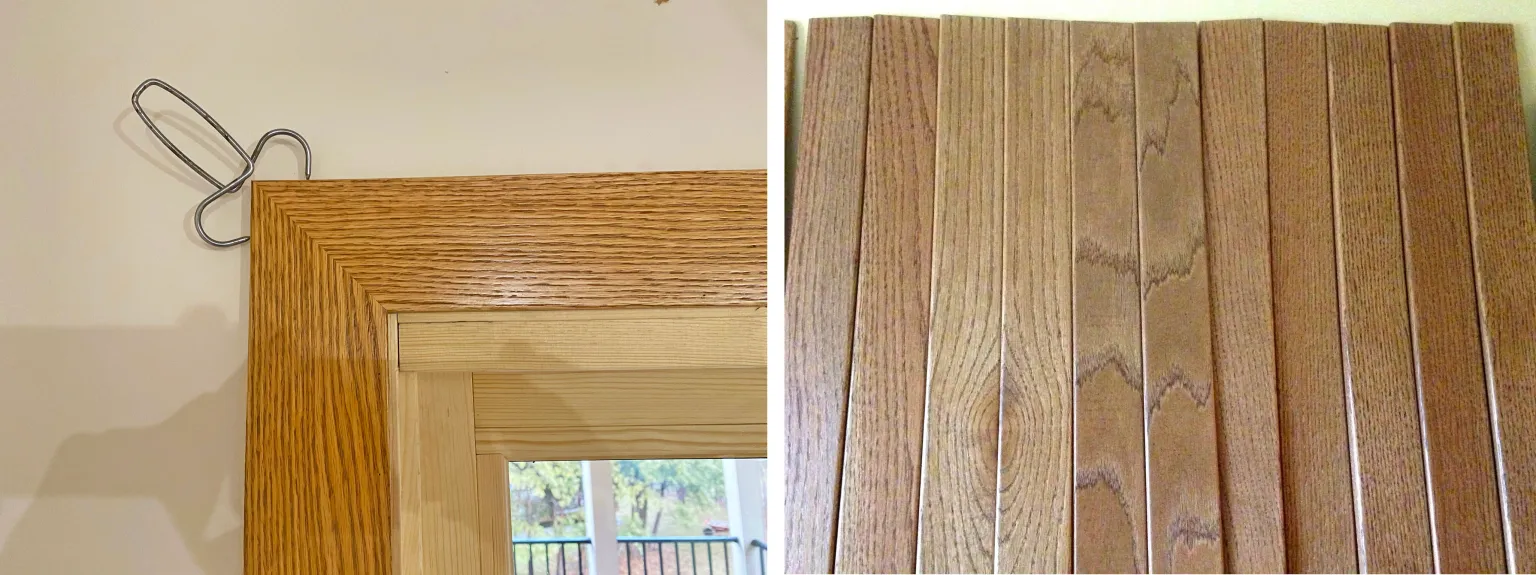
Journal of Light Construction: Wood grain is often the main attraction of stain-grade and clear-finished woodwork, yet I’m surprised how often I see new trim that has been installed without any consideration for the grain patterns in the wood. A little time and attention paid to wood grain can vastly improve the look.


4 comments:
I appreciate the attention to detail here. The pictures of frames and casing he made with knots centered is visually appealing. It can certainly waste a lot of wood to do this all the time, but there are specific cases where I definitely think it wood (ha) be worth it. It is also good to know how the grain behaves. It makes sense that early and late wood absorb water at different rates, I'm guessing one is more dense than the other. I think in general for a project it's good to know what you need, and what kind of malformation you can accept from the wood. Sometimes a little bit of warp would be okay but twist would not be acceptable. All in all, you need to know what your tolerances will be and being able to look at wood and know how it will behave is definitely helpful.
One of the great tragedies of scenic carpentry is that I think there is probably very rarely a chance to get to care about something like matching wood grain to create a more seamless finish. In reality, it would probably be a paint treatment, but that doesn't stop these natural variations in wood from being quite beautiful. I had never really stopped to think about how wood grain forms, and I find it very interesting that trees get pale in the winter and tan in the summer. They're just like us! This person clearly has an incredible attention to detail that really sets handmade wooden pieces from mass produced items. I also never stoped to wonder how the sap content of wood changes the way it behaves and looks in finished products. I had never heard of plainsaw patterns before, and how the grain in wood from the same tree would vary wildly depending on what slice of the cylinder your getting.
This is a very informative article, and if is mainly due to the terminology that the article uses in regards to wood grain and it’s applications. This article talks about wood grain and its application in ways that I had never even considered in the ways that the articles talks about wood grain. I had noticed differences between one piece of wood vs another, but I never really knew why these differences existed. This article opened my eyes to why some differences between pieces of wood is present through the appearance of the wood grains of said pieces of wood. The aspect of these interested me the most is the fact that the age of the wood has a direct connection to the appearance of the wood grain. In retrospect this makes perfect sense due to stress and other forces, but it still surprised me. It is somewhat concerning that I am just now learning about these differences in wood grains when I have been seeing these differences for years.
Wood is a very specific texture that people will or won’t recognize a lot easier than they might think. It is such a common pattern in everyday life that people subconsciously know what it should look like and notice it a lot more than they let on. Because of this, you have to be incredibly intentional and observant about wood texturing and usage. As the author mentions, well placed grain can hide seams and make a unit look much cleaner. I think this highlights the importance of intentionality and understanding how the audience’s mind works. While this might not be a problem for a proscenium show that has the audience far away, it will become more obvious when in a black box or other close up experience. I also appreciated the time that the author put in at the beginning to sort out their lumber into pairs. I am a big fan of putting work first that will make later work go infinitely faster. This is a great lesson to learn for anyone in every department.
Post a Comment