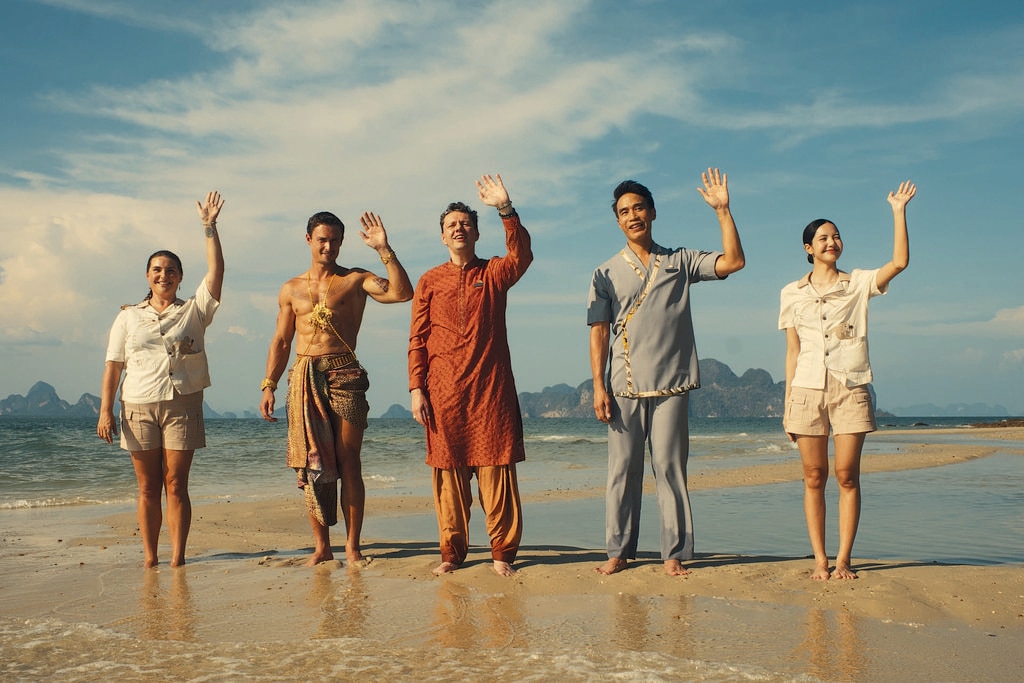
Vogue Australia: At The White Lotus—television’s most drama-filled, badly behaved and sexed-up resort—things are never what they seem. And try as you might, you can never truly escape who you are, even on holiday. But, as the award-winning television series’ costume designer Alex Bovaird points out, we are nevertheless tantalised by the idea that we can become someone else when we are far away from home.


6 comments:
Reading this made me reflect on how closely our clothing choices are tied to our inner lives—especially during moments when we imagine ourselves free from daily constraints. I totally relate to Bovaird’s insight about using holiday outfits as a way to temporarily reinvent myself. Whenever I pack for a trip, it feels like picking costumes for a performance: suddenly I’m the adventurous traveler in colorful market-bought scarves or the mysterious stranger in oversized sunglasses I wouldn’t dare wear back home.It’s funny to think that the more we try to escape reality through our clothes, the more revealing our choices actually become. Bovaird mentions how overdressing can reveal our insecurities, like we have something to prove, and that really resonated with me. It’s like wearing a flashy necklace that screams confidence while secretly feeling a little out of place.
I loved the newest season of White Lotus. It was crazy, disturbing, and so much fun to watch. What’s more, the artistry behind it is unmatched. The directors, creatives, and actors had such a vision that they were able to carry out incredibly. While the season was especially disturbing, it was exactly what they were going for, meaning they achieved excellent audience impact and intention. What really stood out to me is the fact that thd costume designer said in the interview that they pulled heavily from instagram posts on expensive hotel pages. I think this a genius source to pull from and had not thought of this, yet when it was said it immediately makes sense. The kinda of subtly more outgoing clothes and flex of money is very present in the story without being too obvious. What’s more, this shows that inspiration for art can be pulled from anywhere and should be done so to fit the final vision of your project. I think instagram is a great resource that until know I haven’t thought of using.
This is now the second article I have read about White Lotus, though I still have not seen the show. The closest I have come to doing so was hearing one of my peers across the desk in 33 watching it and exclaiming loudly in shock at a particularly unsettling sexual scene. However, both of the news comments I have read about it were talking about the costumes and how they convey the freedom of a vacation while also including a bit of uncanny valley effect to show the imperfections of the vacation itself. While the previous article went into more detail about the marketing behind the costumes of the show, this article explains the main characters and the way that their costumes demonstrate those personalities, something I’m incredibly interested in as a costume designer. I particularly liked the idea of the southern sophisticated clothing, and how that can actually convey insecurity. I still will probably not watch White Lotus, but the thought process behind the costuming remains interesting to me.
While all areas of theatrical design are inherently dramaturgical and require extensive script analysis, I can say with confidence that costume design requires the most character-driven research by FAR. In order to understand how each of the characters in the White Lotus season three would dress, costume designer Alex Bovaird had to consider each character’s personality, background, tastes, and relationship to the people around them. As she puts it, “‘Where do they shop? What’s their budget? Who shops for them? How long have they had this stuff?’ And then each scene, ‘Do they care what they look like? Are they trying hard? Did they think about what they were wearing, or did they not think about it at all?” I think that, in order to be a good costume designer, you have to love people. The more people you interact with, the more you understand the nuances of how people dress themselves and express themselves. An eccentric person you meet one day might come to mind five years down the line when you’re building an equally eccentric character.
I love how the costume designer said she would trawl the hashtags and location tags for resorts to see photos of what people are wearing to their swanky resorts for inspiration. I find myself using instagram a lot for style inspiration when trying to costume a modern show, but their search feature can really suck and I often struggle to find things relative to what I’m looking for. I never even thought to go by location! That is so useful because you will get certain groups of people in highly specific contexts tagging those locations, and not just the super high influential influencers- you can access photos from real people, in a way that is less influenced by the algorithm this way. At the end the costume designer says “its very overthought, probably too much” in relation to how much work she put into theorizing how a character would look- from how they would think about their outfit, to if they even thought about it in the first place. I think this is really funny, because I often think the same thing when I am working to costume characters. Is this way more effort than it probably should or could be? Yes. Would I be able to live with myself if I didn’t put that much thought into it? No.
Oh resort wear my sworn enemy. As someone who grew up in a tourist resort area (South Florida) and whos father transitioned from his previous punk style to yacht dad chic (much to my dismay) I feel uniquely qualified to afirm what this article is saying. These people are so ever conscious of what and who they wear not only because it’s a status thing but because they truly see themselves as representing the brand. They have it in their head that everyone cares so much about who their wear because they see themselves as valuable and important enough to be considered advertising to the brand, the persons image and the brands being one in the same. For them every clothing article is a testament to their personal brand and letting that slip is a no go. I do really like that they kept the dress style more classical rich people traveling. A thing I’ve noticed as a rich person who travels is theres an emphasis on “we’re not like other tourists.” Weather its from dress to behavoir to itinerary there is an established divide the wealthy like to make in their habits as to not associate with what they think is beneath them and tourism is no exception. Truth is that they’re especially concerned with their image and the exclusivity of it and will do anything to uphold it.
Post a Comment