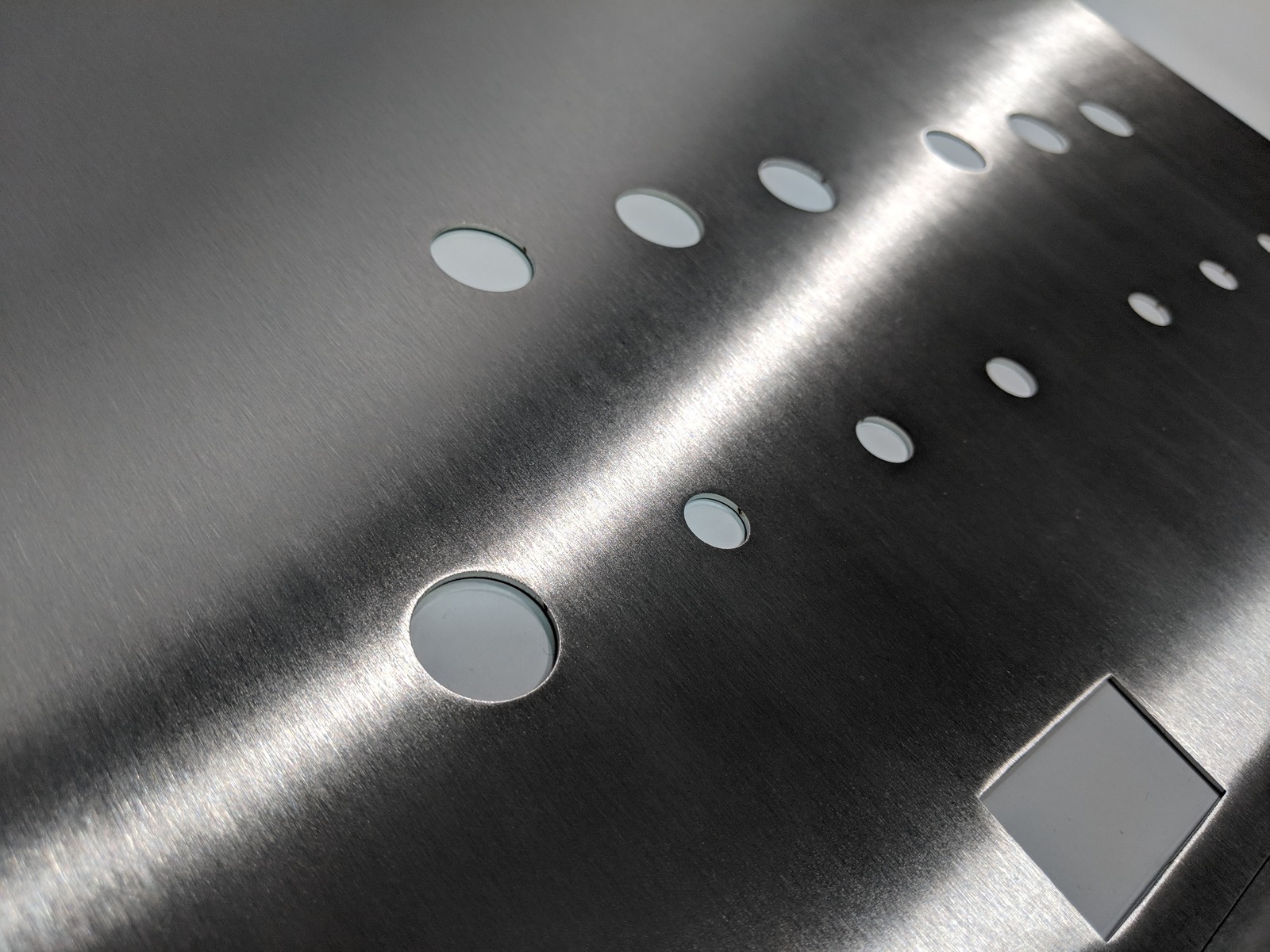
www.protocase.com: Engineers and designers often choose a powder coat finish for their custom enclosures and parts because it provides a bright, vibrant and professional look. But what if you don’t need to have your enclosures or parts painted but still need them to be aesthetically pleasing?


3 comments:
Metal having a grain is not something that I knew existed, I thought that was something unique to wood, paper, and fabric, but I suppose it makes sense that through the manufacturing process of shaping metal it would develop a grain in one direction. Though, I do wonder how hard it is to tell which direction the grain is going, because in something like a piece of wood it's pretty hard to miss, but for sheet metal I for one would probably miss the subtleties of grain direction. I do also wonder how much it affects the probability that it will crack when being bent, and how much of a disaster can be caused by forgetting to orient your sheet metal correctly, or if it's more of just a best practices sort of thing. I do also like the straight metal finishes that allow you to see the materiality of sheet metal objects.
I had never previously truly considered the impact that grain direction could have on sheets of metal. Previously I had believed that it would have some effect on the part itself but was mostly oriented to assist in design details. But considering that when welding pieces together there should be thought as to whether or not that weld is parallel or perpendicular to the grain pattern relates back to the precise technical design that each mechanical part requires. I was also intrigued to find out that the bending properties relating to grain in metal is very similar to wood as cracking occurs when wood is bent parallel to the grain. I also appreciated that the article included standard notation that can be applied to the technical drawings. Being able to properly communicate specific hardware manufacturing needs is the pinnacle of importance as if the shop doesn't know what is going on no one does.
It is definitely both interesting and good to know that sheet metal does indeed have grain direction. This is not something I had known previously. I have noticed the existence of "grain" in the lines that are present on the sheet metal, but I had thought that they were only there because of the way the finish was applied. I had no idea that their direction would actually affect strength and other factors, the same way it does with wood. In the future, I would be really interested to learn how changing the direction of the grain could have different affects in different scenarios. I wish this article went into more detail about just how important grain direction of sheet metal is. I would love to know how much more or less efficient a part is based on grain directions of vertical, horizontal, or even diagonal. I'm also curious how much manufacturing companies of bolts, screws, and other metal fasteners pay attention to the direction of the grain.
Post a Comment