Pittsburgh Arts, Regional Theatre, New Work, Producing, Copyright, Labor Unions,
New Products, Coping Skills, J-O-Bs...
Theatre industry news, University & School of Drama Announcements, plus occasional course support for
Carnegie Mellon School of Drama Faculty, Staff, Students, and Alumni.
CMU School of Drama
Friday, April 17, 2026
'The future of immersive technology lies in the impossible'
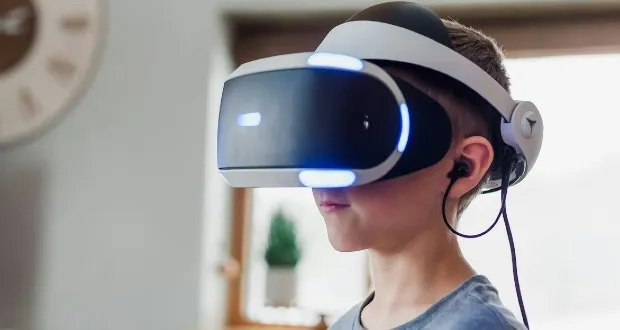
AV Magazine: New research reveals that rule-breaking moments such as floating 10 storeys above a city skyline or passing through a solid wall are a crucial feature, and the future, of virtual reality (VR).
5 comments:
CaspianComments
said...
As a person who used VR relatively often throughout their high school years (and still does whenever I get a chance), I can definitely affirm most of the information within this article. Before I do that though, I would like to refute the argument for generative AI in these VR spaces. I find, and have made a lot of friends who also agree, that having to take time to create things for VR without the use of AI is an extremely enriching experience that not only is fun and emotionally stimulating, but also intellectually stimulating and teaches very good skills to have overall. Beyond the comment on generative AI, I can affirm a lot of the information brought up within this article. Throughout high school and some of middle school, I would get on VR for long periods of time pretty often. Throughout the pandemic, it served as a space for me to be social and interact with people when I couldn’t in person. Due to these prolonged periods of time in VR, I have developed phantom touch/pain and I also have experienced the effect of having a distorted reality coming out of VR. I have tried to open doors by doing the motion of pressing a trigger on a controller after coming out of an extended VR session. I distinctly recall an instance in which I fell asleep in VR and woke up believing the VR world I was in was reality. It was extremely disorienting and it took me a full 10 minutes to realize there was a headset on my head. I have had to exit VR on certain occasions because I received an injury in-game and I’ve felt it in my actual body. Do I think all of this is necessarily healthy? No, but I do think there are ways to utilize it in healthier ways to amplify future entertainment experiences/experiences in general.
It is always fascinating to use technology to experience things that would be impossible to experience without the help of the aforementioned technology. When I used VR for the first time I started out with playing games like those talked about in this article. The impossible things that people can experience need to be close to reality so that there is a point of reference that makes people experiencing these impossible things feel more impossible than just spectacle. I think that VR used in conjunction with creative media like AI or tools for art is a good direction for developers to lean into in the future. I find it fascinating that people are able to use the AR functionality of these headsets to plan out and then create murals or other large form art pieces. There are some people online that are using the apple vr headset to create large murals in a way that overlays the picture they are referencing on top of the surfaces they are painting.
When vr headsets first started hitting the market when i was a kid i thought it was gonna be a way bigger phenomenon that it ended up becoming, i remember being really annoying about wanting to buy a headset but as time grew on the interest in vr technologies simmered and most people consider to be a mildly amusing gimmick instead of the future of entertainment which i feel like is fair because people are use to how media is already its hard to convince an audience to step out of what they know and its especially hard to keep that interest when you have them and stop them from returning to the thing that they are used to( its just human nature to stay in whats comfortable) but i think that if a lot of people gave vr a chance they'd find that it could give you a unique experience, different from any media they've experienced before
This was a very in eye opening article for me. I do acknowledge that VR is the future when it comes to technology particularly in media and gaming. The part of this article that I did expect to see when looking at a article that is researching the use of VR is that users viewed the real world differently for a period of time after an intense VR session. The reason I expected this bit of information from the article / research is that as someone who has used VR I also have experienced some variation of this phenomenon, but due to the amount of video games that I have played this phenomenon was not as strong for me as it may have been for someone who has not played a lot of video games and is then trying VR for the first time. Something else that I am also glad that this article said was the importance of the users body within the immersion within the VR world. A lot of games have your body be invisible or just some floating hands in the VR world, and this does not immerse the user as well as a full corporeal body within the VR world.
It's super interesting to study and be able to see what is deemed "impossible" in the realm of VR. One surprise at this workshop was the idea that photorealistic content tends to be less engaging than surrealistic content. As producers of content, we tend to become fixated on making things "real," but in fact, a true advantage of the immersive technology is its ability to defy physical law (e.g., walk through walls, fly above the city).
The "bleed" effect described at the workshop, when a user sees the physical world through a VR lens for days after a session, is a powerful testament to the effectiveness of spatial design in VR. Spatial design impacts not just the cognitive mind but also the physical body. If someone is standing on a flat floor but their legs are shaking, the technology has successfully engaged their lower body on a sensory level rather than a cognitive one.


5 comments:
As a person who used VR relatively often throughout their high school years (and still does whenever I get a chance), I can definitely affirm most of the information within this article. Before I do that though, I would like to refute the argument for generative AI in these VR spaces. I find, and have made a lot of friends who also agree, that having to take time to create things for VR without the use of AI is an extremely enriching experience that not only is fun and emotionally stimulating, but also intellectually stimulating and teaches very good skills to have overall. Beyond the comment on generative AI, I can affirm a lot of the information brought up within this article. Throughout high school and some of middle school, I would get on VR for long periods of time pretty often. Throughout the pandemic, it served as a space for me to be social and interact with people when I couldn’t in person. Due to these prolonged periods of time in VR, I have developed phantom touch/pain and I also have experienced the effect of having a distorted reality coming out of VR. I have tried to open doors by doing the motion of pressing a trigger on a controller after coming out of an extended VR session. I distinctly recall an instance in which I fell asleep in VR and woke up believing the VR world I was in was reality. It was extremely disorienting and it took me a full 10 minutes to realize there was a headset on my head. I have had to exit VR on certain occasions because I received an injury in-game and I’ve felt it in my actual body. Do I think all of this is necessarily healthy? No, but I do think there are ways to utilize it in healthier ways to amplify future entertainment experiences/experiences in general.
It is always fascinating to use technology to experience things that would be impossible to experience without the help of the aforementioned technology. When I used VR for the first time I started out with playing games like those talked about in this article. The impossible things that people can experience need to be close to reality so that there is a point of reference that makes people experiencing these impossible things feel more impossible than just spectacle. I think that VR used in conjunction with creative media like AI or tools for art is a good direction for developers to lean into in the future. I find it fascinating that people are able to use the AR functionality of these headsets to plan out and then create murals or other large form art pieces. There are some people online that are using the apple vr headset to create large murals in a way that overlays the picture they are referencing on top of the surfaces they are painting.
When vr headsets first started hitting the market when i was a kid i thought it was gonna be a way bigger phenomenon that it ended up becoming, i remember being really annoying about wanting to buy a headset but as time grew on the interest in vr technologies simmered and most people consider to be a mildly amusing gimmick instead of the future of entertainment which i feel like is fair because people are use to how media is already its hard to convince an audience to step out of what they know and its especially hard to keep that interest when you have them and stop them from returning to the thing that they are used to( its just human nature to stay in whats comfortable) but i think that if a lot of people gave vr a chance they'd find that it could give you a unique experience, different from any media they've experienced before
This was a very in eye opening article for me. I do acknowledge that VR is the future when it comes to technology particularly in media and gaming. The part of this article that I did expect to see when looking at a article that is researching the use of VR is that users viewed the real world differently for a period of time after an intense VR session. The reason I expected this bit of information from the article / research is that as someone who has used VR I also have experienced some variation of this phenomenon, but due to the amount of video games that I have played this phenomenon was not as strong for me as it may have been for someone who has not played a lot of video games and is then trying VR for the first time. Something else that I am also glad that this article said was the importance of the users body within the immersion within the VR world. A lot of games have your body be invisible or just some floating hands in the VR world, and this does not immerse the user as well as a full corporeal body within the VR world.
It's super interesting to study and be able to see what is deemed "impossible" in the realm of VR. One surprise at this workshop was the idea that photorealistic content tends to be less engaging than surrealistic content. As producers of content, we tend to become fixated on making things "real," but in fact, a true advantage of the immersive technology is its ability to defy physical law (e.g., walk through walls, fly above the city).
The "bleed" effect described at the workshop, when a user sees the physical world through a VR lens for days after a session, is a powerful testament to the effectiveness of spatial design in VR. Spatial design impacts not just the cognitive mind but also the physical body. If someone is standing on a flat floor but their legs are shaking, the technology has successfully engaged their lower body on a sensory level rather than a cognitive one.
Post a Comment