Pittsburgh Arts, Regional Theatre, New Work, Producing, Copyright, Labor Unions,
New Products, Coping Skills, J-O-Bs...
Theatre industry news, University & School of Drama Announcements, plus occasional course support for
Carnegie Mellon School of Drama Faculty, Staff, Students, and Alumni.
CMU School of Drama
Thursday, April 09, 2026
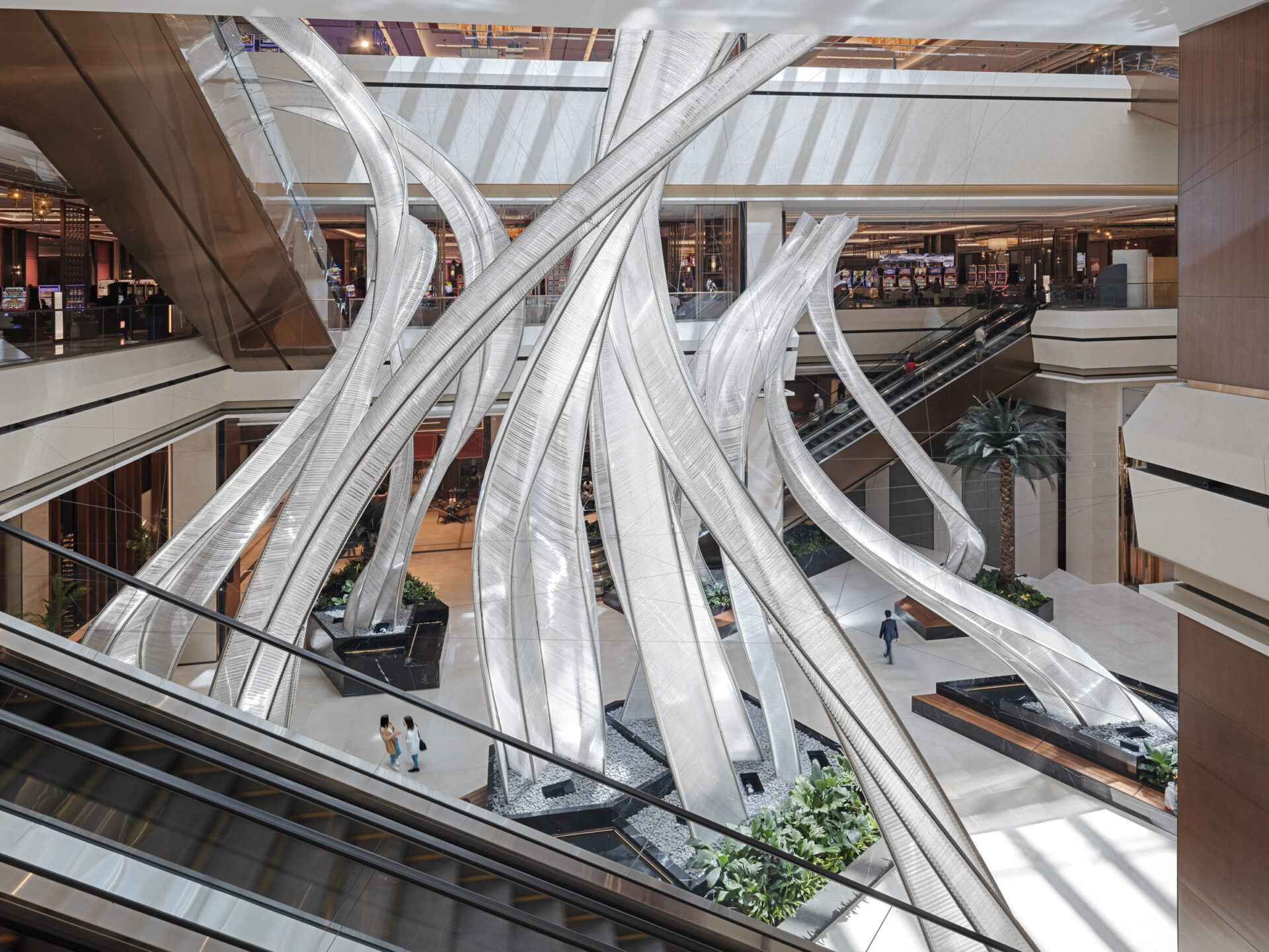
Nikolas Weinstein Studios’ Glass Sculpture Enters Guinness Book of World Records with Autodesk Fusion
Fusion Blog: The jaw-dropping Mangrove glass sculpture is one for the books—quite literally. It was recently named the world’s largest glass tube installation by the definitive recordkeepers at the Guinness Book of World Records.
3 comments:
Julian Grossman
said...
When I was in middle school, I took two glass art classes (one for fused glass and one for stained glass), and ever since then I’ve wanted to do more glass stuff, but I’ve never seemed to have the time. (Which is a real bummer since the Pittsburgh Glass Center offers some really cool classes!) But those classes got me to be very excited about glass art and the degree of work that goes into it. This is a really awesome project especially with the way that it interacts with the urban environment, people passing through it, and the light from the skylight. It’s also so awesome to read about the parametric algorithms used for the sculpture. I sometimes feel so frustrated reading about Fusion’s capabilities these days when Vectorworks still doesn’t let you select what edge you want your sweep to be centered on or even have a functional constraint system.
What a great example of technology and art working hand in hand. One can only Marvel at the turnaround time between idea and implementation and iteration. As miraculous as it is, it is truly a miracle. Thinking about the triangle of getting things done you can only have two: fast, cheap or good. Considering this method of fabrication was fast and good quality one can assume it was also very expensive. That unfortunately derails any dream of having this process become part of theatrical commonplace. I'm reminded of one 3D pen that first came out. I must have been 10 years old at the time. and it was revolutionary soon all of our homework was going to be done in 3D space 3D pens and little strings of melted plastic. It was exciting but ultimately impractical and in little time they fit into the distance. still around but hardly as popular and widespread as I thought they would be.
What stands out to me about the Mangrove installation is how much it blurs the line between sculpture and engineering system. It doesn’t feel like something that was just designed and then built once, but more like something constantly tested, adjusted, and refined through software before it ever became physical. The idea of a “digital twin” makes it sound like the sculpture existed in parallel form long before installation, which changes how I think about authorship in work like this. At the same time, it’s interesting that even with all this advanced modeling and rapid iteration, the final piece still depends on very hands on labor, especially the weaving and installation by people on site. That mix of high tech planning and physical craft feels important because it stops it from becoming purely digital or detached. I also keep thinking about how fast the team was able to iterate and solve problems, which makes the whole process feel more like engineering than traditional sculpture.


3 comments:
When I was in middle school, I took two glass art classes (one for fused glass and one for stained glass), and ever since then I’ve wanted to do more glass stuff, but I’ve never seemed to have the time. (Which is a real bummer since the Pittsburgh Glass Center offers some really cool classes!) But those classes got me to be very excited about glass art and the degree of work that goes into it. This is a really awesome project especially with the way that it interacts with the urban environment, people passing through it, and the light from the skylight. It’s also so awesome to read about the parametric algorithms used for the sculpture. I sometimes feel so frustrated reading about Fusion’s capabilities these days when Vectorworks still doesn’t let you select what edge you want your sweep to be centered on or even have a functional constraint system.
What a great example of technology and art working hand in hand. One can only Marvel at the turnaround time between idea and implementation and iteration. As miraculous as it is, it is truly a miracle. Thinking about the triangle of getting things done you can only have two: fast, cheap or good. Considering this method of fabrication was fast and good quality one can assume it was also very expensive. That unfortunately derails any dream of having this process become part of theatrical commonplace. I'm reminded of one 3D pen that first came out. I must have been 10 years old at the time. and it was revolutionary soon all of our homework was going to be done in 3D space 3D pens and little strings of melted plastic. It was exciting but ultimately impractical and in little time they fit into the distance. still around but hardly as popular and widespread as I thought they would be.
What stands out to me about the Mangrove installation is how much it blurs the line between sculpture and engineering system. It doesn’t feel like something that was just designed and then built once, but more like something constantly tested, adjusted, and refined through software before it ever became physical. The idea of a “digital twin” makes it sound like the sculpture existed in parallel form long before installation, which changes how I think about authorship in work like this. At the same time, it’s interesting that even with all this advanced modeling and rapid iteration, the final piece still depends on very hands on labor, especially the weaving and installation by people on site. That mix of high tech planning and physical craft feels important because it stops it from becoming purely digital or detached. I also keep thinking about how fast the team was able to iterate and solve problems, which makes the whole process feel more like engineering than traditional sculpture.
Post a Comment