News | CFDA: The definition of biomimicry is the act of using nature as a model for human inventions.
It is a technological-oriented approach focused on putting nature’s lessons into practice. To see nature as a model, study the model and use it as inspiration for designing and solving humans complex problems.


9 comments:
I found this article fascinating as I’ve been thinking a lot about the interaction between natural forms and man-made things. I’ve been thinking about these things because of a project assigned in Basic Design as my concept is creating the shape of recognizable man-made objects using natural materials in a way that suggests they grew into the shapes we see them take. My idea is much less functional than the examples in this article, but I still find them fascinating. It would be interesting to see a peaceful medium between the two as I love objects that are both functionally and aesthetically inspired by nature because I think it both takes us back to our roots in nature and into the future of technology. I, for one, think that a future like that would be more interesting than one made all of steel and concrete and glass. I hope that is the way technology turns.
This was a very interesting article to read, especially since I am quite unfamiliar with biomimicry. I always knew that it was a thing, but reading in depth about it and how it is an in depth approach to problem solving was fascinating. Often times, especially in this society, we think that technology and computers are always the most efficient and accurate. Human error does not occur with such and it feels almost perfect. However, I often forget that we humans are real and living. Through centuries of natural selection and evolution, we are a natural form of efficiency. It is so crazy to think that sometimes and makes total sense that we use biomimicry to further enhance technology. I really enjoyed the examples the article gave, but I wish they included more about what is currently being invented. From architecture to factories to computers, learning from what nature has created will always be the most advanced.
Hikari Harrison
A few things came quite shocking for me. First, I didn’t realise there’s such a long history of biomimicry. Two, I didn’t know that biomimicry covers such a large field – from learning animals’ behaviours, to plant structures, and mimicking natural patterns – it seems to be everywhere in our lives. But now as I think about the buildings I’ve stayed in, the objects I’ve used and the clothes I’ve worn, I’m more aware of how biomimicry is influencing us. Nature inspires us in what our products look like, how they can be made, what materials to use and even what characteristics to adopt. The article mentions that many companies and designers are looking for new natural, organic materials to use as fabric, which I know is a hot trend that has been going on for quite some time. This push for sustainability is a warning for us as consumers that the fashion industry produces an unaccountable amount of waste in the process of manufacturing, and that we are all part of it.
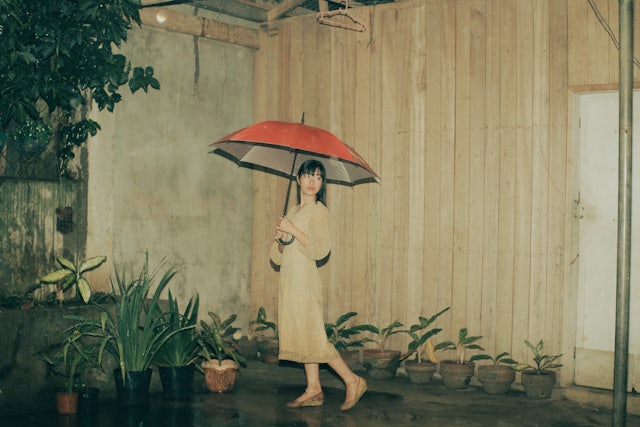
I think biomimicry is a beautiful idea: looking to nature to guide our designs, seeing how the earth has developed things to have a purpose and then using that to create new things. It blends natural beauty and creativity in my mind. Though, I can’t help but read this article and think about how we are destroying the planet: taking the resources and not replenishing them, continuously polluting the air, water, earth. The idea of biomimicry seems so poetic, but in my mind it is so starkly contrasted with global warming and the elements of nature that are being destroyed by it. On a lighter note, I found the fashion aspects of this article to be particularly interesting. Especially where the umbrella came from (which, I finally realized, is actually very useful, often more so than a raincoat alone). That idea is 2,000 years old!! That’s really cool to me.
I had never heard of this concept of biomimicry, but after reading this article, it puts a name to a familiar sensation. I genuinely enjoyed reading about the tiny histories of mankind that go overlooked, especially in such an inspiring way. I often find that the solutions to problems may spawn from places that are simultaneously unexpected and staring you right in the face. I know many artists who find inspiration from the world around them, and often it manifests itself in the organic patterns and intricate nature of biology. I find, as an artist, I don’t often examine the intersectionality of science and the arts, but the connection is so natural. So, it makes sense that engineers and innovators draw from nature, because there is a profound complexity that we may never fully understand. The natural structures around us have stood the test of time and even evolved and adapted with the changing planet. To me, it seems like the ultimate feat of art, science, engineering, and principally design.
Most interesting for me in this article was the separation between nature being a inspiration for design in an artistic sense and being an inspiration more towards technical innovation, in terms of structure and in devices moving forwards. One of the most interesting aspects of this is how pervasive the materials have become. Stuff I would never have considered as a usable or efficient material can now be used for things ranging from fabrics to art supplies, it does go to show how much uniqueness nature puts into materials that we can’t really replicate in our own manufacturing processes. Even in variation on one things, such as wood from trees where we use different trees for wildly different materials and experiences while working, we can only manipulate rather than create, not to take away from the process and the ingenuity required to rework the materials into the form that is desired.
One of my favorite examples of biomimicry is the architecture in many cities in New Mexico, Arizona, and Utah. These states make a large portion of their tourist revenue off of their beautiful landscape and rock formations. Buildings, especially shiny, metal, clearly man made buildings, destroy the landscape and tank revenue. For this reason, in many areas, law requires the buildings to be aesthetically pleasing. This involves matching wall colors to the red and sand tones of the natural landscape, and removing garish colors that clash with the environment. I believe that these cities of fast food restaurants that look like they were cut from stone themselves are so beautiful. And, just as this article discusses biomimicry as a form of environmental preservation, the biomimicry in these towns reduces light pollution and creates environments less hostile to native wildlife. This article discusses biomimicry mainly in fashion, but I find these larger scale examples equally fascinating and beautiful.
I looked a lot into biomimicry when designing Arcadia and it’s a fascinating area of architecture and product design. With Arcadia the team decided to work on bringing the outside inside since there’s supposed to be a sprawling estate outside but because I didn’t want to try to show all of that through some tiny windows in the Rauh, I turned to making the interior invoke the feelings of greenery and foliage. I think an interesting point brought up in this article was the mycelium and food by-product materials being used for construction. In a project for class we are trying to find ways to make Theatre more green and sustainable, and I found a lot of research on mycelium bricks. I think it is cool but also a little dystopian. We must return to studying the way the earth has been surviving naturally now that we as a civilization have destroyed the earth and need to find ways to restore it through the model and methods it’s shown us from the beginning.
I have never heard of the term biomimicry, but that is such a cool practice in inventing! This reminds me of how much scientists and engineers study bees, as they seem to defy what should be possible in physics. I think I remember an article that discussed scientists attempting to mimic bees’ flight pattern to get humans to fly, but for some reason the same principles could not be applied on a larger scale. I also like biomimicry, because it feels like humans admitting that they cannot know everything, and handing the reins back to mother nature. In a way it is this agreement between nature and humans to share little secrets of the universe to create a never ending expanse of ideas. On a slightly more pessimistic note, I wonder if this limits the possibilities of what could ever exist. Does every idea come from reality? If an invention does not have ties back to something in reality, can it be invented? Are all things that we create simply progressions of what already exists? Can what we create ever be truly new?
Post a Comment